Architect of the Week: Stout & Litchfield
June 27th, 2016

This article is more than a year old and may contain information that is out of date. Sorry about that.


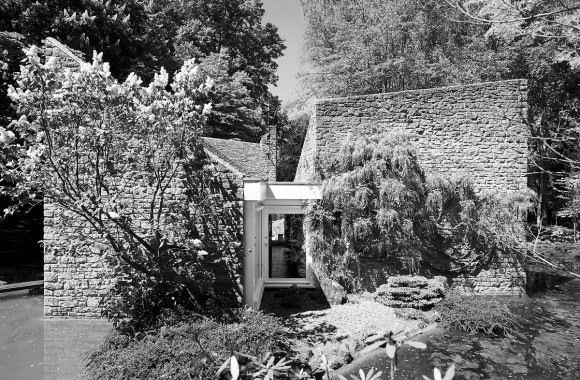

Roy Stout and Patrick Litchfield founded their joint practice in 1962, having previously studied together at the Royal West of England Academy. Their first commission – a residence in rural Oxfordshire – allowed them to develop a distinctive style of private housing for which they became widely known.
Stout and Litchfield’s design for the Oxfordshire house was considerably influenced at the outset by regulations imposed by the local authority, namely that the property had to have at least a mono-pitched roof. Abandoning their initial Corbusian designs, Stout and Litchfield devised a scheme wherein each element of the property was created as a separate volume with a slanting roof, resembling a group of farm buildings – a style which they continued to develop throughout their careers.
In Litchfield’s words, the project represented ‘a simple reaction against the rigidity of structure, breaking down scale, accepting that you could put a roof on – and that you didn’t have to stick to right angles.’
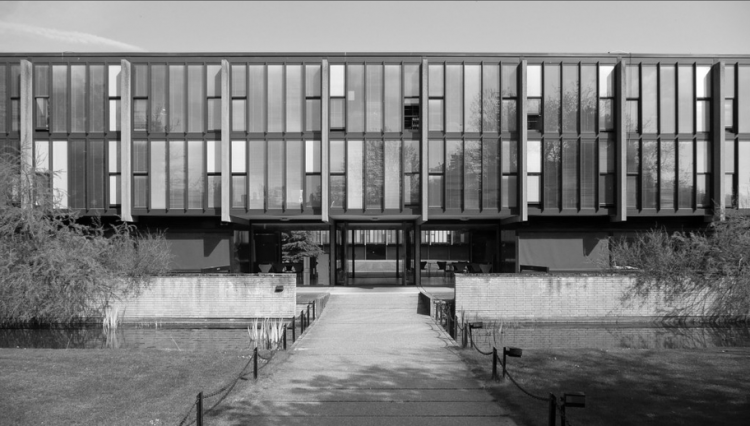
Stout and Litchfield developed this housing style in both rural settings – notably with their pyramid-roofed houses in West Sussex – and in London. They also collaborated on designs for larger projects including St Cross College, Oxford and various housing schemes across Lambeth and London’s Docklands.
Discover more in our Directory of Architects and Designers.


