Bentley Wood
Sold
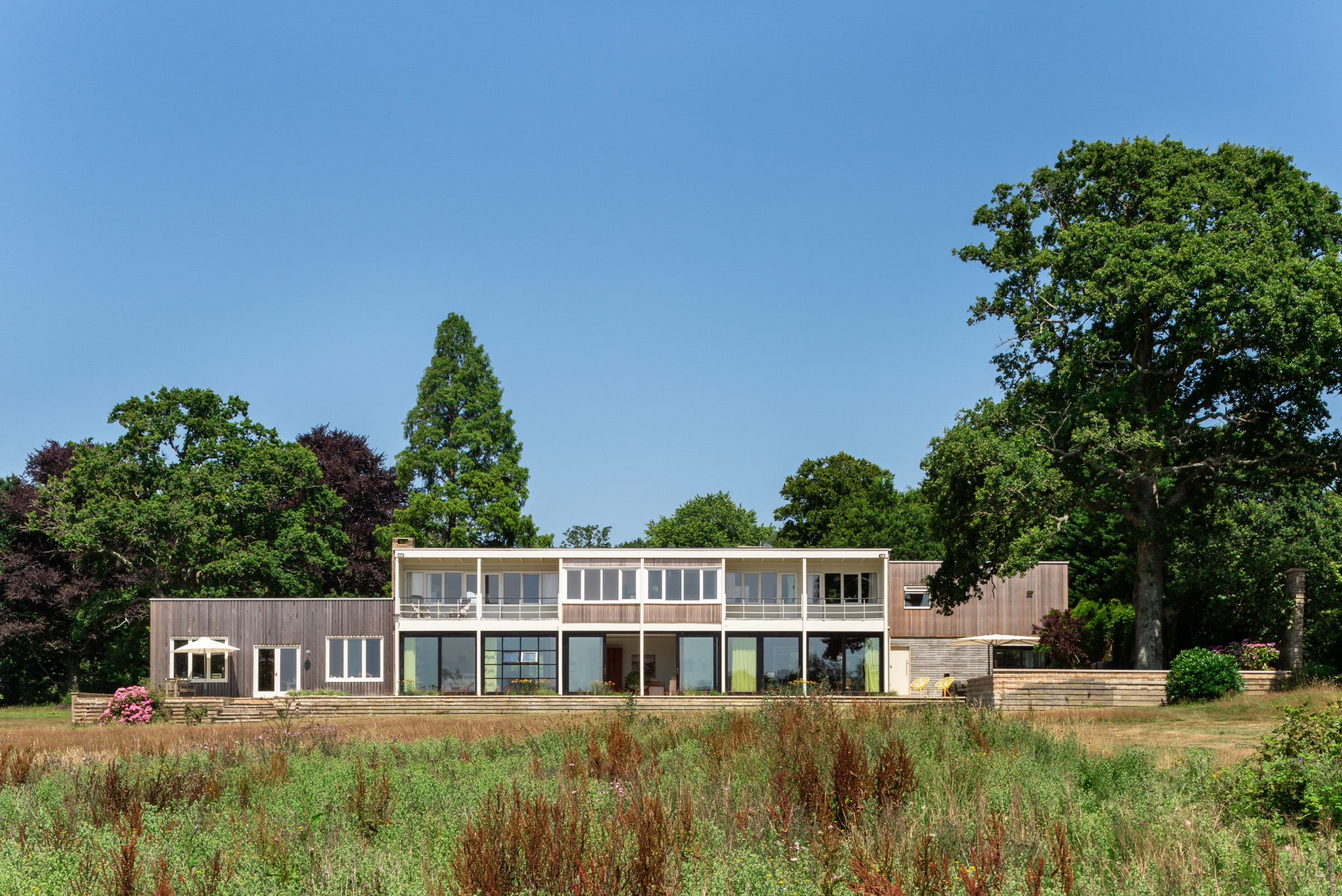


"Of all the modern country houses I have seen, this is one of the best as a machine for living in...A regular Rolls-Royce of a house" - C. H. Reilly (AJ 28.9.38)
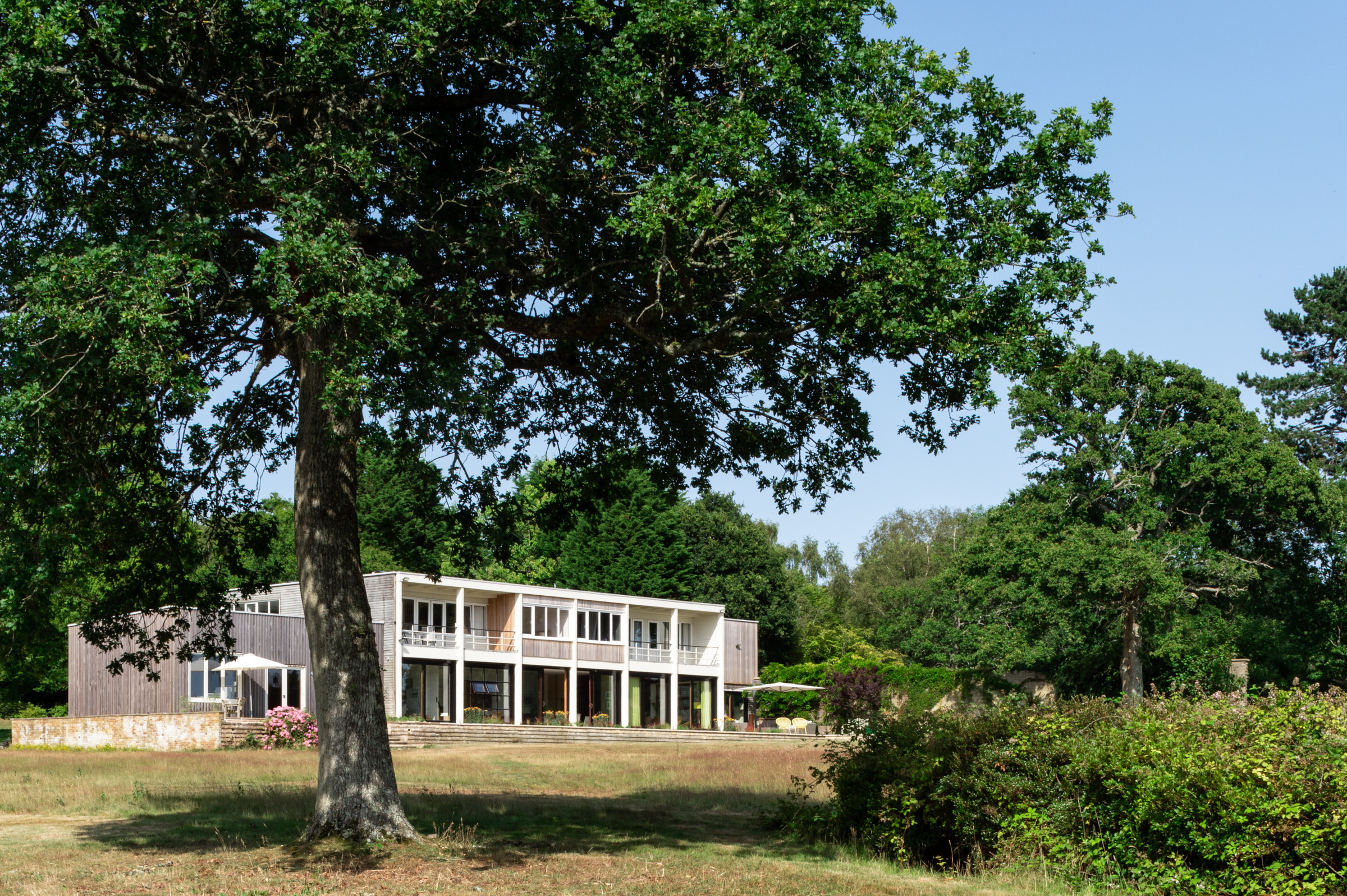
Set in approximately 18 acres of private land, with precious views over fields towards the South Downs, the remarkable Bentley Wood was designed in 1936 by the renowned Russian-born British architect Serge Chermayeff as a country retreat for his family. This impressive five to seven-bedroom detached house is a wonderful example of early modernism in a stunning rural location near Lewes.
Bentley Wood
SOLD
History
"...whose beautifully sited hollow rectangles suppressed every vanity of "style" and merely touched the environment into conscience of form, [Bentley Wood] was the most aristocratic English building of the decade" - John Summerson, Architectural Historian, 1959.
Chermayeff bought the land for Bentley Wood shortly after completing the De la Warr Pavilion along the Sussex coast at Bexhill-on-Sea. Bentley Wood and the Pavilion – which Chermayeff designed together with Erich Mendelsohn – share some characteristics, both being rectangular in plan with extensive play at different scales with grids, both are largely glazed to the south and solid to the north, east and west. In their original form both buildings had an extending wall along the eastern side, and both made use of sculpture as an intermediary between the inhabitants and the distant views.
As described in Alan Powers' book Modern; The Modern Movement in Britain:
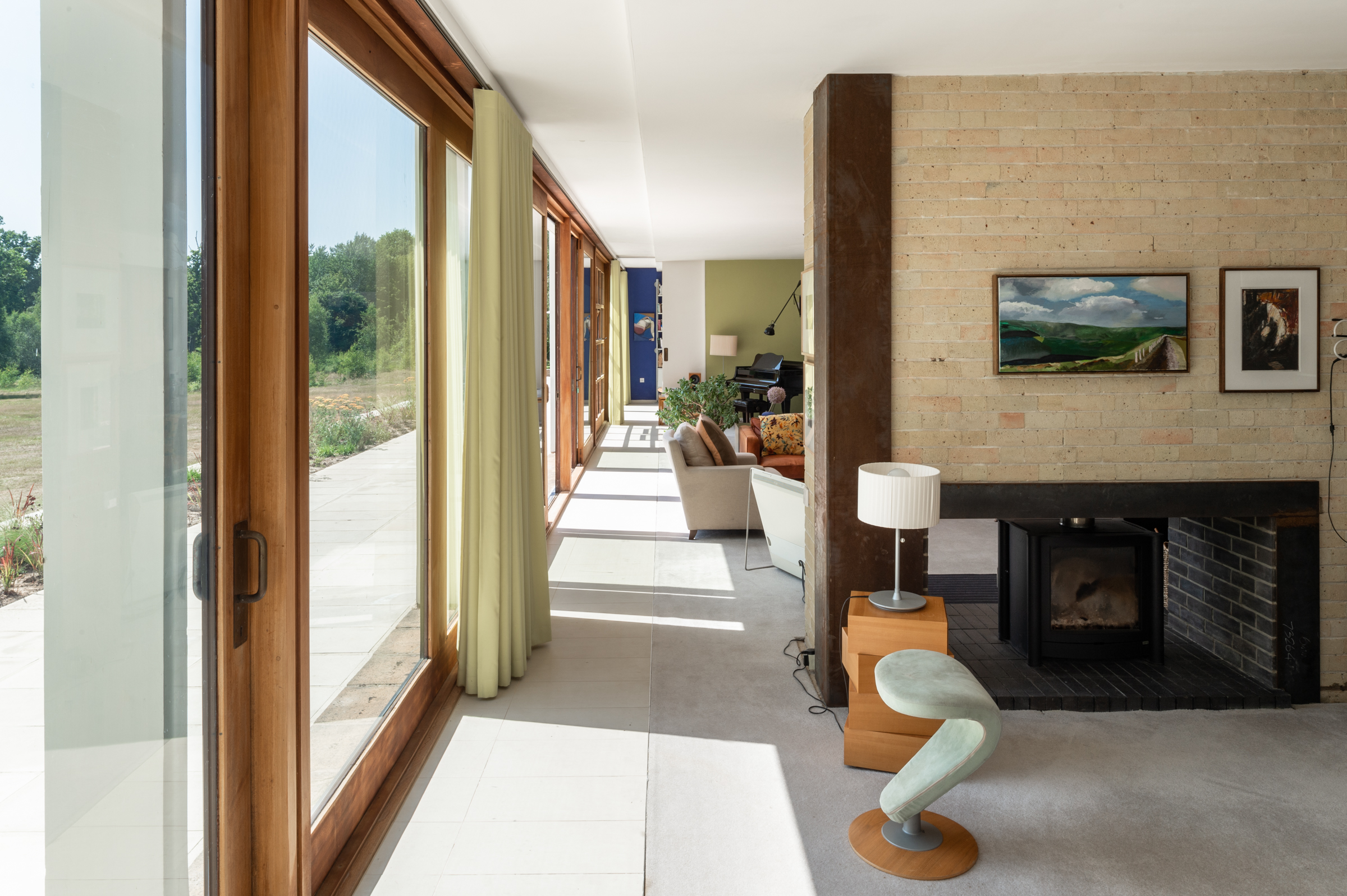
"Chermayeff's first scheme for his own house was contested at a planning inquiry but became a widely admired example of fitting modern architecture into the English landscape. The timber frame is of jarrah wood, revealed on the garden side of the house and painted white to increase the contrast with the regular openings of the sliding windows. Christopher Tunnard, a rising star of landscape theory, was a consultant for the landscape and planting , although Chermayeff probably played a major role. The clarity of the original design was lost in post-war extensions. Most recently a gradual process of recovery has been begun by more sympathetic hands."
Powers continues:
"Chermayeff's friendship with such modern artists as Ben Nicholson, Barbara Hepworth and John Piper was demonstrated by works on display in the house, while at the end of the terrace Henry Moore's Recumbant Figure in Horton stone (now in the Tate, London) surveyed the distant line of hills. The artwork was specially conceived for this position, and was the only major modern sculpture placed in relation to a modern house in Britain in the 1930s. It remained in place for less than a year before Chermayeff sold the house prior to his move to the United States."
The affable and well-connected Chermayeff hosted many distinguished visitors in his short time at Bentley Wood, including Frank Lloyd Wright who can be seen here taking tea on the terrace.
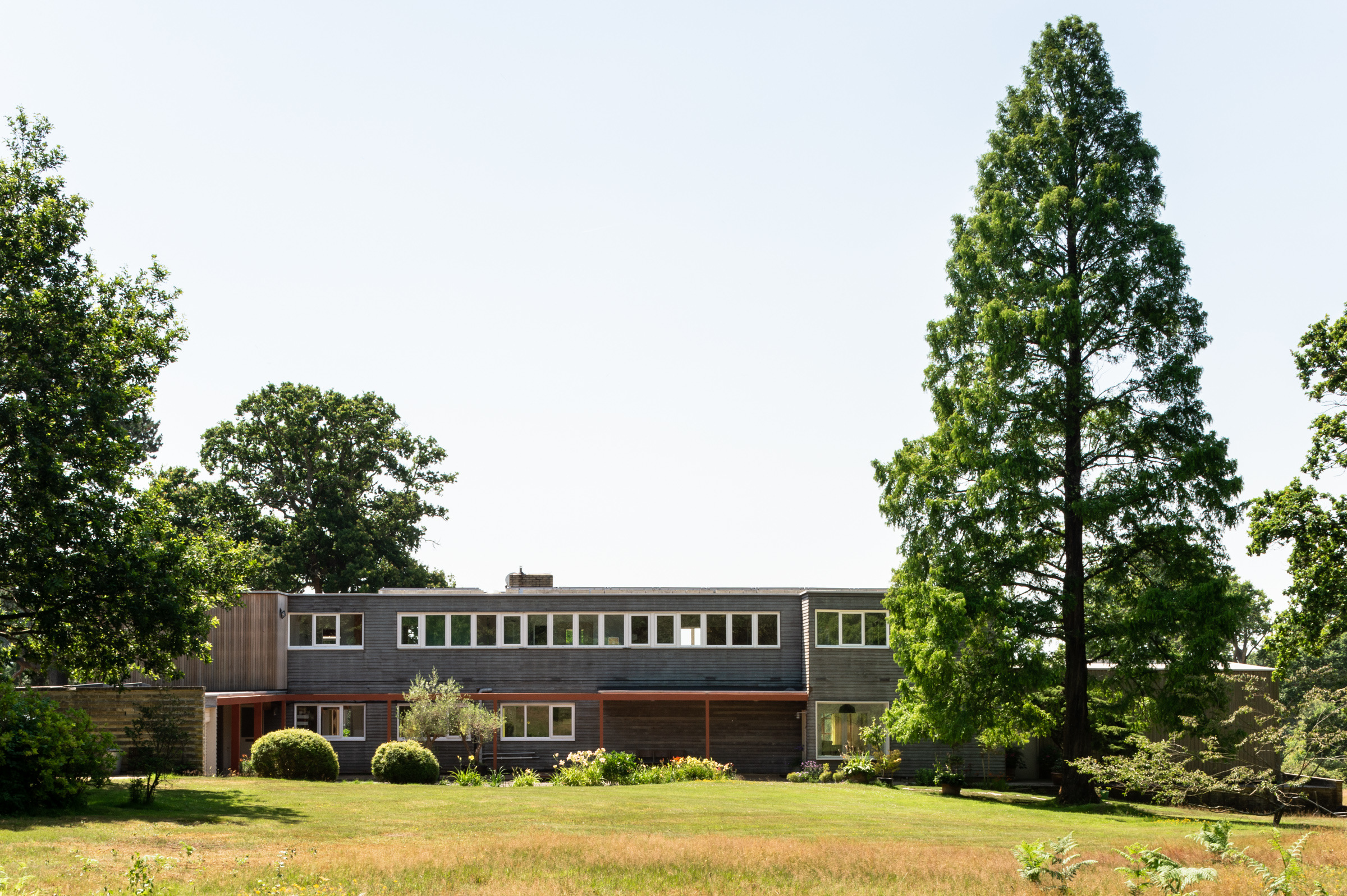
"Bentley Wood was carefully sited in relation to existing trees, with a two-sided entrance court to the north and a garden terrace to the south allowing for distant views of the South Downs. The timber was engineered in a sophisticated manner. "Of all the modern country houses I have seen", wrote C. H. Reilly, "this is one of the best machines for living in", yet informality was achieved by the close contact between indoors and outdoors".
Chermayeff's garden designer, Christopher Tunnard, said of the scheme:
"To me, the architect's point of view has been of the greatest value, particularly that of an architect who believes that planting is a part of architecture. In this problem, planting was architecture, and the oak tree on the terrace has as great an importance in the whole design as any timber support within".
Interested?