Langham House Close II
Sold
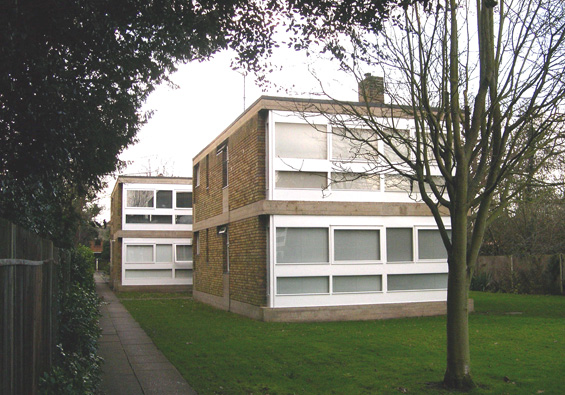


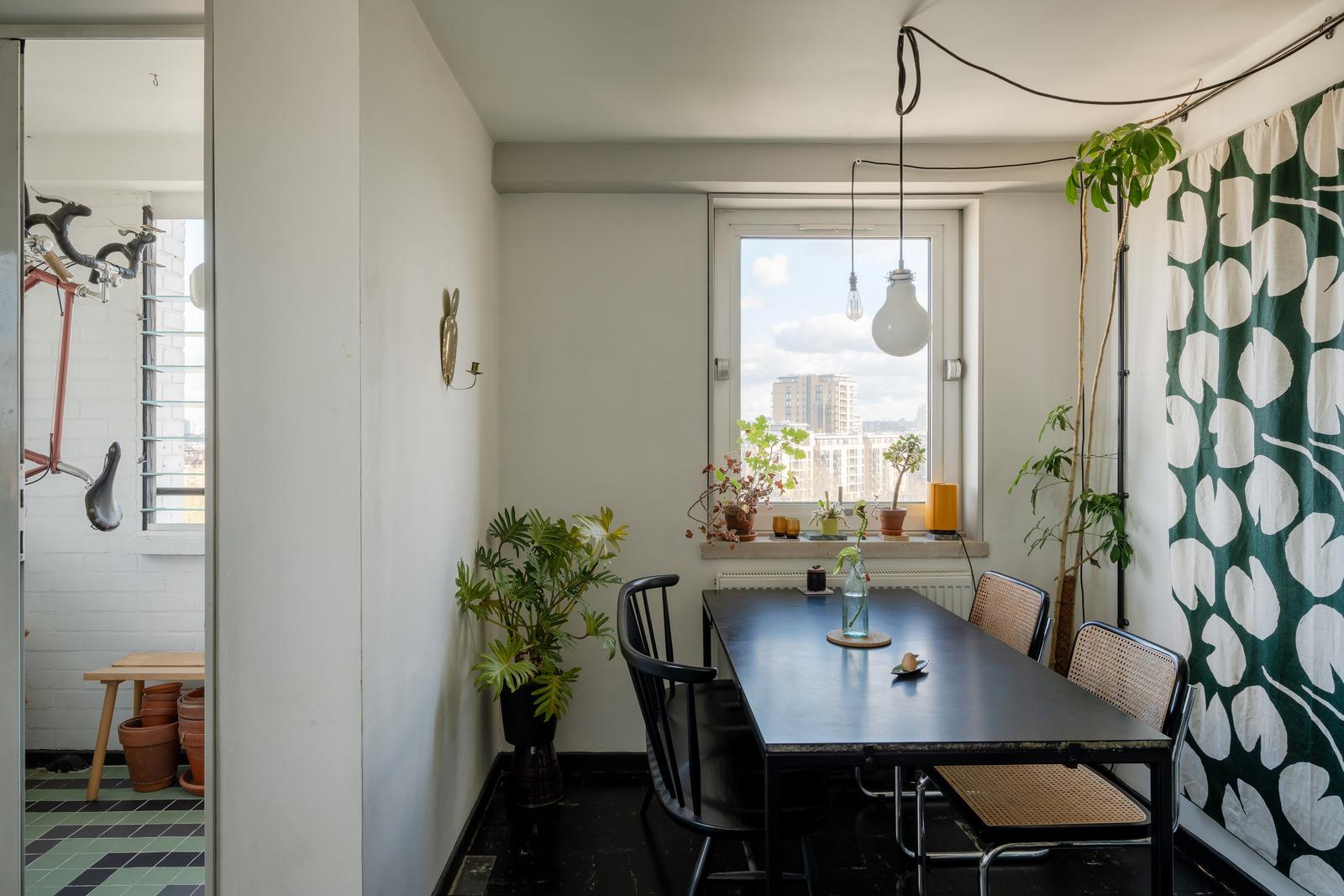
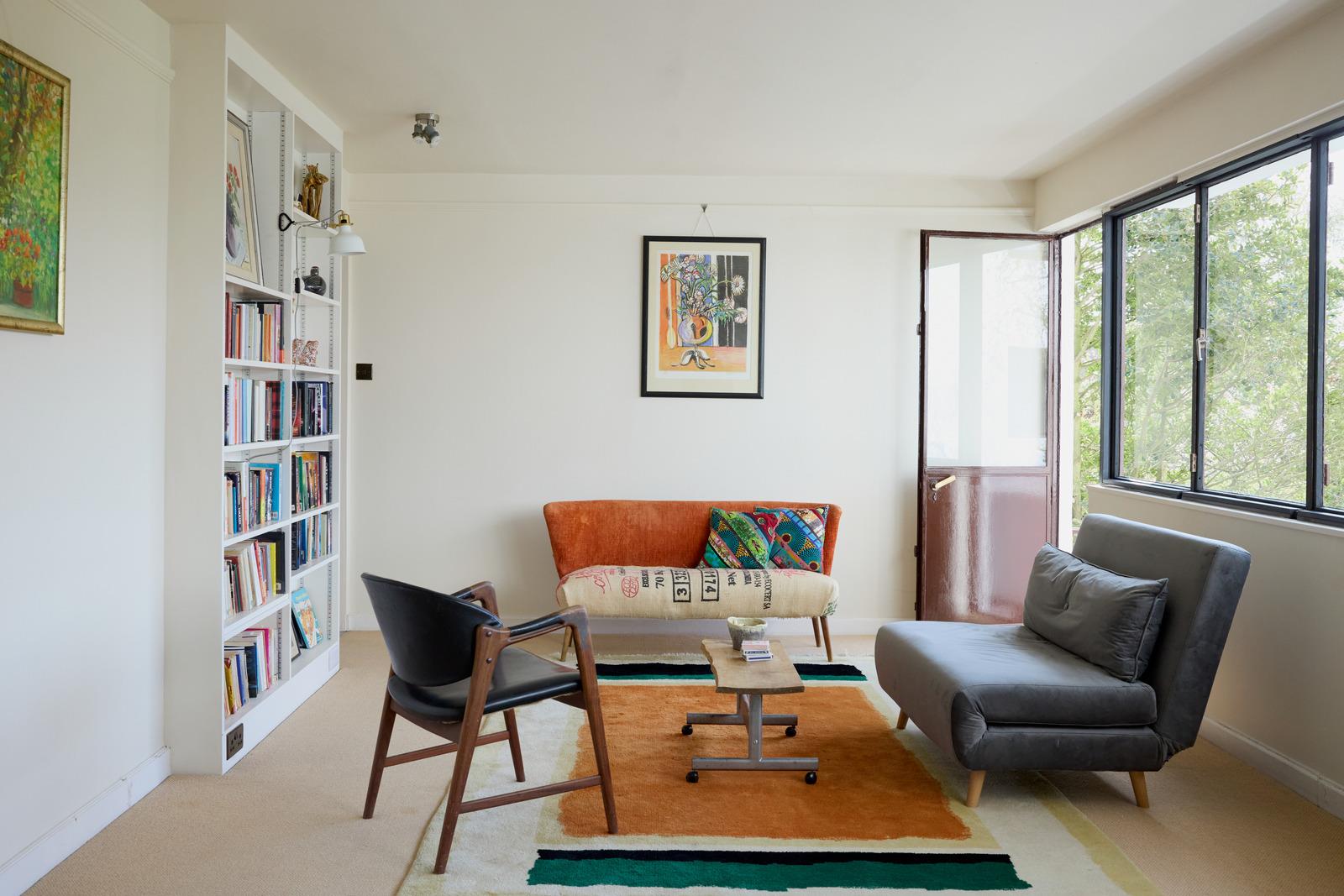
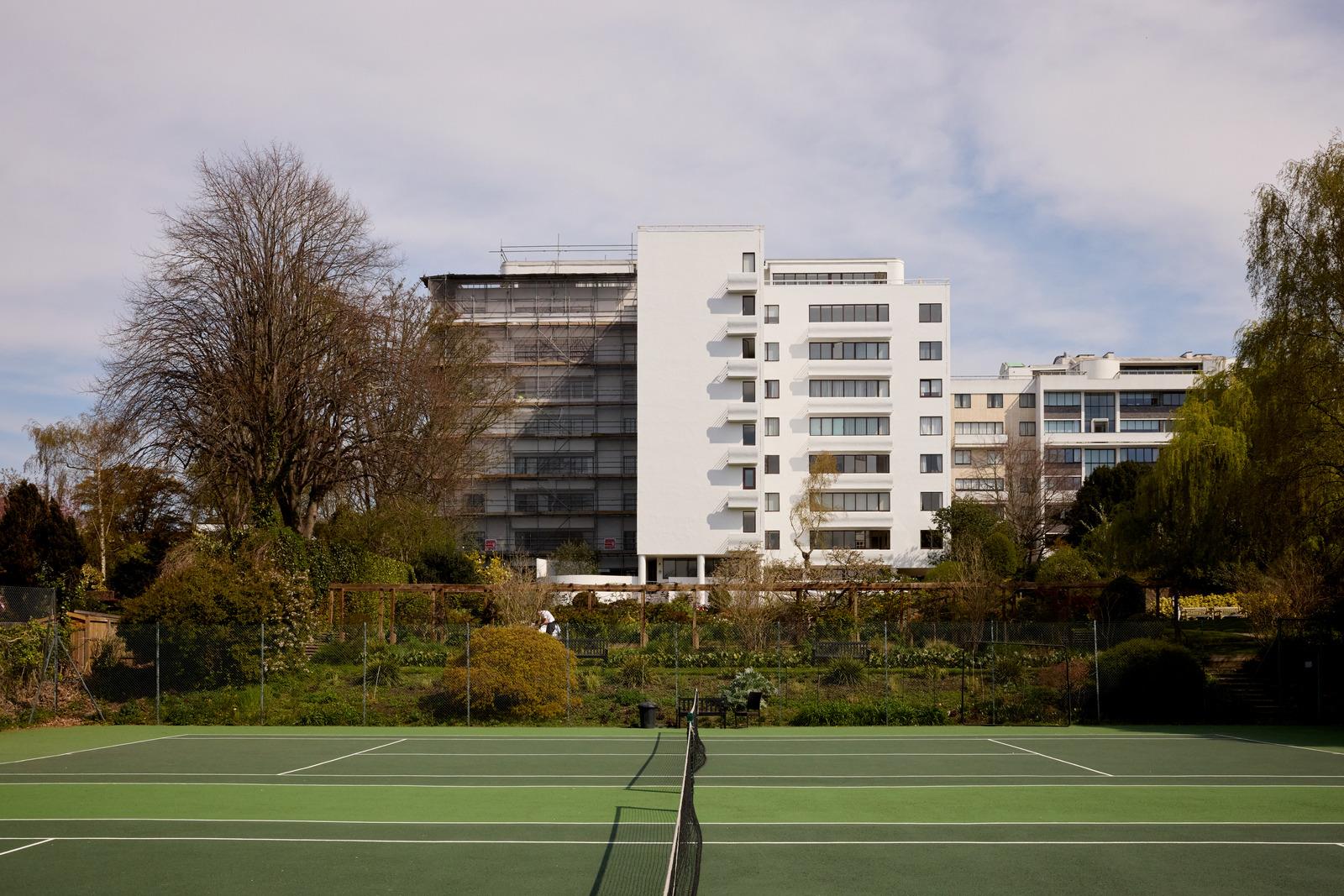
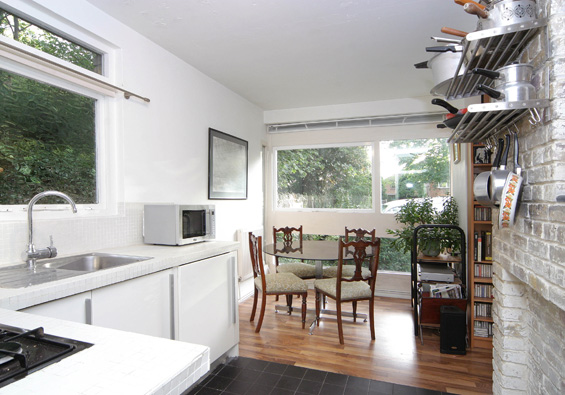
A ground-floor apartment in this celebrated 1950s development adjacent to Ham Common in the borough of Richmond-upon-Thames. Recently described by the Twentieth Century Society as “a benchmark against which other apartment blocks can be measured”, Langham House Close has recently been given Grade II* listed status in recognition of the exceptional design of the architects Stirling and Gowan and the manner in which the buildings have been maintained. The estate consists of the Georgian Langham House, once home of Admiral of the Fleet Lord Fisher, and three apartment blocks, set in attractive gardens.
Langham House Close II
SOLD
History

The three apartment blocks in Langham House Close were designed in 1955
by James Stirling (1926-1992) and James Gowan (1923-) for the Manousso
Group as a speculative development. They were built in 1957-58 on a
site that was formerly the back garden of a Georgian manor house. The
blocks were Grade II listed in 1998 and upgraded to Grade II* in 2006.
The
main block (primarily built of load-bearing London stock brick and
timber shuttered concrete) is three storeys in height with floor levels
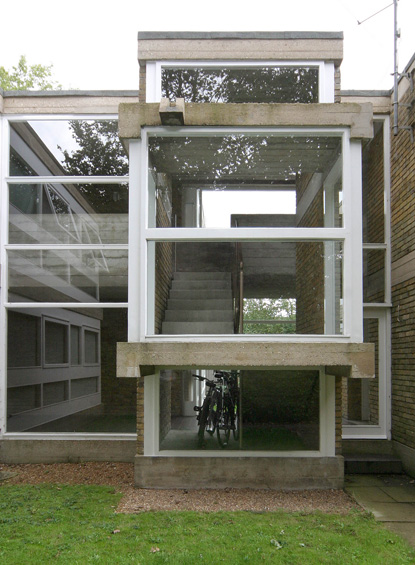
expressed externally by concrete bands. Each block has a largely glazed
entrance hall with dogleg stairs. Apartments in the main block feature
balconies drained by concrete gargoyles whose pattern derives from Le
Corbusier's Notre Dame du Haut, Ronchamp, and Maisons Jaoul. Stirling
wrote widely on Le Corbusier in the years preceding his work at Langham
House Close and was also known to be studying the work of Dutch
architects such as Theo Van Doesburg at the time. It is also thought
that the warehouse buildings of Stirling’s native Liverpool influenced
the design of these apartment blocks. According to English Heritage,
“this mix of vernacular and early modern movement influences with raw
Corbusian concrete (far better finished here than in Le Corbusier's
work) heralded a new style of architecture in Britain, which with its
acknowledgement of the massiveness of many buildings of the
nineteenth-century industrial revolution was a truly British
contribution to the international modernist canon of the late 1950s,
and gave an appropriate aesthetic to the title 'New Brutalism.'”
The
architecture of the Langham House Close flats is as impressive inside
as it is externally. The structural brick and concrete fireplaces are
particularly noteworthy, but the attention to detail and quality of
construction is to be admired throughout. “If we consider this building
within the context of other post-war apartment complexes,” wrote Eva
Branscome of the Twentieth Century Society in a recent article
concerning the listing of the buildings, “we can find none at all that
has dedicated such a thorough approach to the whole building both
inside and out.” Branscome goes on to praise the “rigorous approach” of
the design, describing it as “a truly exemplary ensemble” and “a
benchmark against which other apartment blocks can be measured”.
Catherine Croft, the director of the Twentieth Century Society, further
added that “the flats themselves are striking with ingenious floor
plans and geometric concrete fireplaces. They still look very modern
and are exciting spaces to live in.”
James Stirling was awarded
the Pritzker Architecture Prize in 1981, and the annual RIBA prize for
architecture is named in his honour.
A former resident of No. 27 was Mary Speare, widow of Royal Academician Ruskin Speare.
Interested?