Burnham Market
Sold
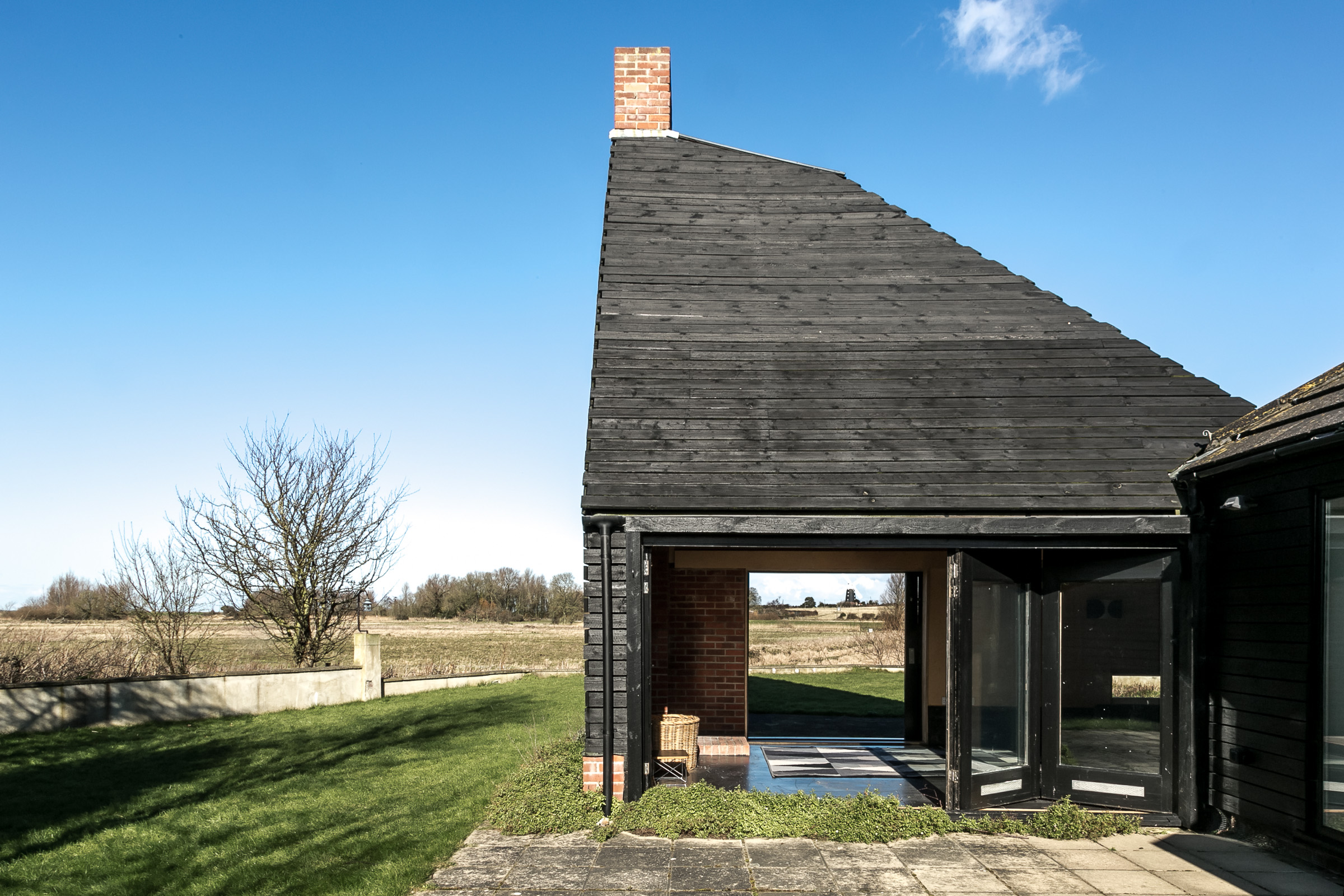


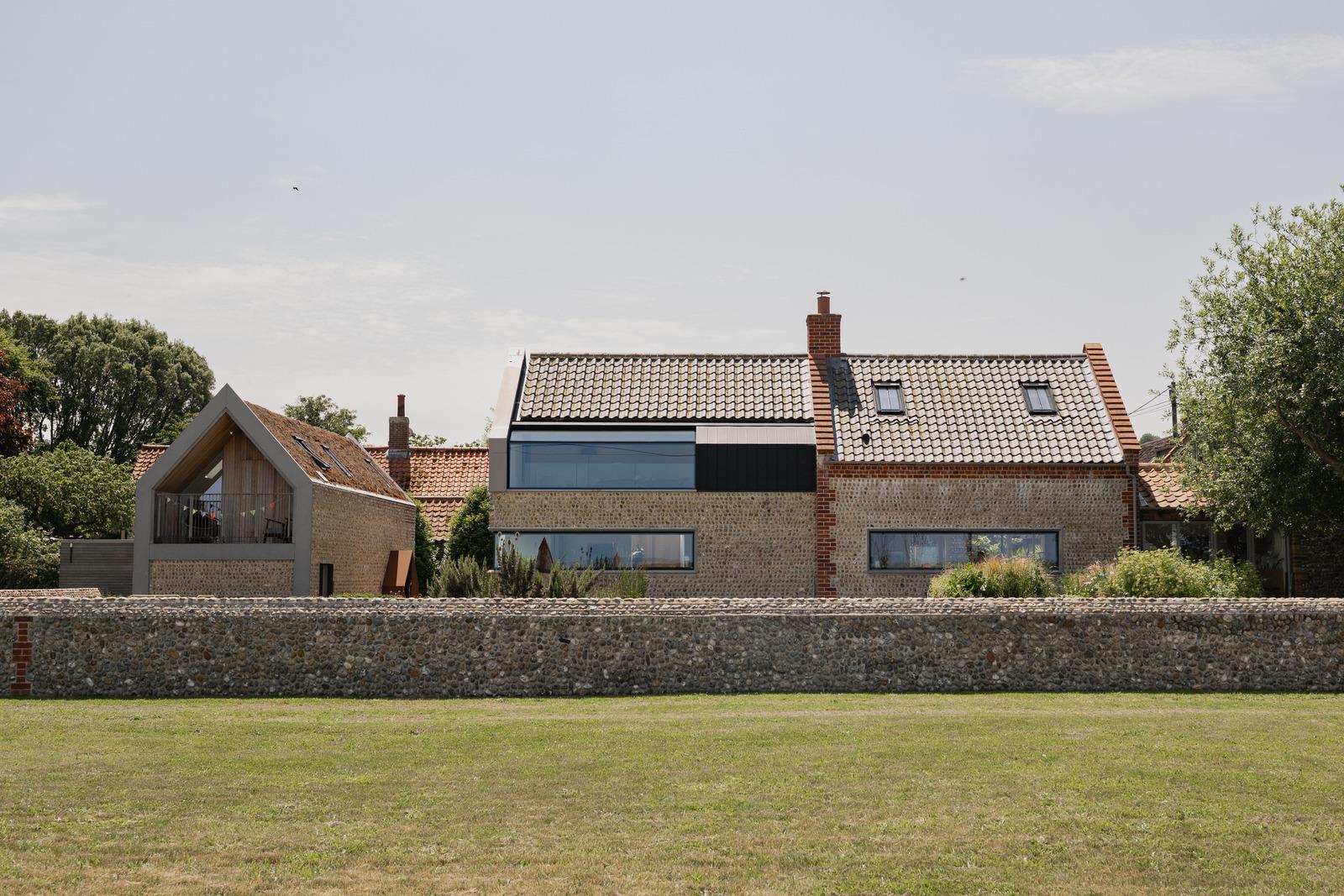
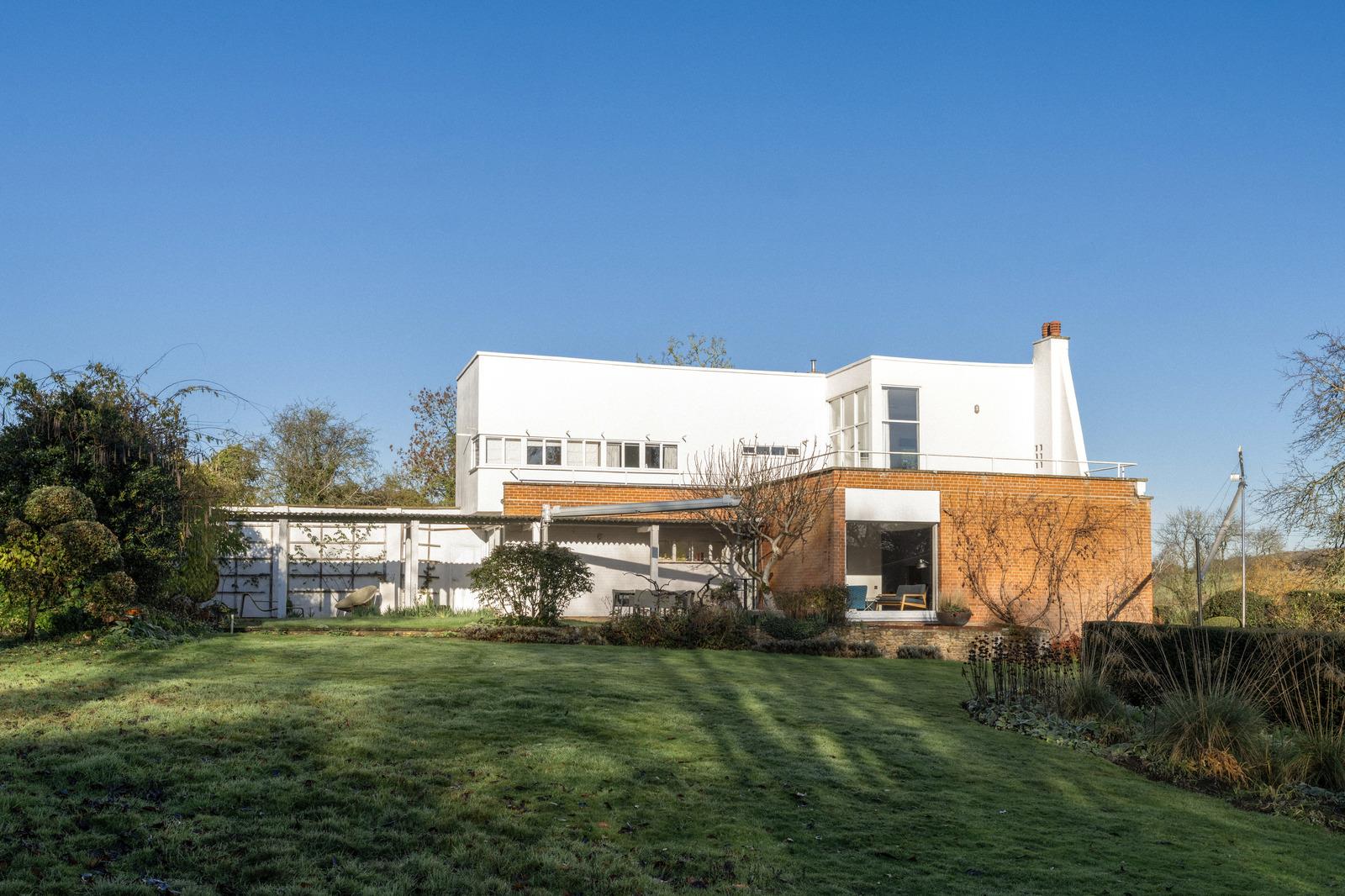
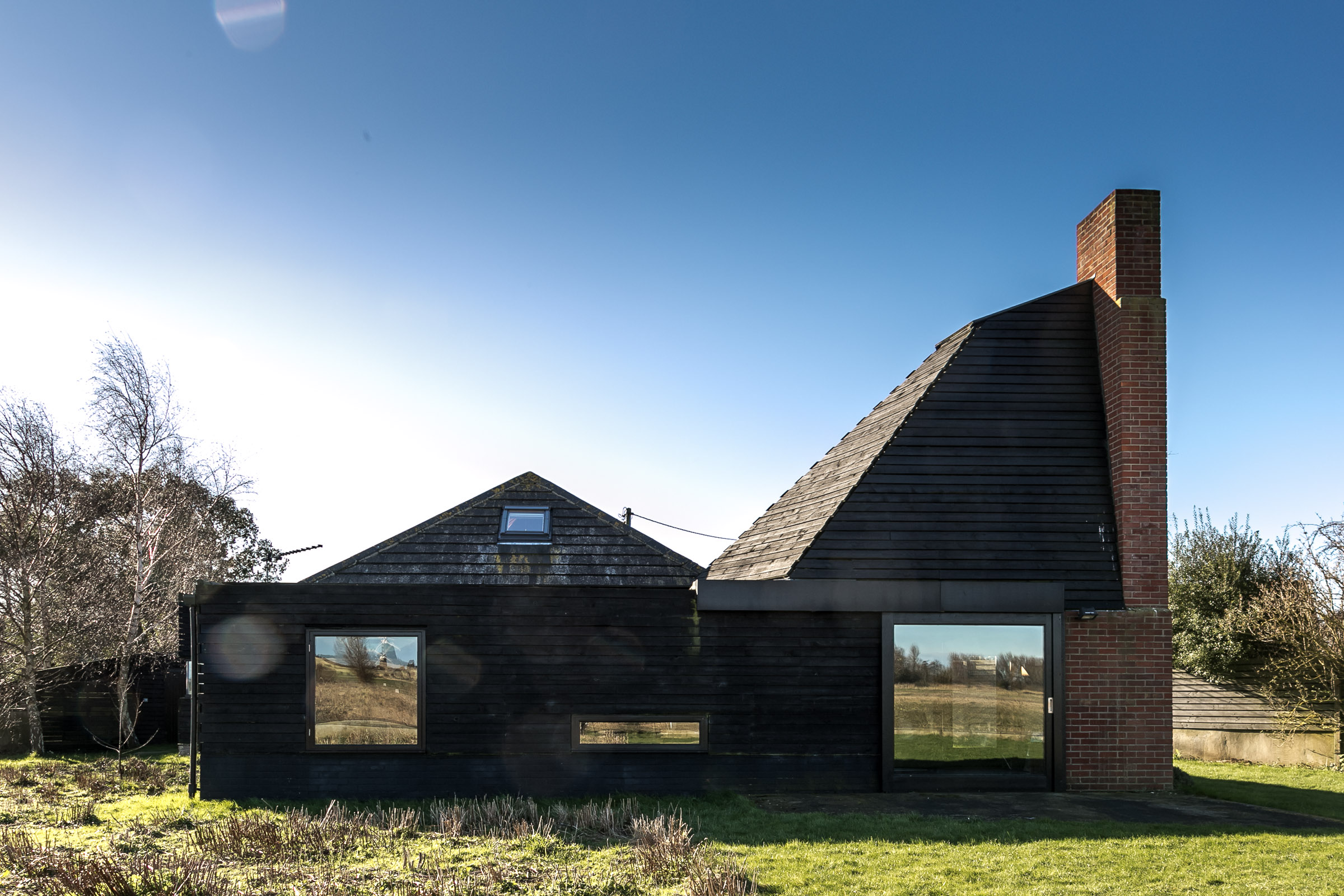
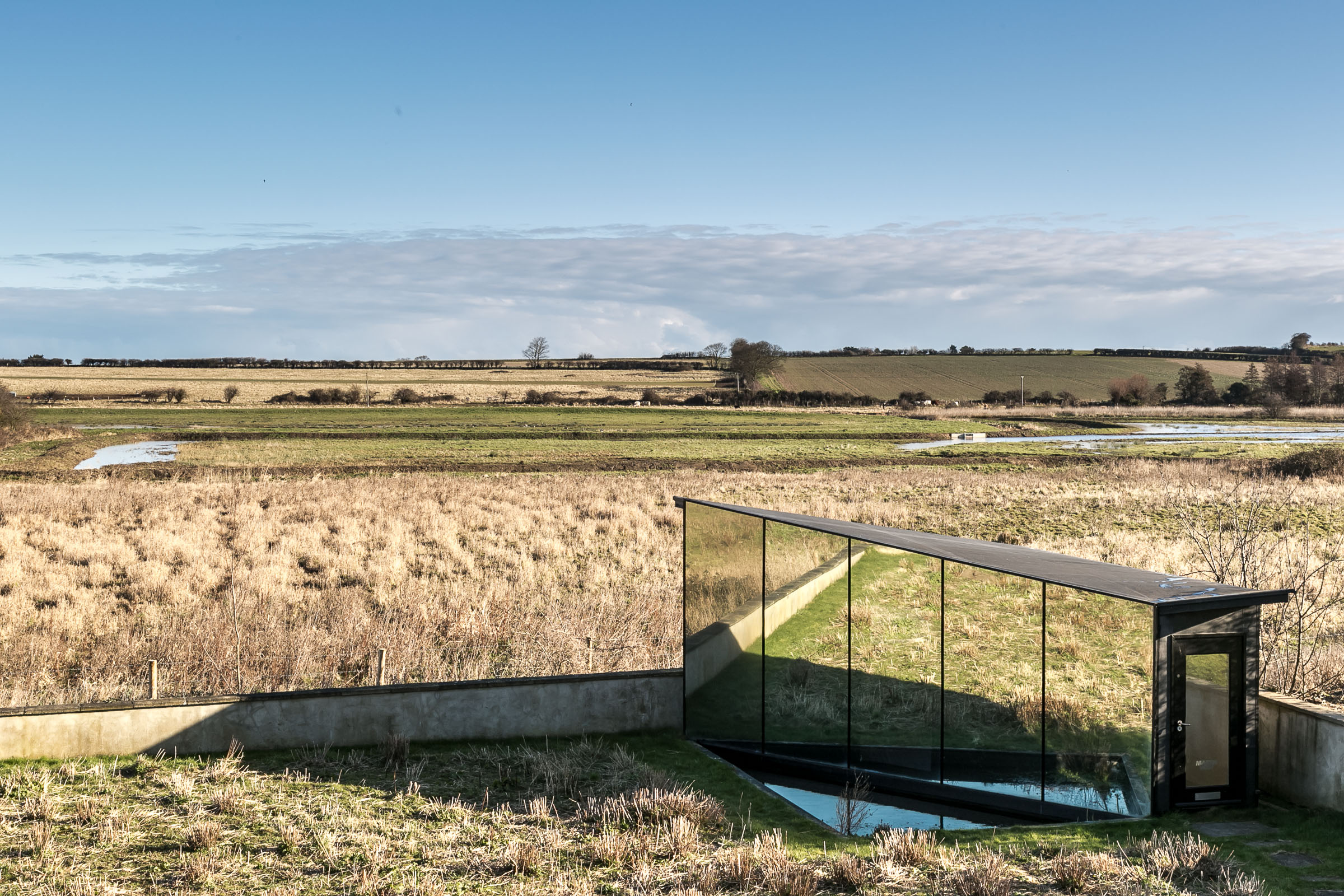
This three-bedroom house on the North Norfolk coast is a rare find – it combines a magnificent location in an Area of Outstanding Natural Beauty with modern architecture of the highest quality. Formerly a 1950s bungalow, the house was comprehensively remodelled and extended by Patrick and Claudia Lynch of Lynch Architects in 2002-03. Since then a striking mirrored studio building and car port, also designed by Lynch Architects, have been added.
Burnham Market
SOLD
History
Soon after the completion of this project, Kieran Long (now Senior Curator of Contemporary Architecture at the Victoria and Albert Museum) described the transformation of the house from unprepossessing bungalow to architectural masterpiece in Icon magazine:
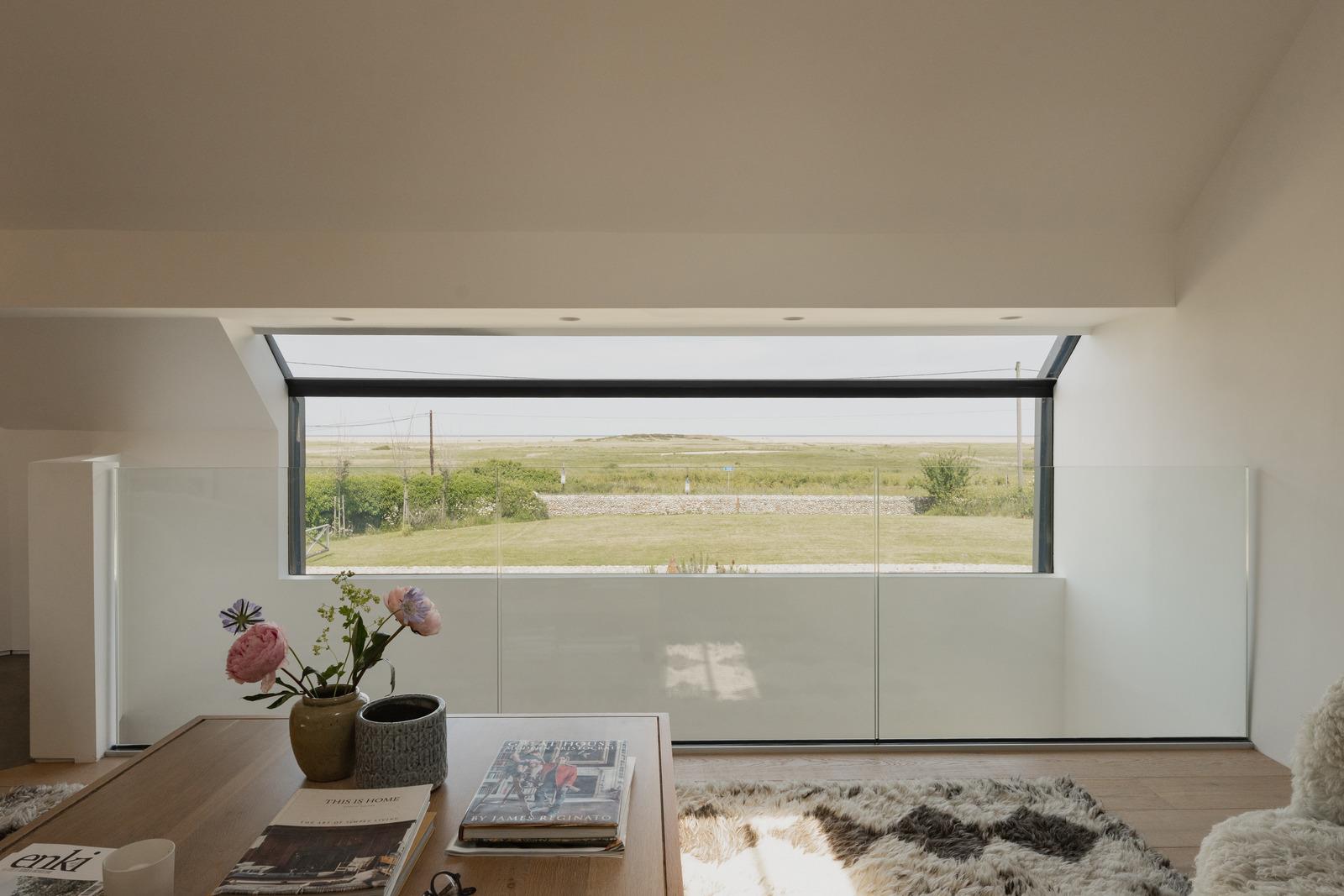
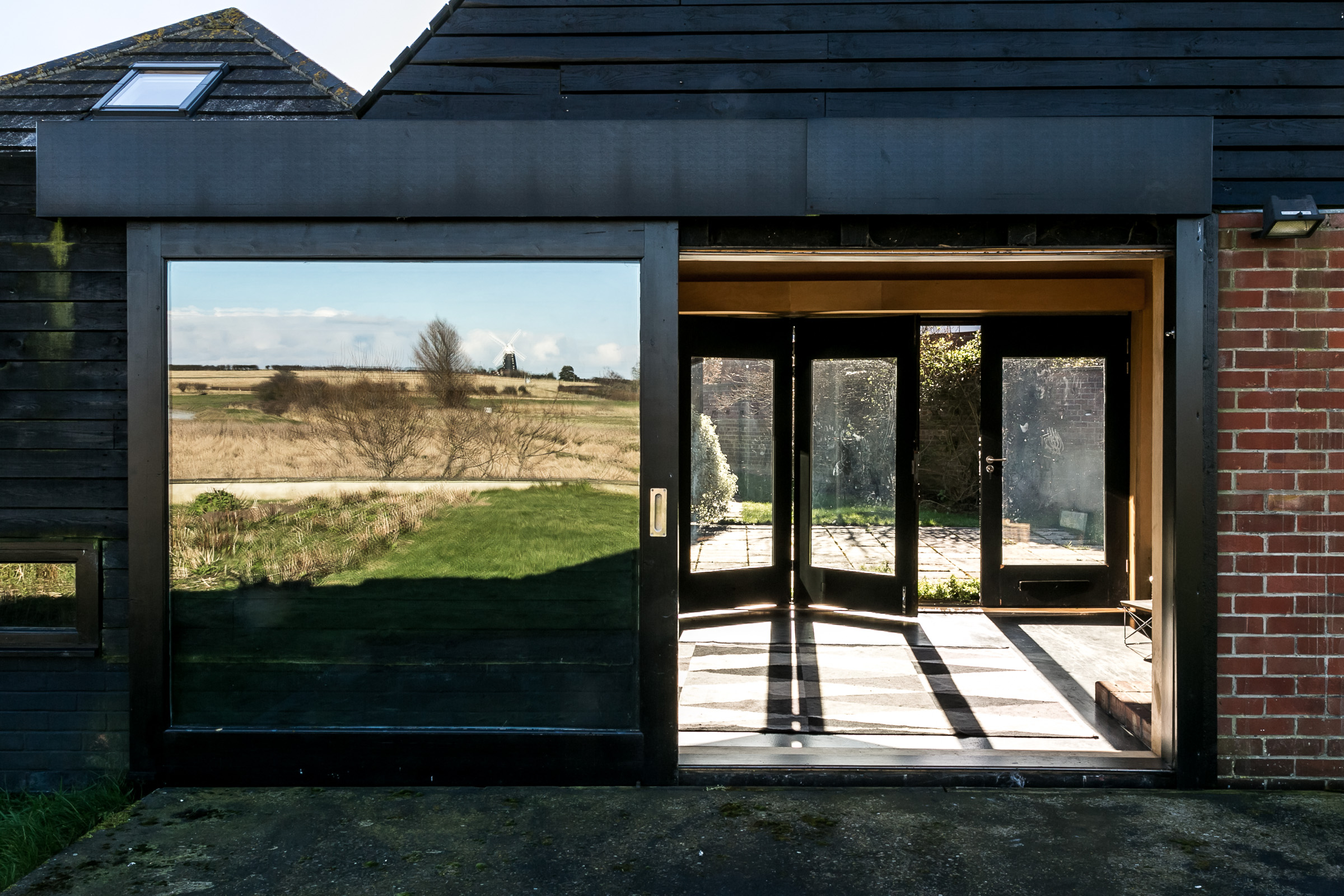
“The site was previously occupied by a banal and ugly bungalow, built by a developer from a pattern book of designs as part of a mini-estate. Despite its name, the old building on the site had never had a view of the marsh. The new house occupies the plot of the pre-existing building, recreating the form of the bungalow, but radically reworking the façades to provide larger openings and glass doors. The two timber elements, one housing a studio and general purpose room and the other forming the entrance lobby, provide the longed-for views of the adjoining water meadow.
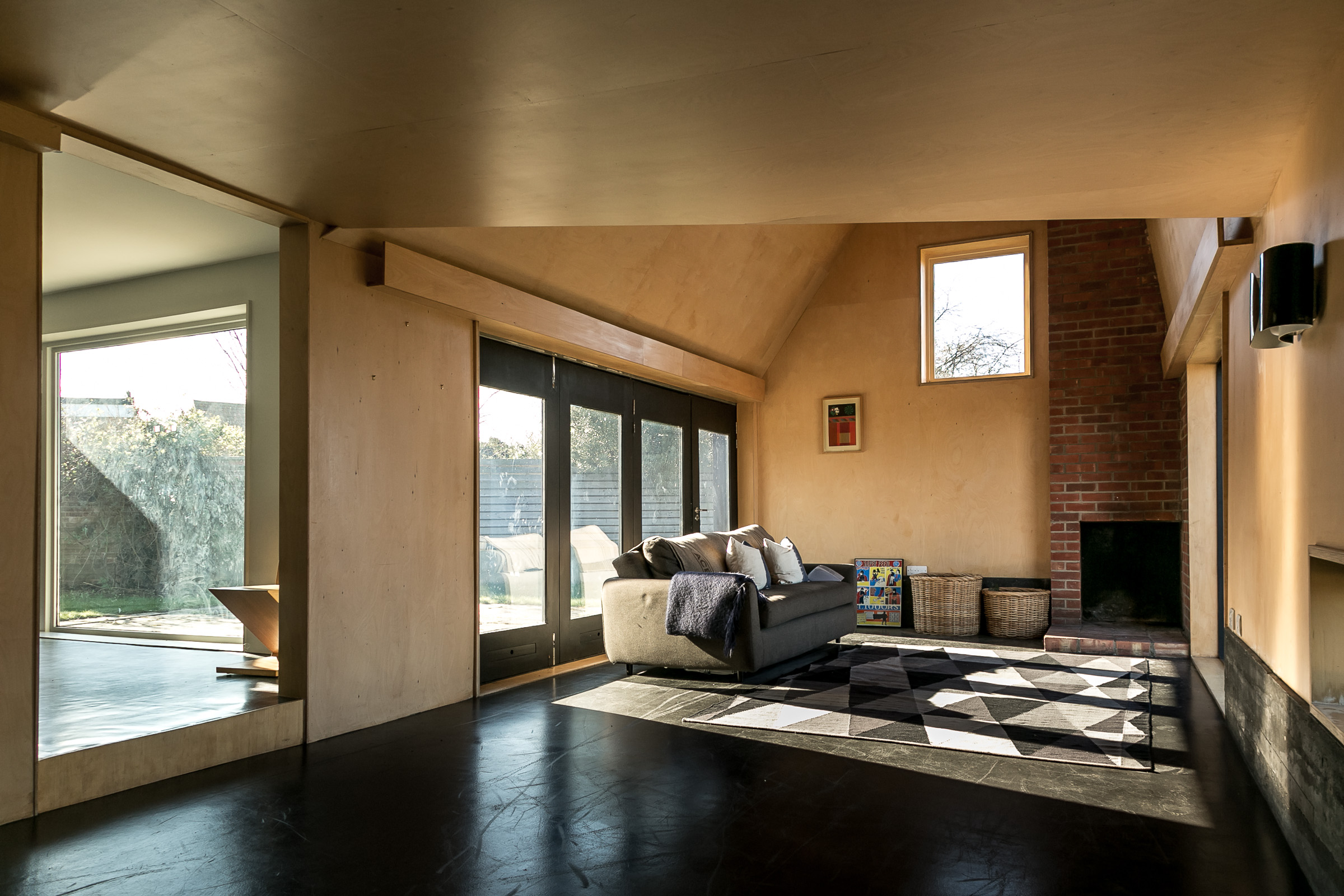
The main room, with its soaring, 7.5m-tall chimney, is disorienting in its scale, but the room inside is given narrative by the simple composition of window, chimney and hearth. The large window in the west-facing wall allows the evening light to enter the building. At certain times of the year, this light falls across the fireplace as the sun begins to set, uniting time, home and ritual in a play of natural light. The high roof, with its oculus at the top, provides a view of the stars at night, and acts as a sundial in the day.
The house is lined in plywood, a material that… is textural and diverse here. The low part of the studio room uses ply for the walls and the ceiling, and the small step down into this space from the existing house helps the thin material to have mass. The soffit seems to press downwards, creating an almost cave-like atmosphere. This is thrown into relief by the tall part of the room, with its oculus that completes a play of scales between the low space of the east end of the room, the strangely enlarged proportions of the west façade with its brick chimney, and the scale of the landscape and the huge skies in this part of Norfolk.
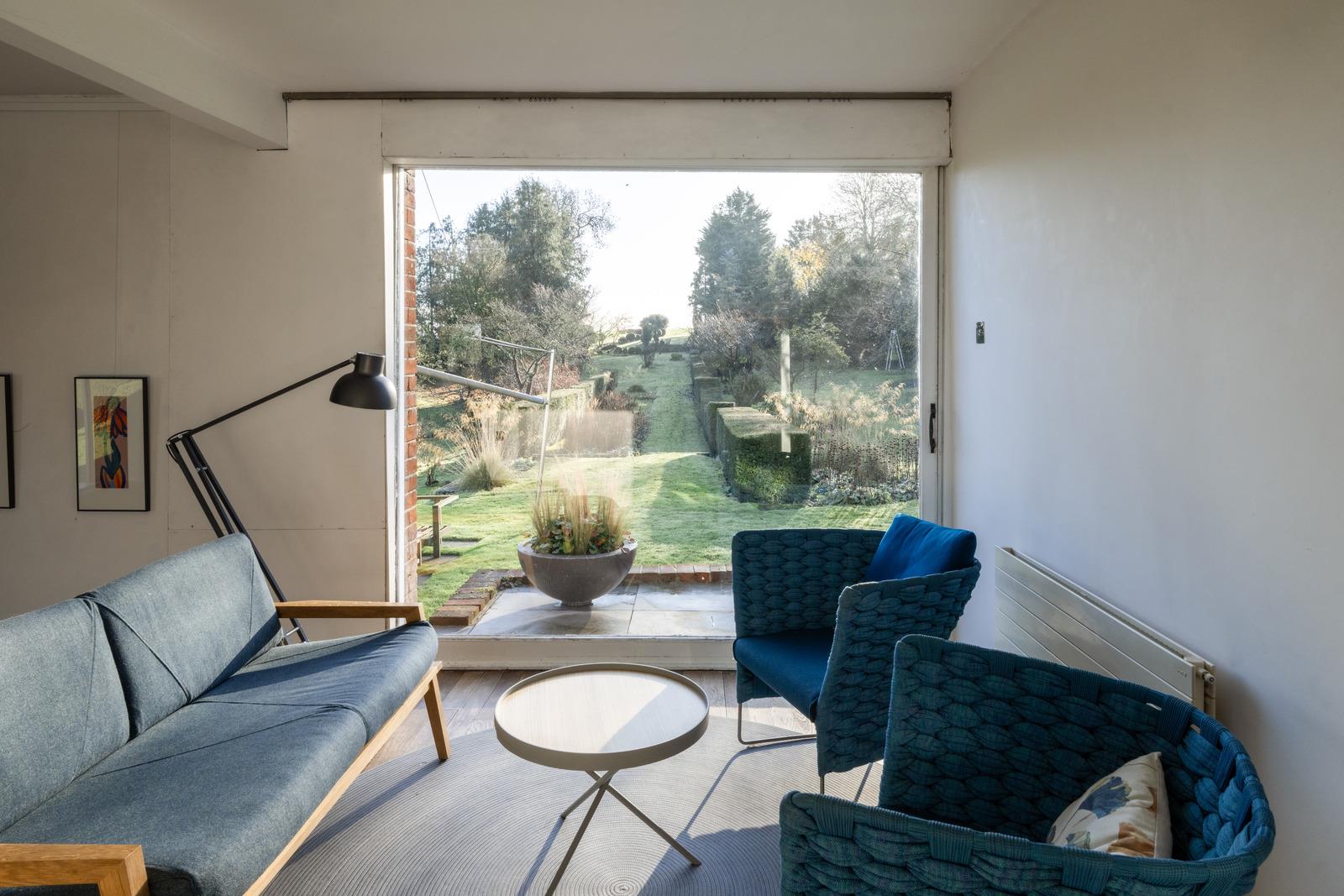
The floor of the house is concrete, with underfloor heating throughout, and this forms a ground datum on which the building sits. A concrete ramp rises up to the entrance, and at the back of the house a patio extends from the large glass door looking out across the marsh. The new wing with its distended roof shelters a more formal south-facing courtyard, domestic in proportion.”
Interested?