Plush
Sold


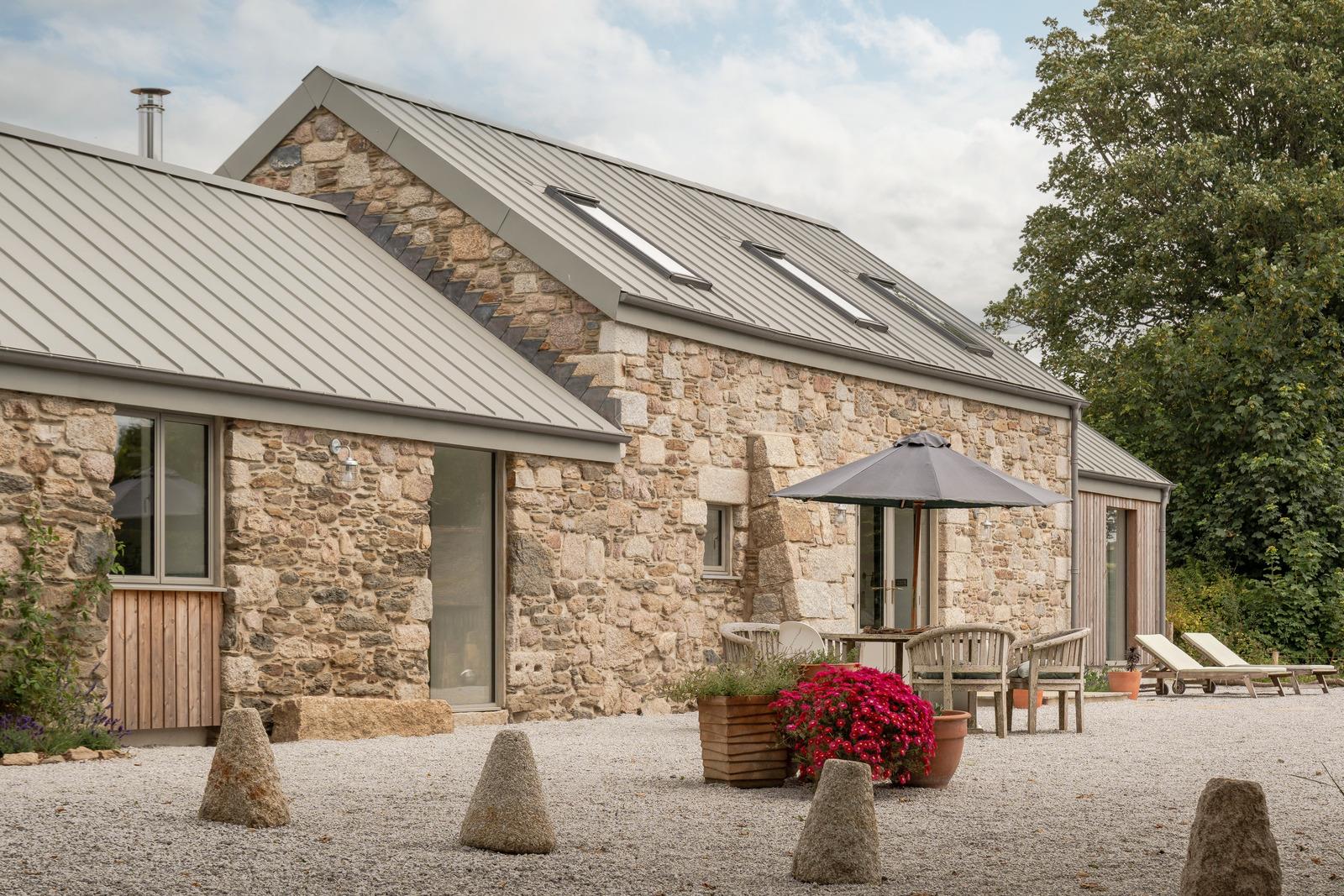
This wonderful conversion of a Grade II listed 19th century barn was carried out by the conservation architect John Browning of Regeneration Partnership in 2000 for his own family use. It can be found in the picturesque Dorset village of Plush, in a fold of the hills between the historic towns of Dorchester and Sherborne.
Plush
SOLD


History
The below is a text written about the house by the architect, John Browning:
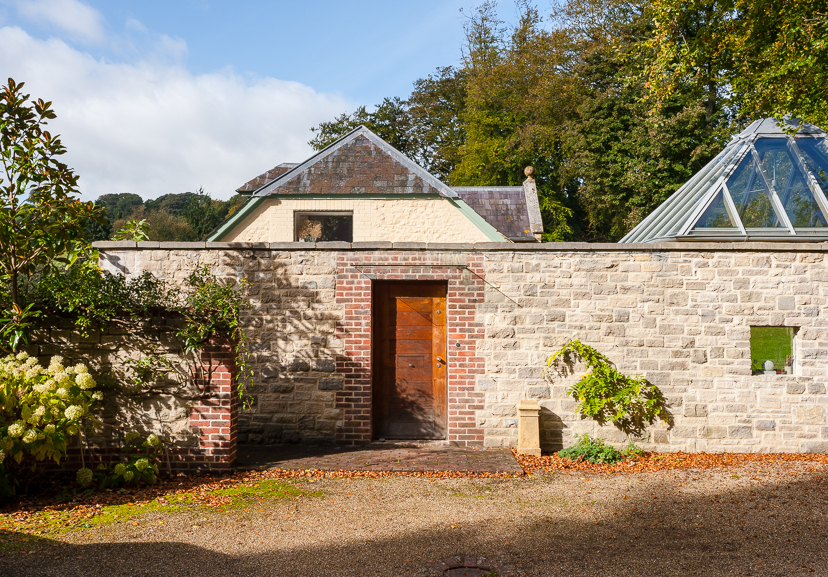
"The Barn is situated in the folds of the Dorset landscape, an enclave of high beech and lime trees at the head of the Plush valley. Built in 1876 and used as racing stables and coach-house for Plush Manor, the building had a grander North face towards the Manor as a feature of its garden landscape, while the Southern face was simple and utilitarian, although with the benefit of sunlight and view. In coursed random stone and flint with brick dressings around openings and with dressed stone copings and ball finials, the building was partly converted for the widow of the then owner of the Manor in the early 1970s as a simple three-bedroomed house. By 2000, the conversion was dated and tired, with upvc windows, the half-acre garden showing signs of distress and a large timber garage erected at the entrance with a fence across the site all but blocking the wider view on arrival.
The Barn has seen a complete remodelling to achieve a series of interlinked spaces where daylight is ever-present and the modern interior a background for contemporary art. The garden, designed by Nick Williams-Ellis, reflects the levels, axes, circular forms and the architecture, set up by the alignment of the house and outbuildings and responds to the sun moving around during the course of the day. The pool area is set at a lower level to contain the heat of the afternoon and the lower garden reflects this with Mediterranean planting in contrast to the Northern garden defined by the woodland.
The major conversion scheme to bring it up to the standards of the day involved the remodelling of the earlier layout, extension of the entrance front to define better the public and private open space, removal of the previous garage building and its replacement with a much larger and more modern structure along the South boundary wall and the construction of a new stone wall to achieve a level entrance, create a step in the ground and open up the long views. The entrance forecourt now provides parking for several cars, access to the zinc roofed garage/workshop through four sliding doors, spaces for oil storage and refuse bins, a new front door and access to gardens on either side of the house. The North garden, bounded by woodland, was raised to a shallower gradient while the South garden, enclosed by stone/flint walls and hedges, was completely levelled and stepped down in terraces to provide separate spaces of different character with new planting layouts, dividing hedges and a large deck with lap swimming pool. A long brick-paved terrace in front of the house offers access in several places. A second vehicle gate at the lower end of the garden is reached from a private lane.
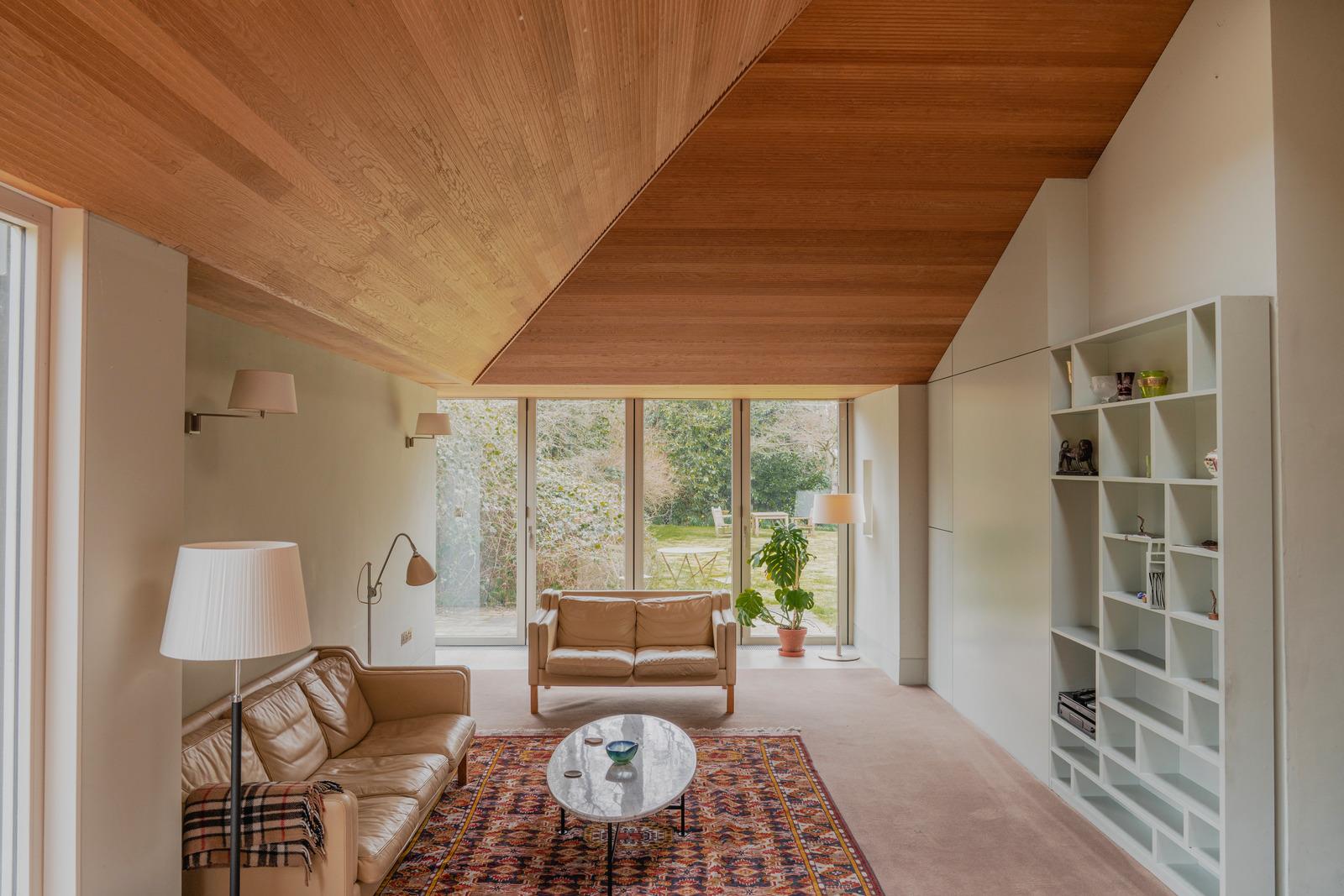
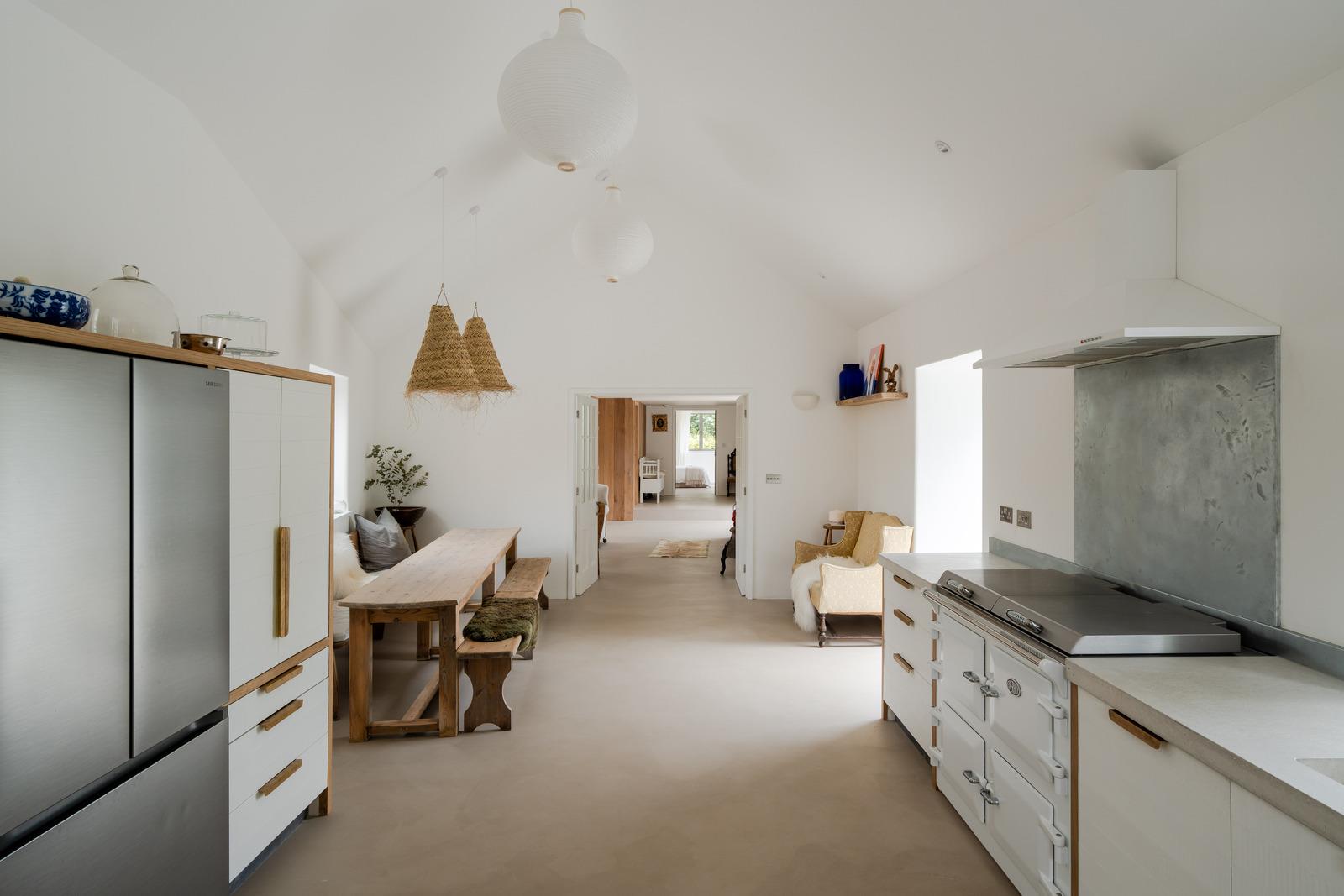
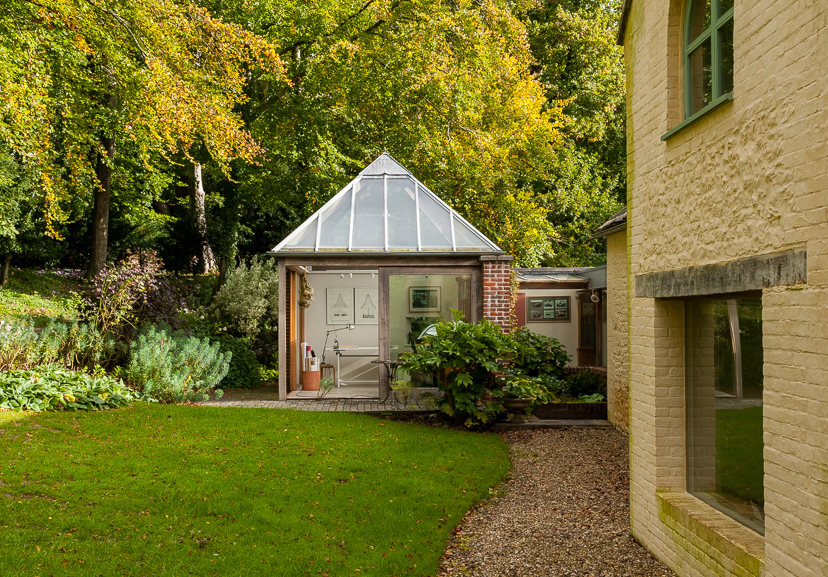
The interior was designed as a linear progression, avoiding the use of separating doors unless absolutely necessary, heated by radiators in the older part and by underfloor heating in the converted or new sections. All but three of the external windows and doors have been replaced with new, double-glazed hardwood joinery and d-line stainless ironmongery. Entrance to the house is into a light-filled hall where large areas of glass surround a small internal courtyard, a link into the conservatory studio and the cloakroom. Stone steps lead down to a route along the house beside the kitchen, past the snug with its own log-burner, stairs to the upper part, a large dining room with french doors, through to the former derelict coach-house. Now a large, double-height living room with a new open fireplace structure carrying the gallery office and children's play /sleep deck above is reached by a secret stair from one end. Two sets of french doors lead out on to the terrace while another wide, glazed door gives access beyond the fireplace to the North garden; a guest suite occupies the earlier tack room with room and its own South access door to the terrace.
Upstairs, the East end contains the main double bedroom with balcony deck over the garden, a second double bedroom with en-suite shower room, a single bedroom and the main bathroom."
Interested?