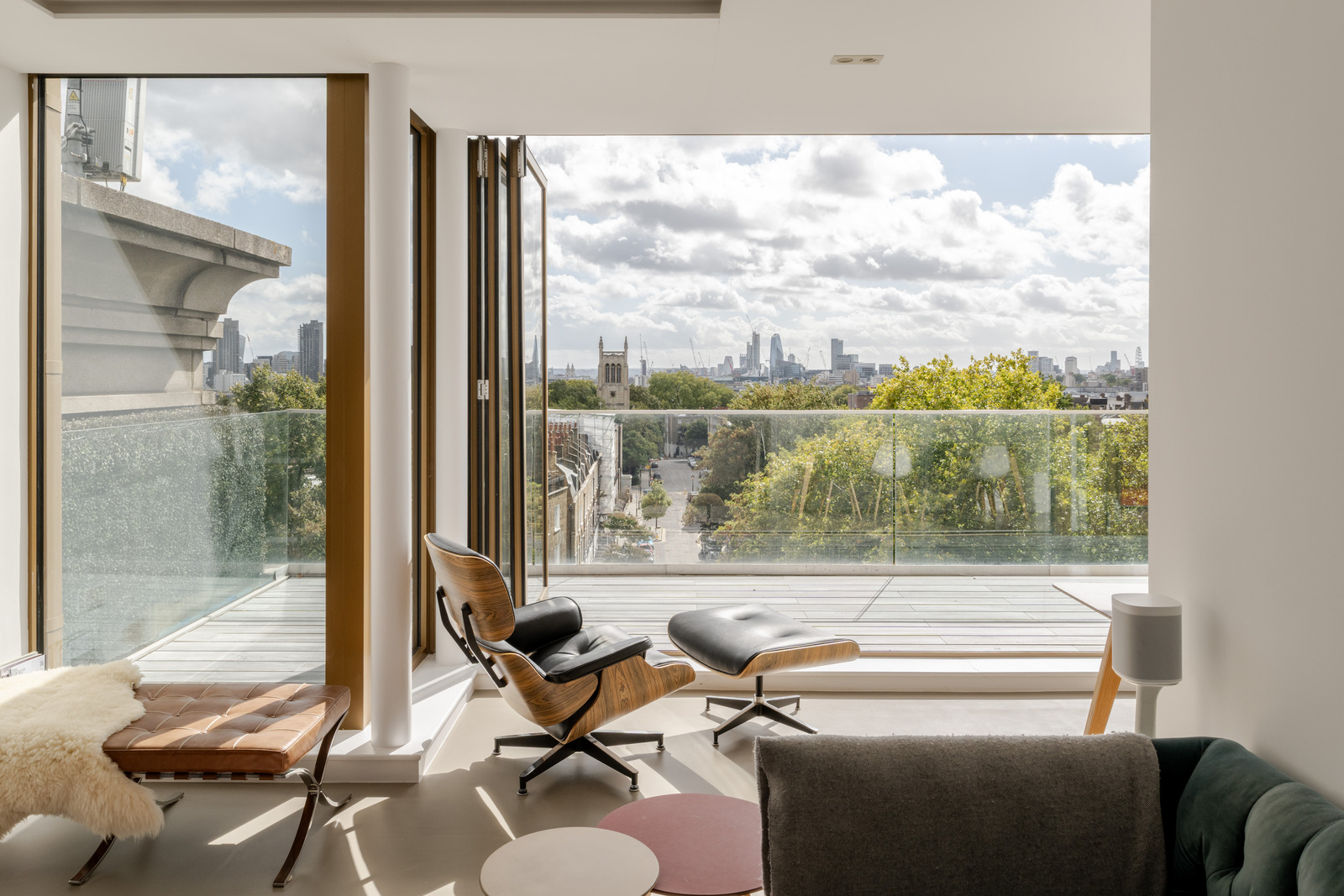
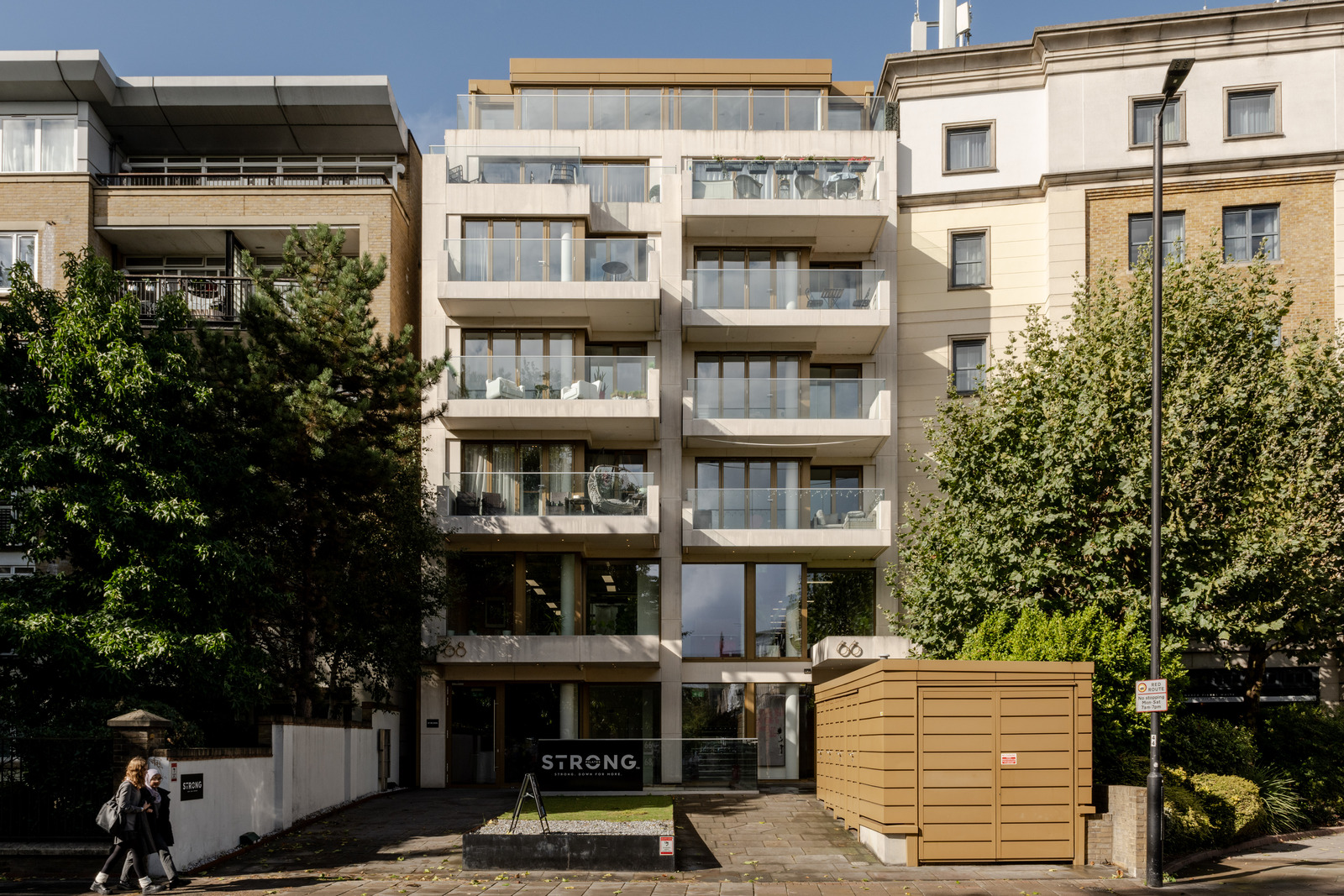
Sold
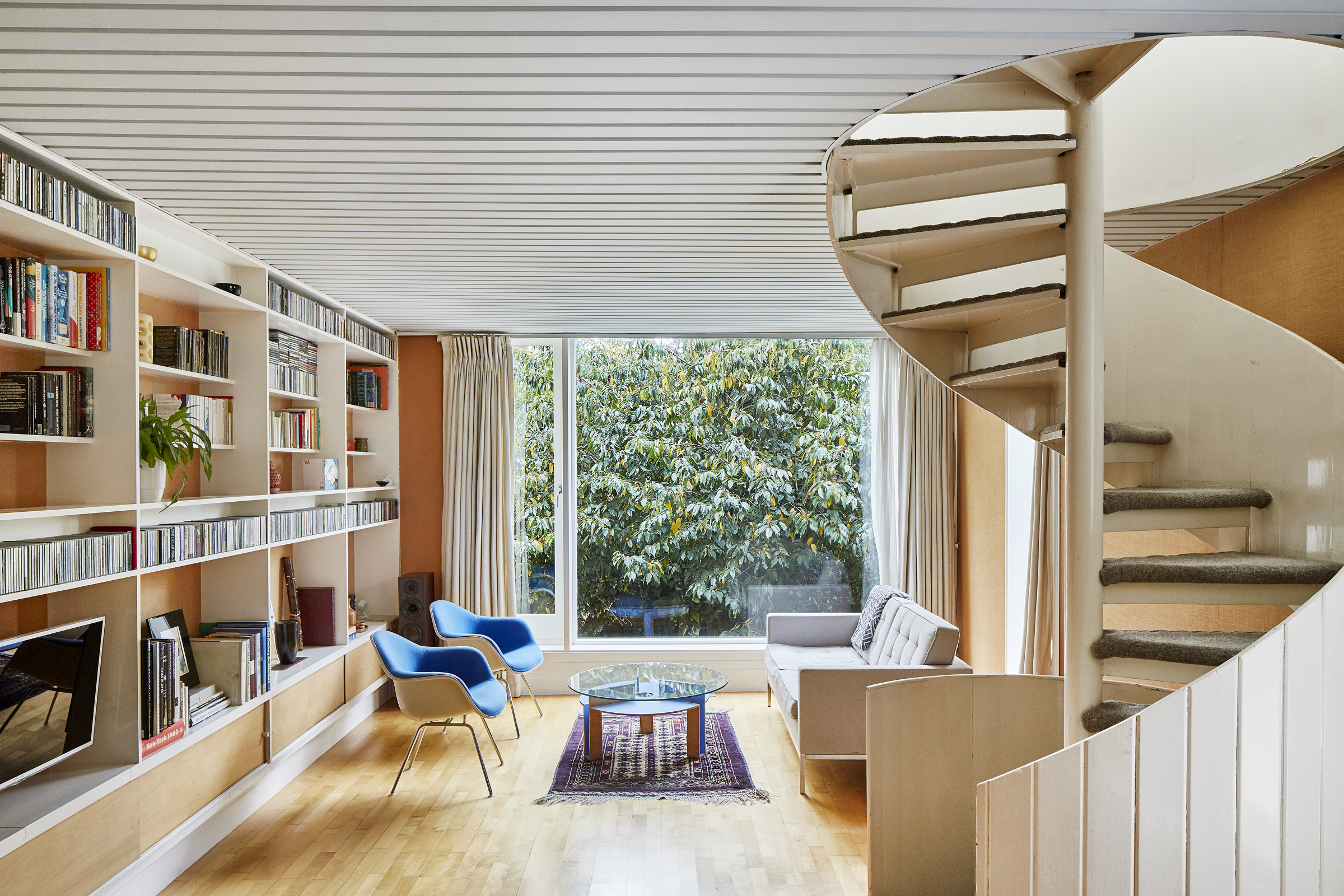


"In this, John Winter's first work designed for his own use, it is possible to see how he became one of British Modernism's greatest practitioners"
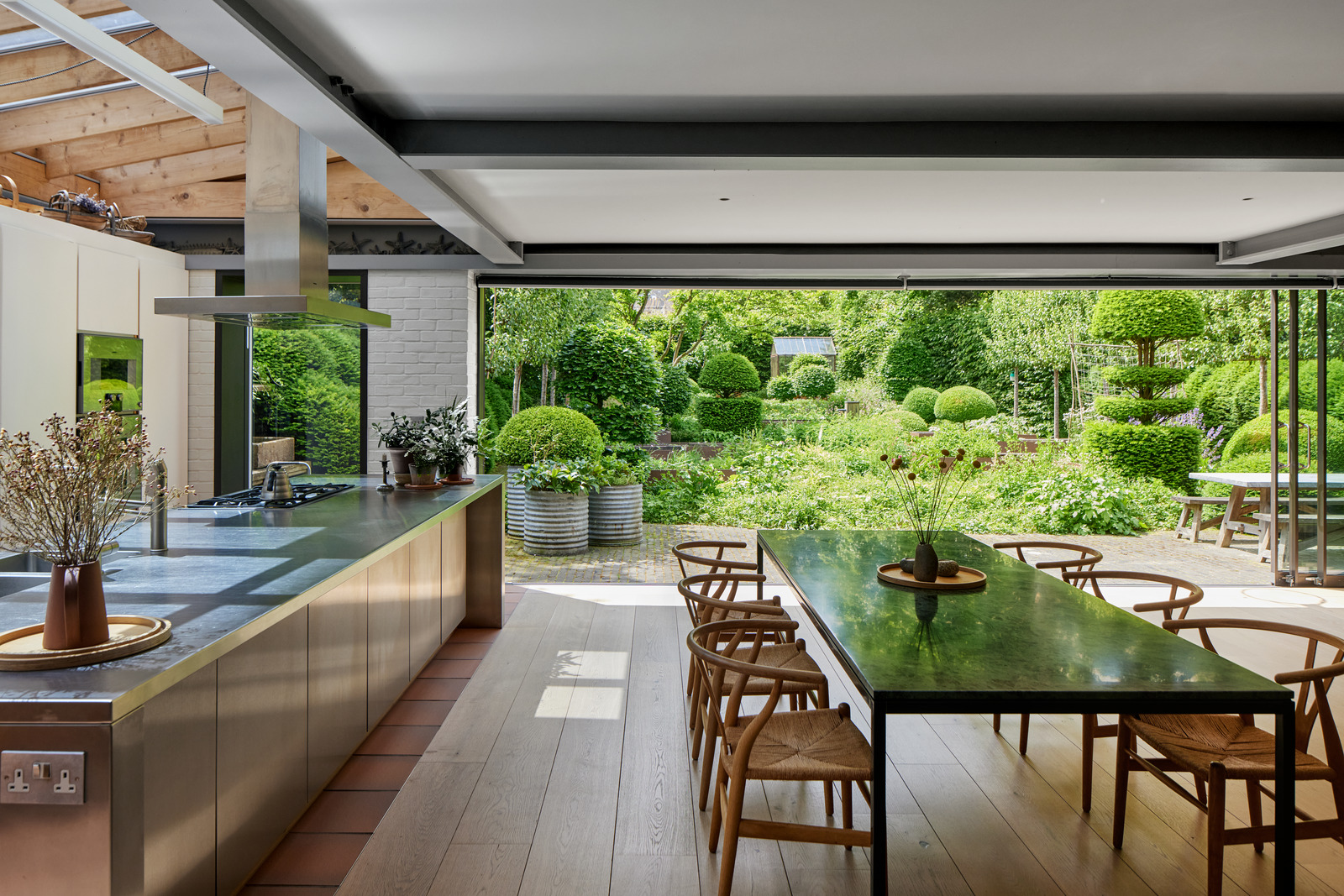
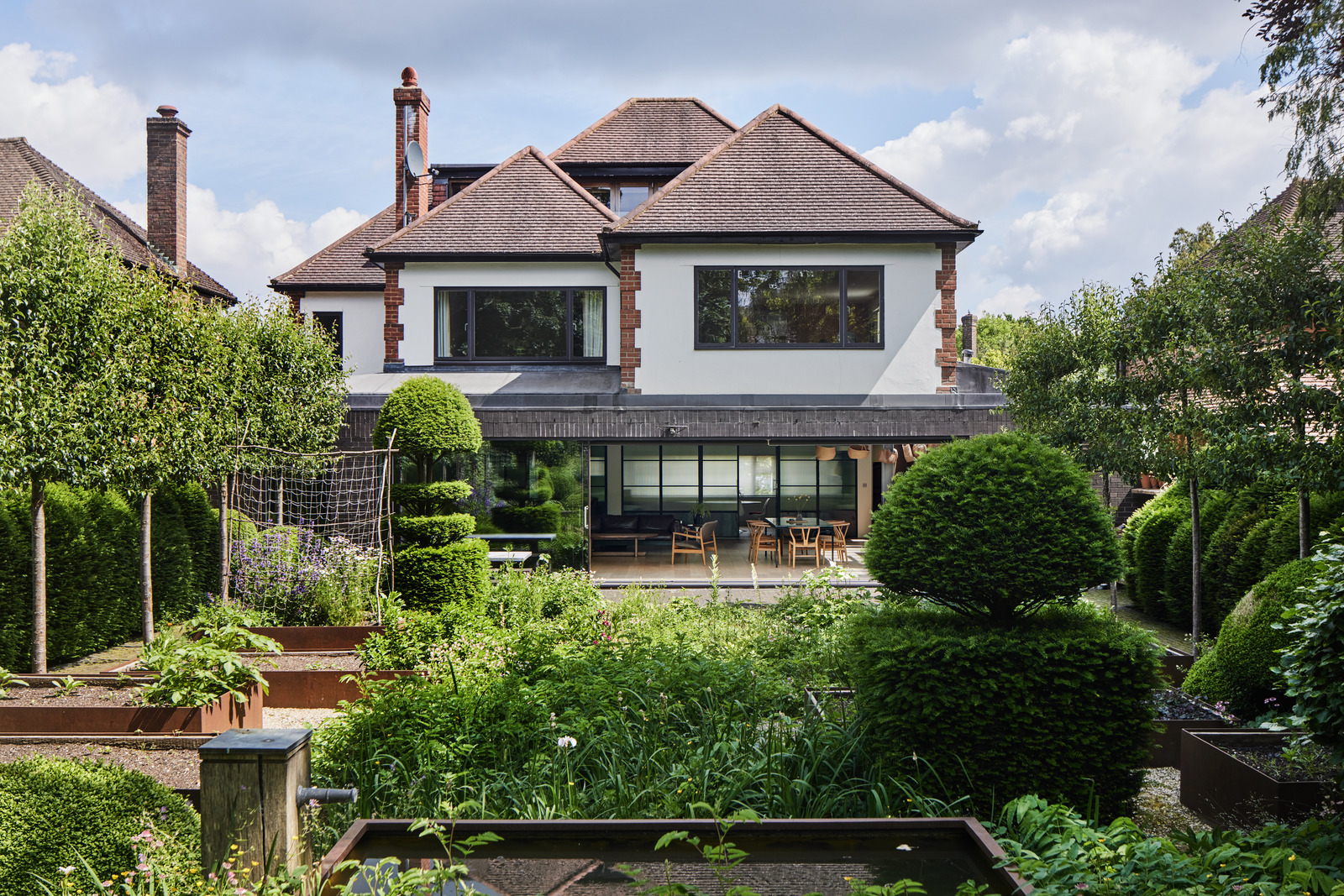
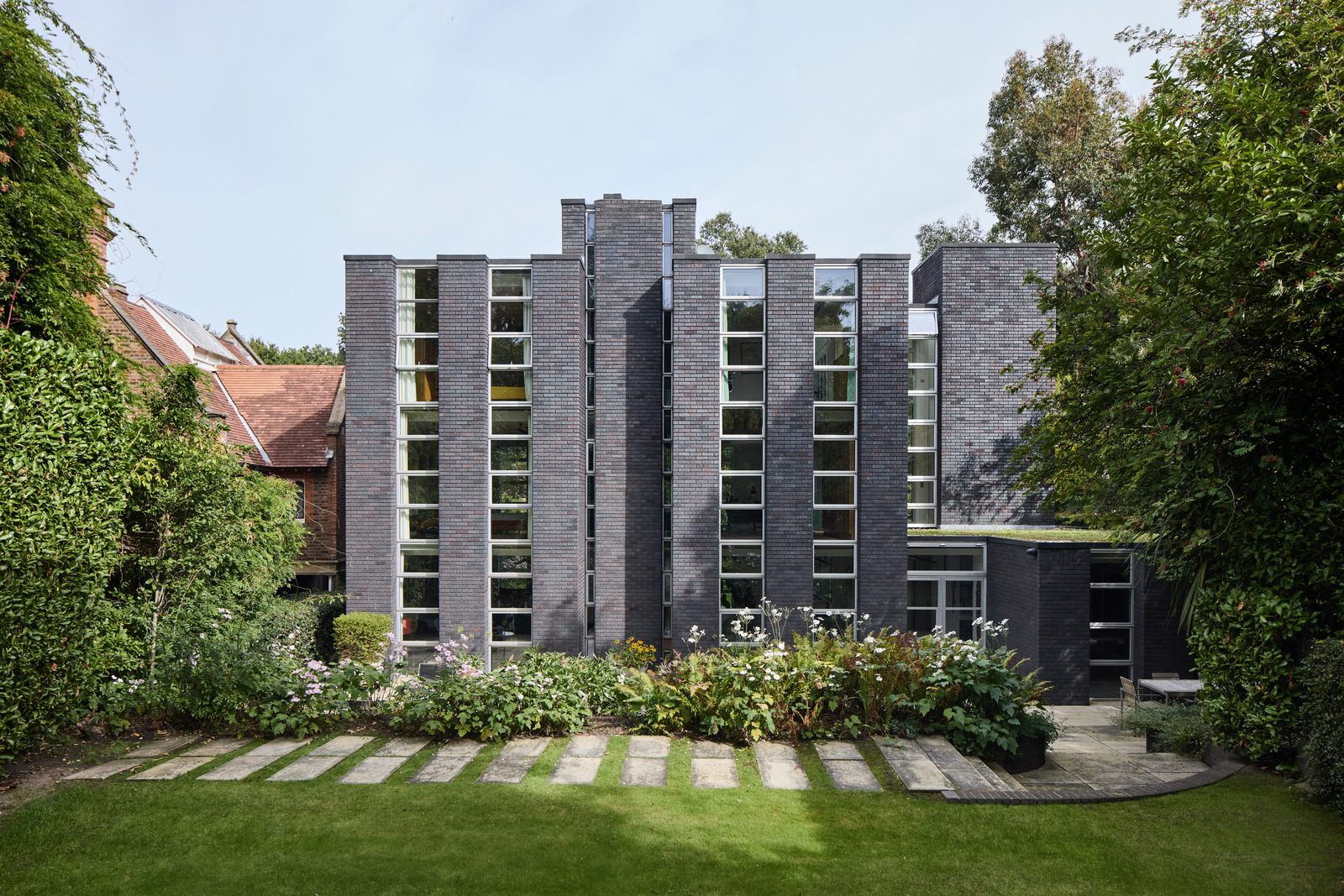
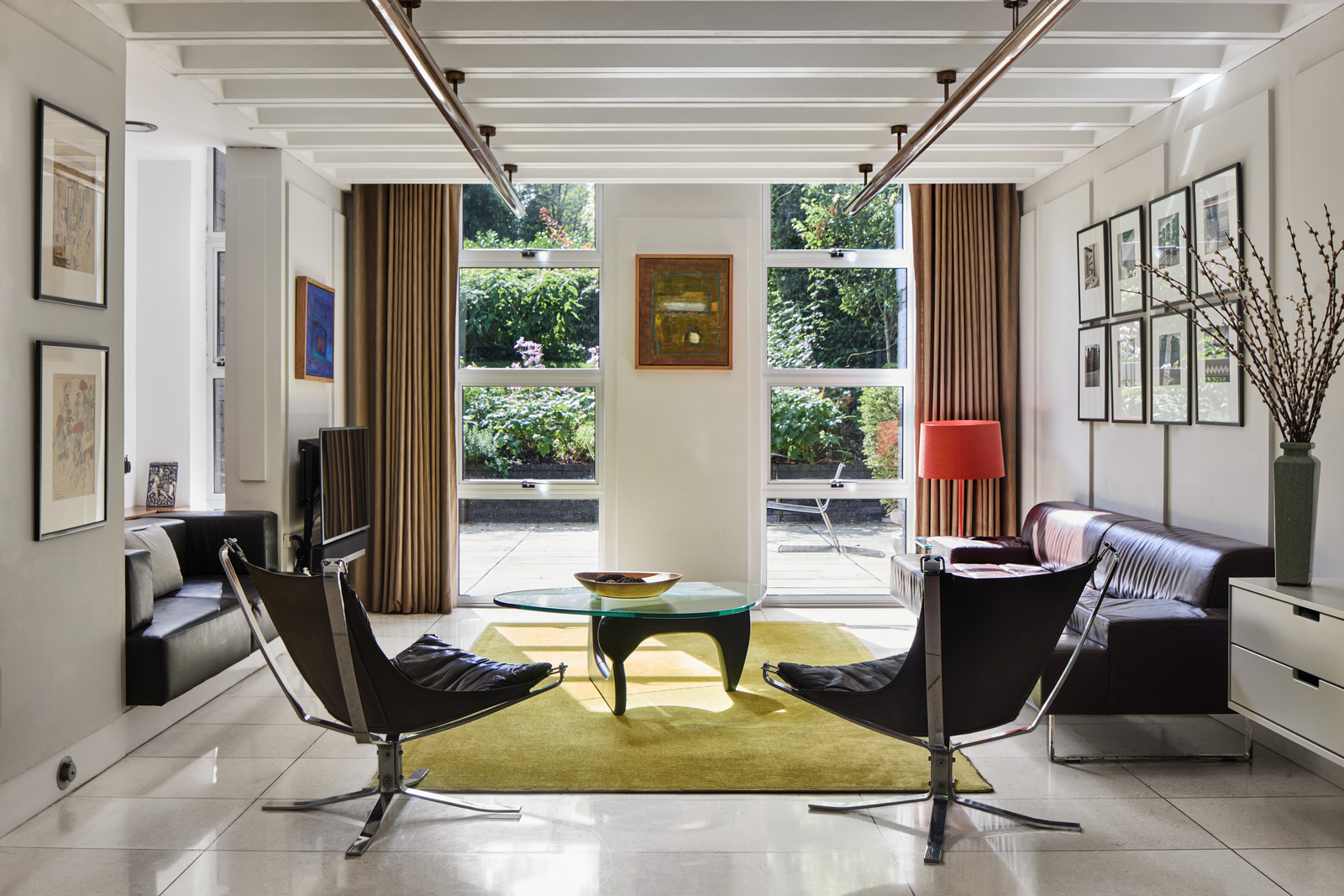
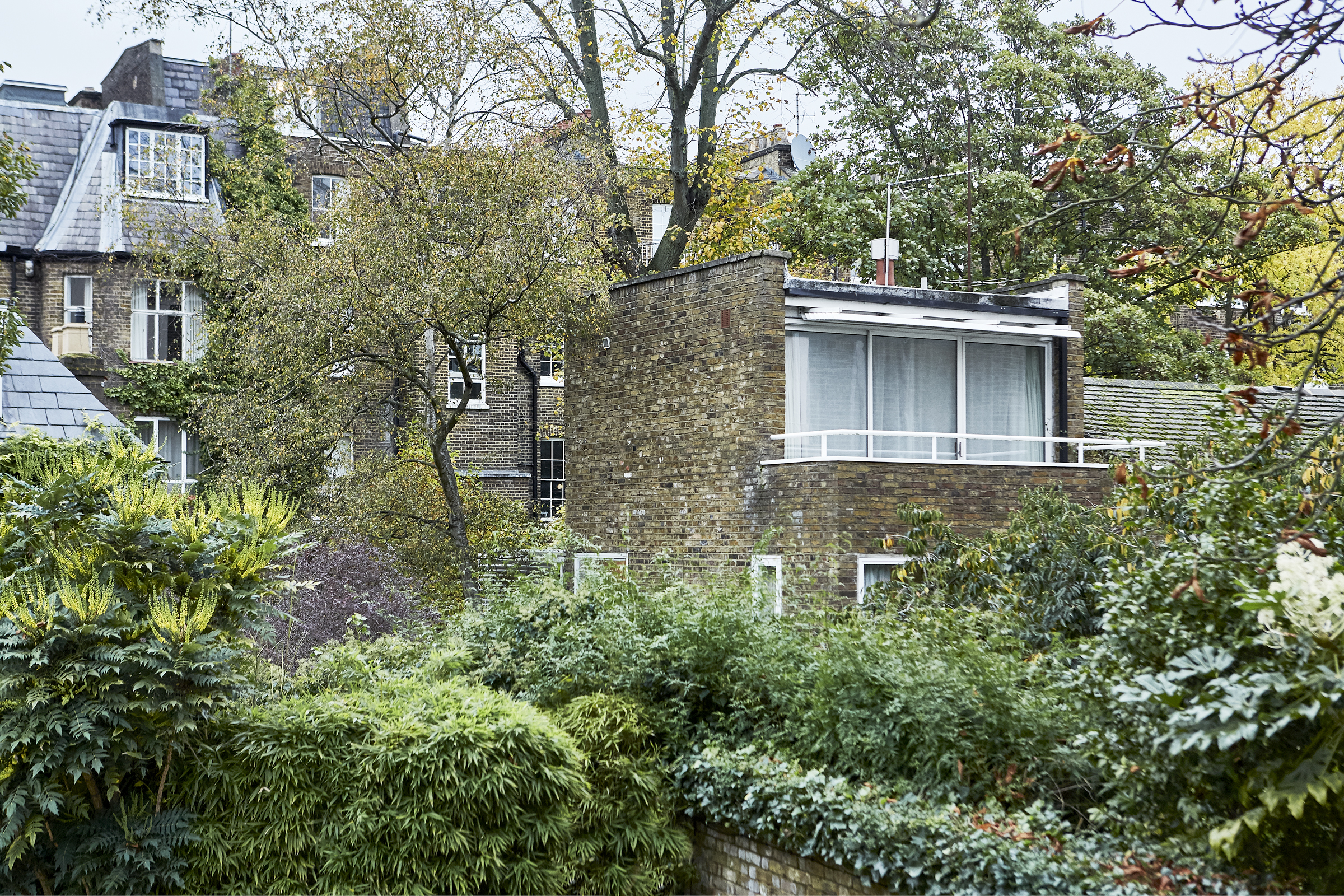
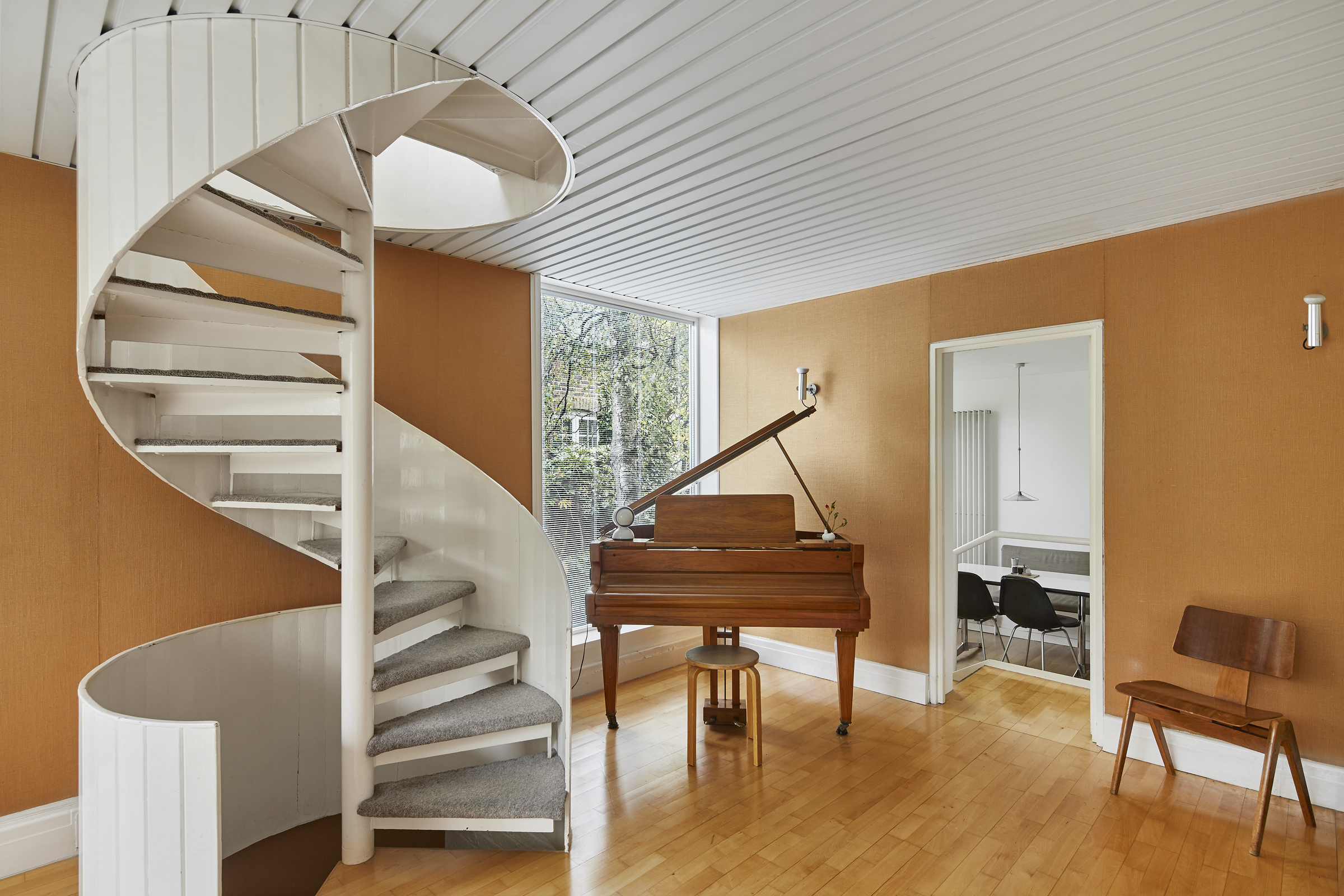
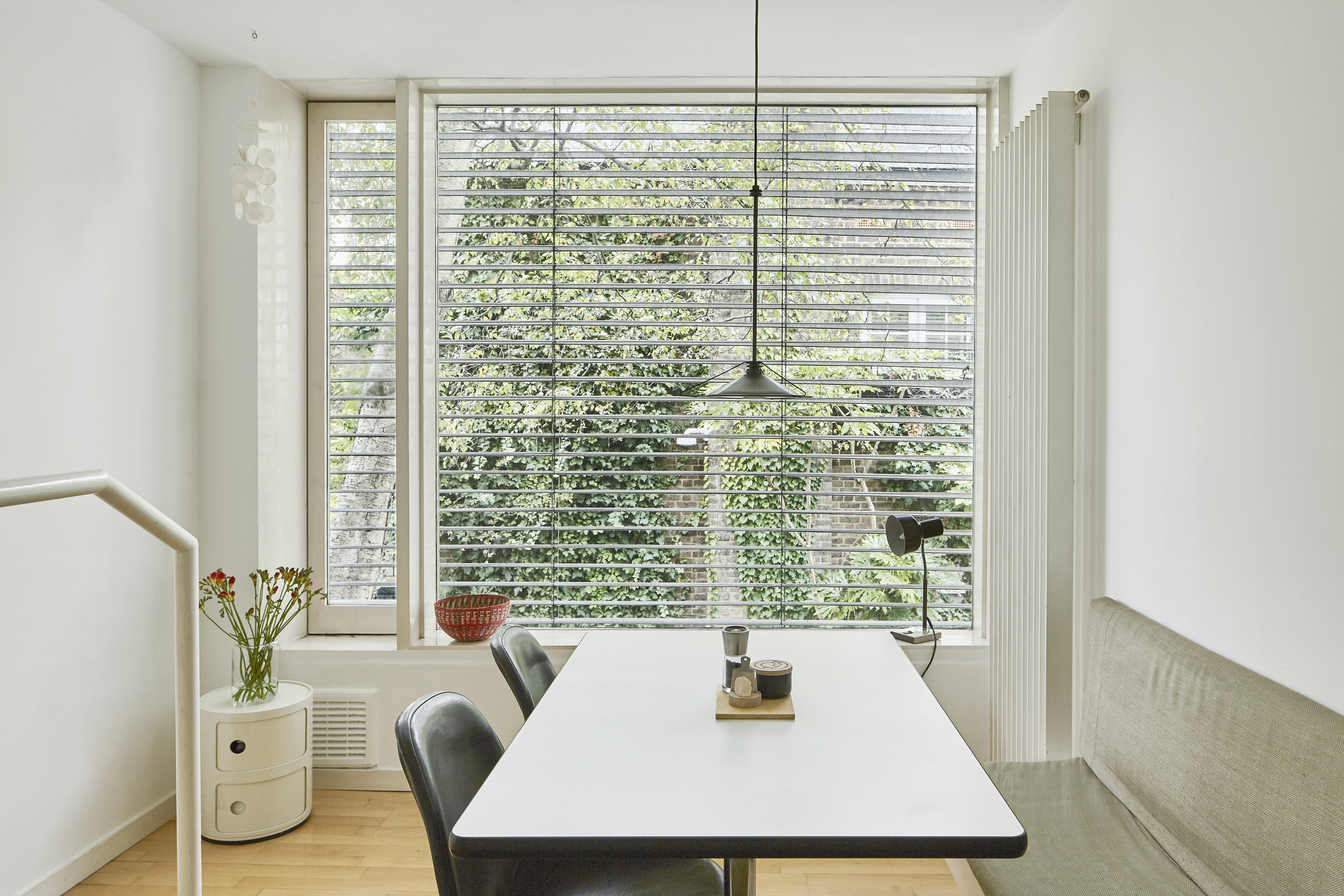
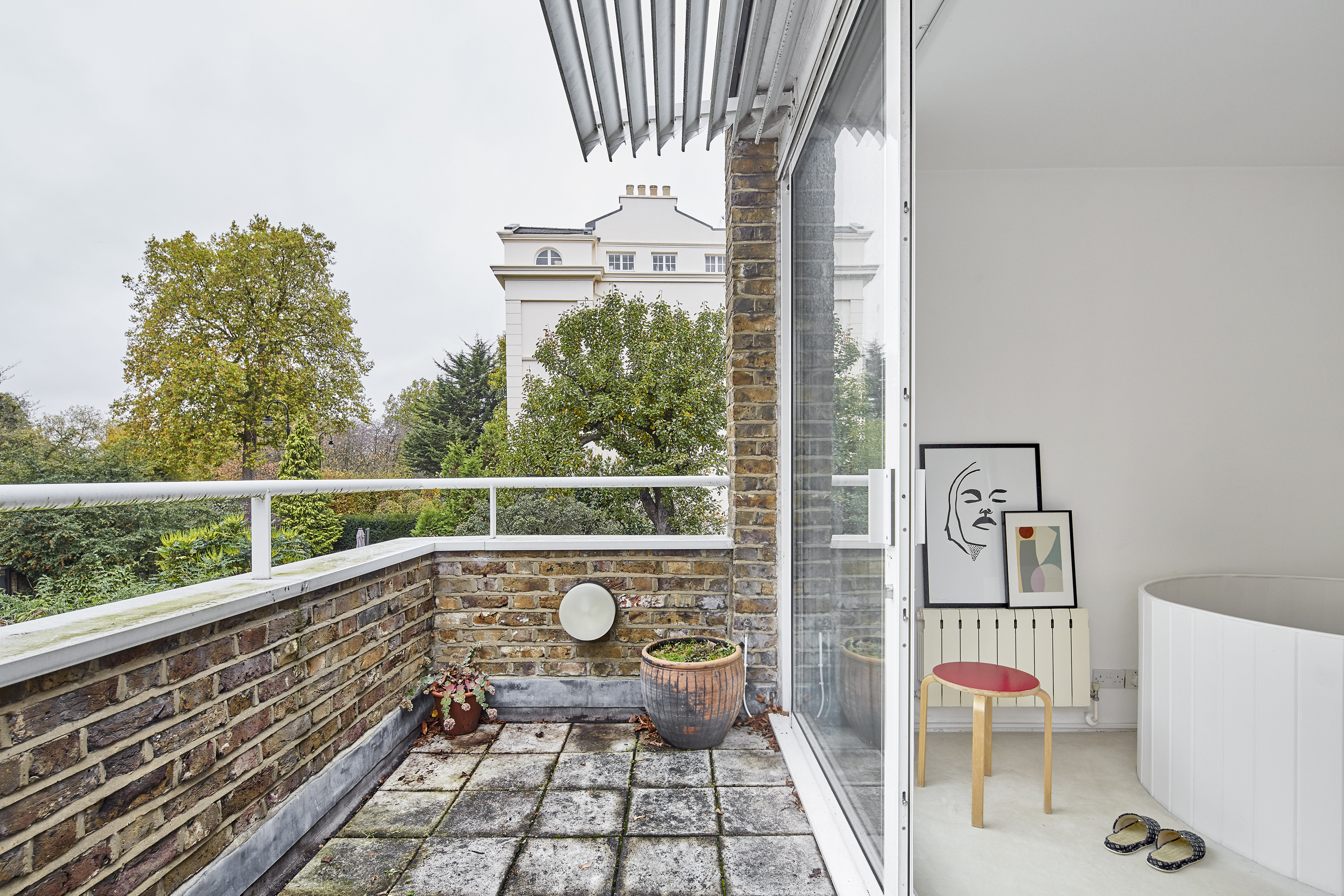
Built in 1961 by the revered Modernist architect John Winter, this exceptional three-bedroom house occupies a magnificent location, at the end of a quiet residential lane, overlooking the Regent's Park in central London. Winter designed and built the house for his own use and lived at Regal Lane for a number of years in the 1960s, before notably building again on Swain's Lane in Highgate.
Regal Lane
SOLD
History

John Winter (1930-2012) studied at the Architectural Association in the 1950s, and after national service attended Yale. In San Francisco he worked for Skidmore, Owings and Merrill as well as Charles Eames (Winter had a personal collection of Eames furniture). Eventually returning to England, he worked for Ernö Goldfinger and lectured at the Architectural Association before setting up his own practice.
Of Goldfinger, Winter has remarked, “From him I learnt a commitment to quality in architecture; to go far beyond that which is reasonable. That one has to endlessly search for a better solution and that the better solution in the true Modern Movement tradition is based on function and on the means of building. I have always found this a way to hang on to one’s sanity in a world obsessed by applied style.”
At the AA, his students included Jeremy Dixon, Edward Jones and Nicholas Grimshaw, and he acted as the association’s “house architect”, designing and overseeing a series of extensions and alterations to its premises.
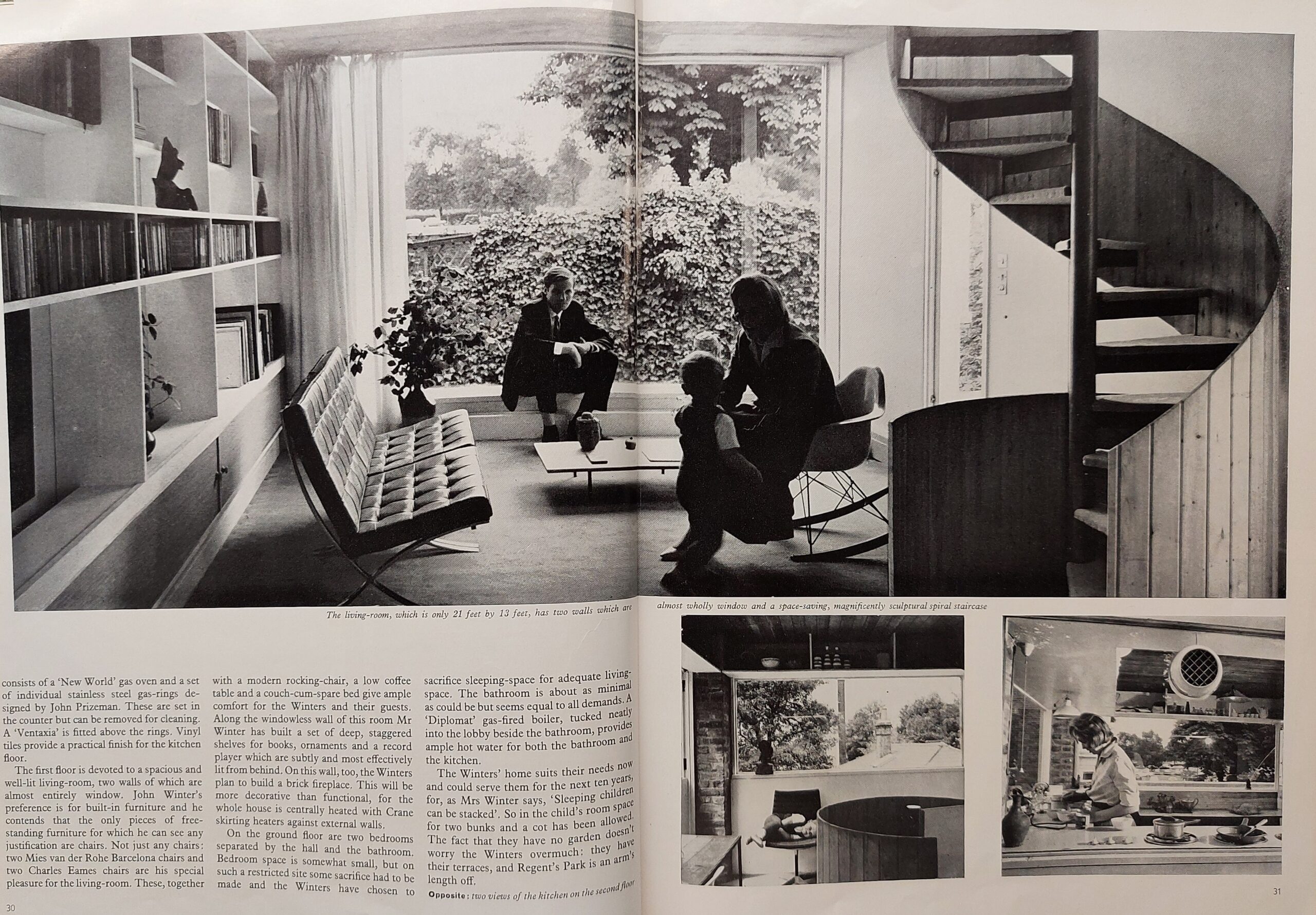
Winter carried out a number of elegant residential projects in the 1960s and ‘70s, including three in Belsize Park, and his own first house, on Regal Lane in Primrose Hill.
According to the RIBA Journal, Regal Lane, "His first self-built house (pictured in construction above, care of the RIBA Journal) was designed in the late 1950s overlooking London Zoo. Fresh from America, where self-building was common, Winter taught himself the necessary trades such as bricklaying (using recycled bricks from demolition sites) and concrete shuttering, using old floorboards. He recommended that all architects build their own houses as he did, to understand how buildings are made."
Winter was closely involved in subsequent additions to the house that were carried out in the 1990s, after he had moved on, including a kitchen on the first-floor and the conversion of the former second-floor kitchen into a master bedroom suite. He was renowned for never having failed a planning application and was an enthusiastic correspondent regarding the twists and turns of the planning process to extend Regal Lane. At one point remarking to the owner, "The wheels turn slowly, but at least they do turn..." Upon receipt of planning approval, a letter on 'John Winter Associates' stationary simply reads, "HOORAY!"
Perhaps his most famous house is on Swain's Lane, where he lived with his family until his death. The project was ahead of its time – its Cor-Ten steel panelling was the first domestic use of the material in Britain. The proportions of the house and the grid on which it was designed were set by reference to the dimensions of the standard Cor-Ten sheet, so that nothing was wasted. The house is widely regarded as one of Britain’s most important Modern houses, and is one of only a small handful to be given a Grade II* listing by English Heritage.
In the 1980s, Winter was commissioned to design another house on Swain's Lane, which was in the High-Tech style and supported on a single central concrete pillar. This was demolished in recent years to make way for a new award-winning design by Eldridge Smerin.
Late in his career, Winter took a detailed interest in the restoration and conservation of some of Britain’s most avant-garde International Style properties, including Six Pillars in Dulwich and High Cross House in Devon.
Interested?