How My Garden Grows: an autobiographical tour of the gardens Arthur Parkinson grew up in
March 31st, 2026
Words Francine Raymond
Film and photography Ellen Hancock
During what seems an interminable wait for spring, I’ve come to Nottingham to meet a friend of mine: the writer and gardener Arthur Parkinson, one of the most influential young gardeners in the UK, and a charming guide.
I’ve known Arthur since he wrote to me as a small boy, and we’ve kept in touch because of our mutual love of hens. As the author of several books including The Pottery Garden, The Flower Yard, Chicken Boy, and more recently the fabulous Hen Party, he has long ago taken over my mantle as Chicken Oracle.
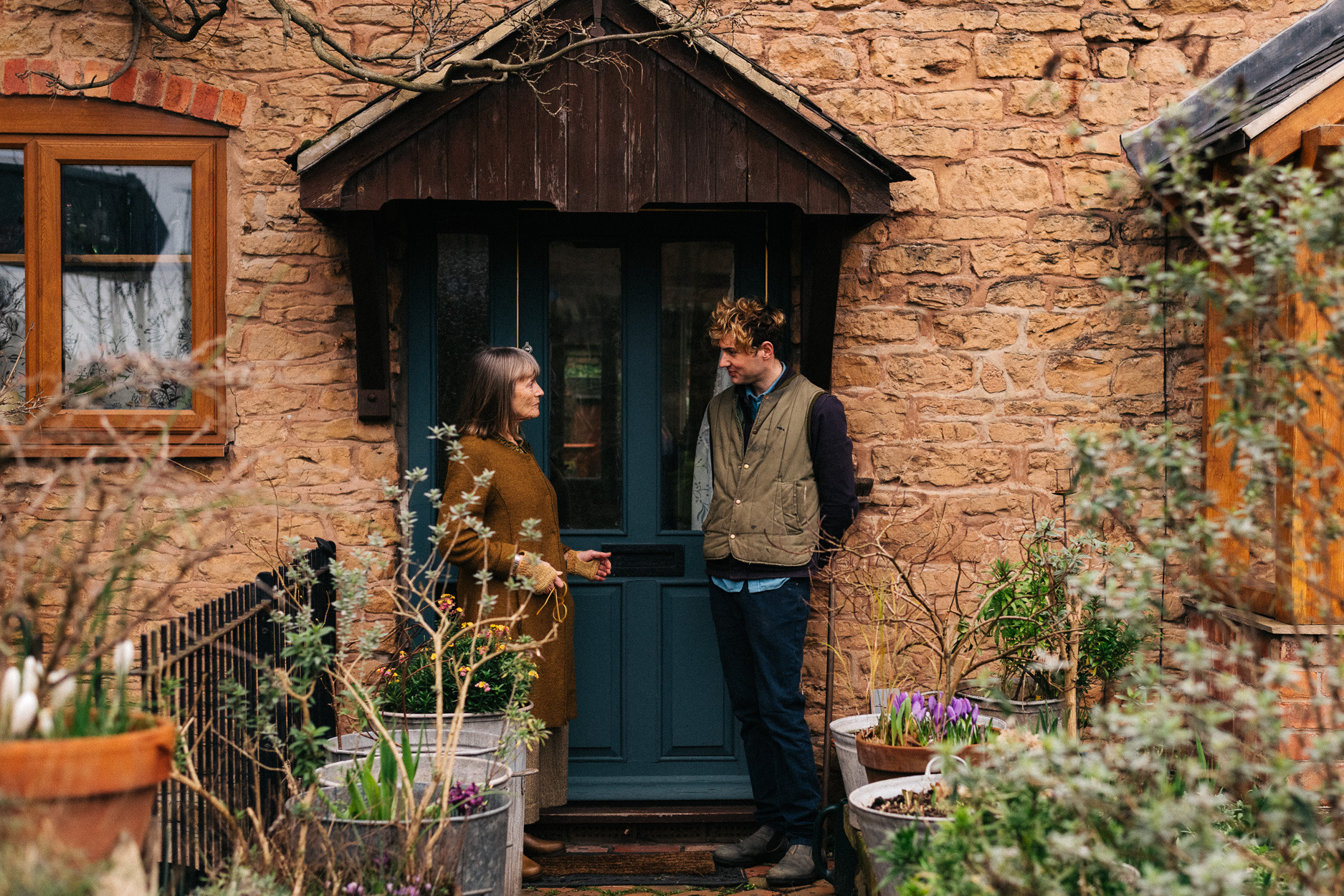
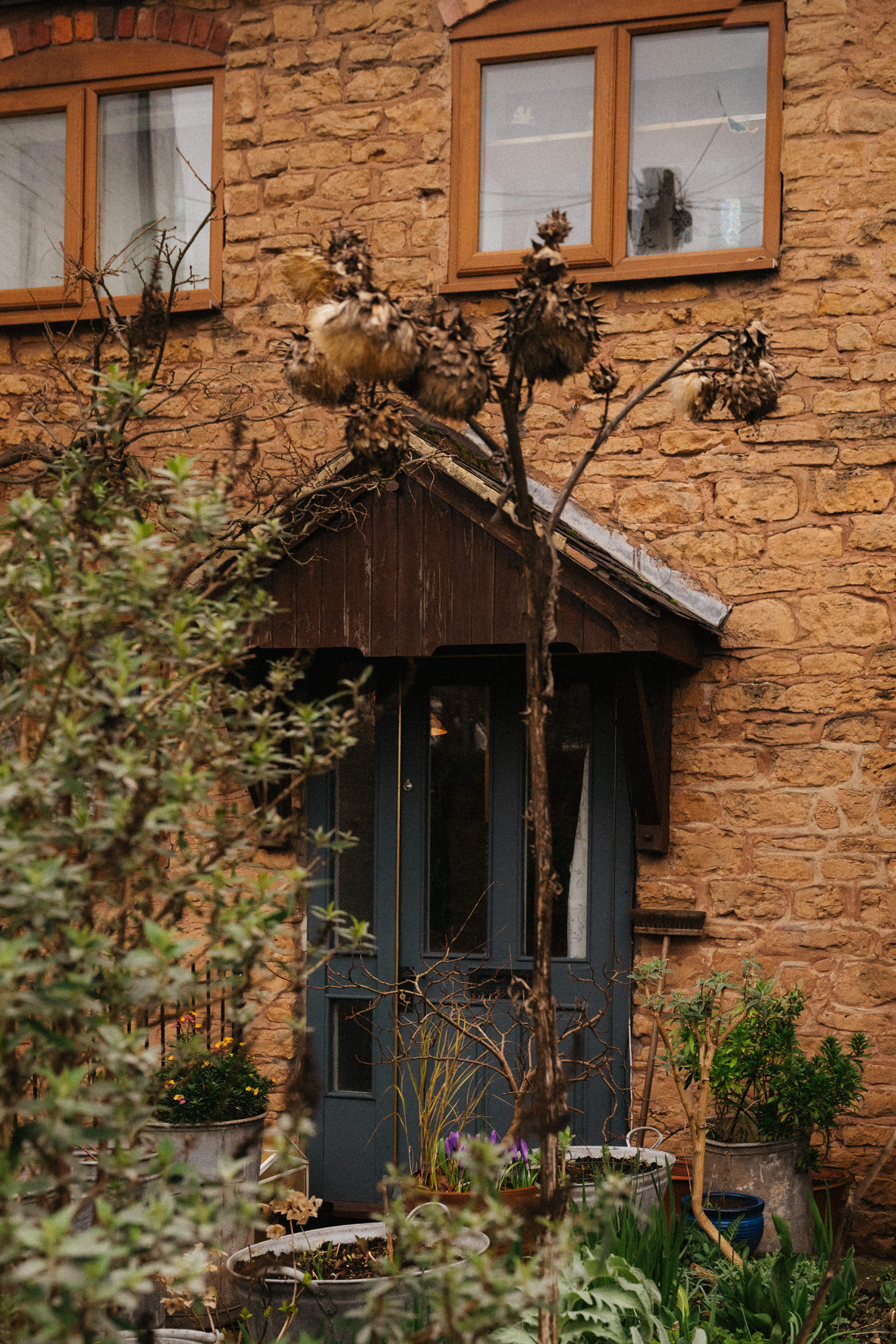
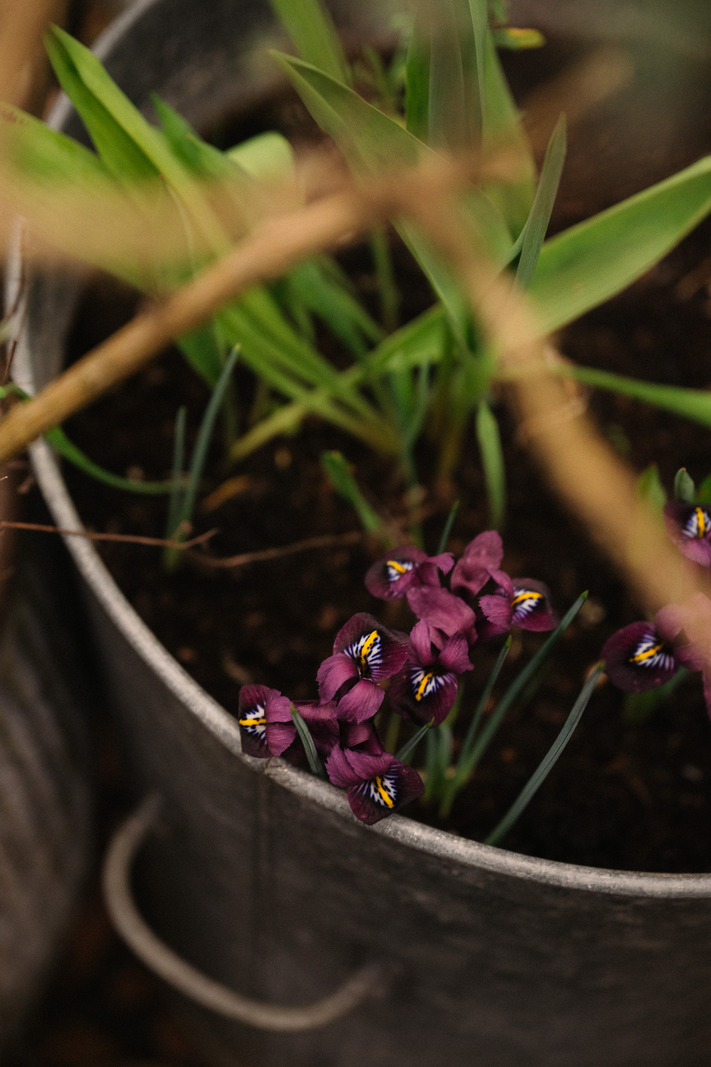
For our fifth episode of the How My Garden Grows podcast, Arthur shows us around three gardens that have been pivotal to his love of nature, hens and gardening. “I come from a world of small urban gardens,” he tells us as we stand in his mum’s tiny front garden, crammed full of pots filled with bulbs just beginning to flower under their squirrel protection. It’s precisely here – at home with his mum and brother, being allowed to forage, harvest and play unhindered in this plot – that his path was set.
Standing in the small plot of land in the yard opposite, Arthur explains this was his debut guerilla garden, a sanctuary for wildlife with unpruned roses and crab apples, with blossom and fruit for the birds and insects. Nicely untidy, he believes in “letting plants be plants for wildlife and knocking the romance out of gardening,” (surely something he more than makes up for with his wildly romantic bunches of flowers).
Tracking his journey from school to an RHS course at Nottingham Trent University, Arthur worked in cafes before applying for a Kew apprenticeship at Wisley. (He believes he was accepted onto the course because he embellished his application with sketches of flowers.) He then worked with Emma Bridgewater and Sarah Raven, before writing his first book and building a hugely successful following on social media.
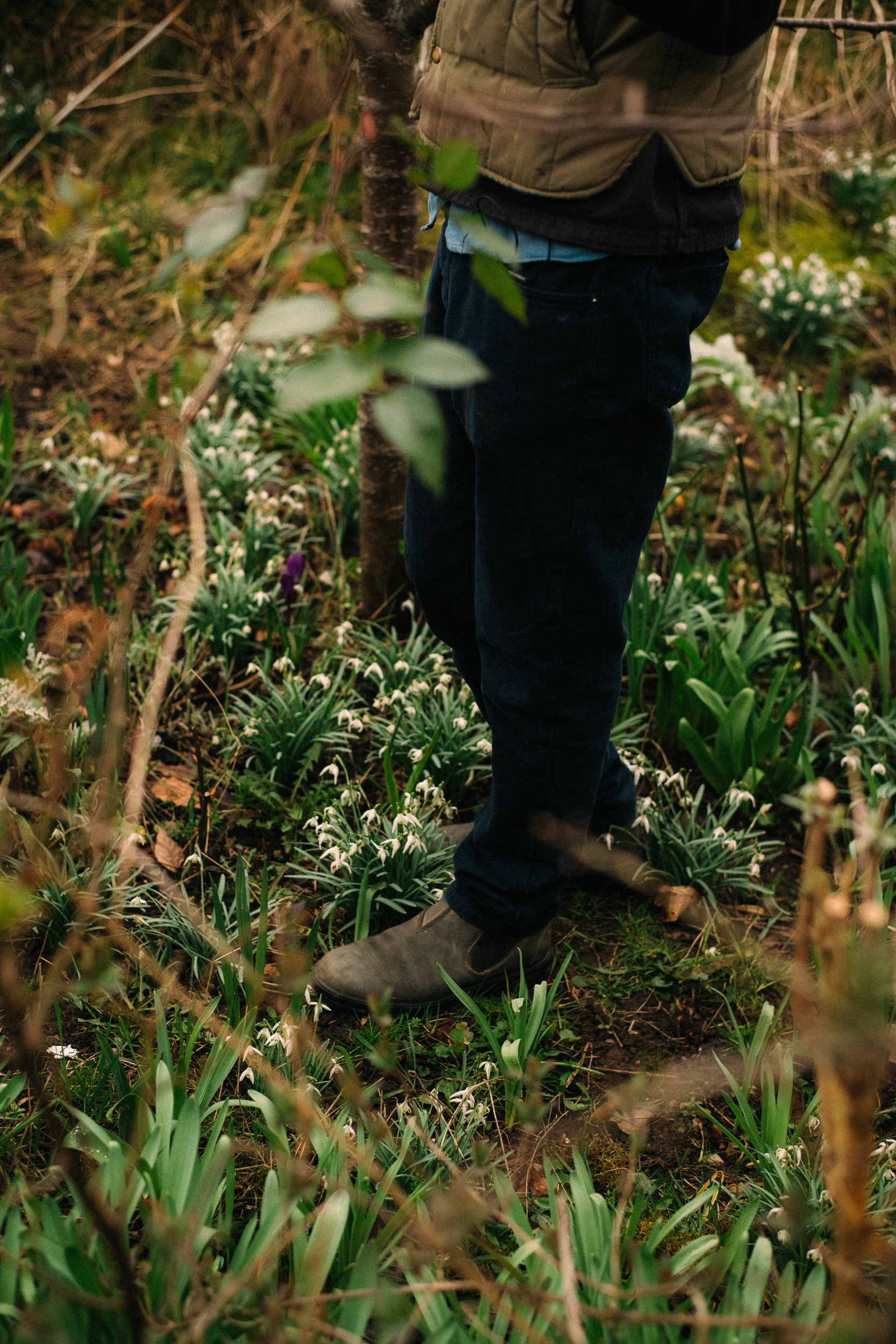
We move on to his Dad’s house, once his Nannar Min’s, with a front garden full of snowdrops and promise, and a back garden that seemed endless to a young Arthur. This is his memory bank garden, where he spent the lockdown looking after his grandmother and hens, bringing hope and humour to his followers during difficult times.
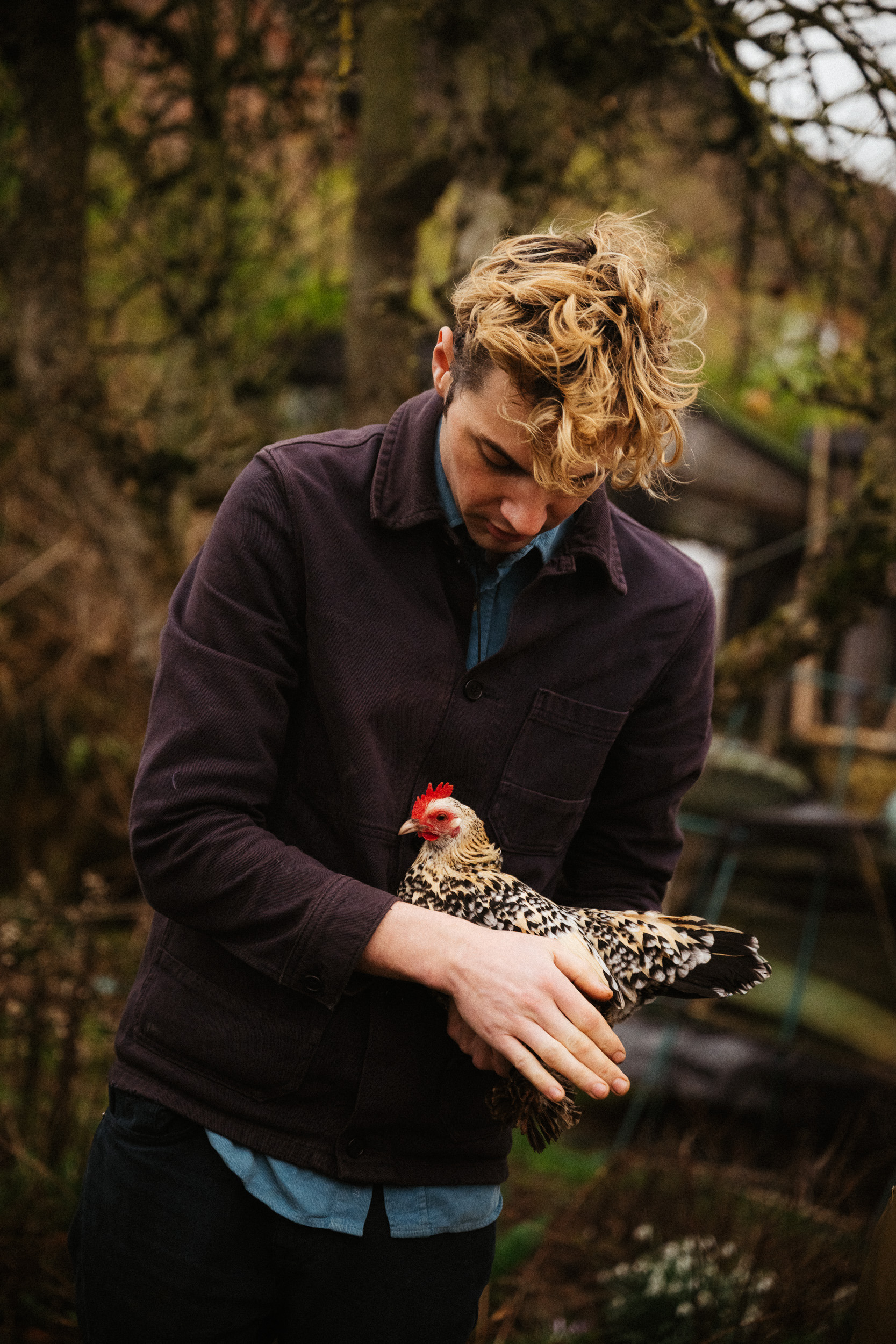
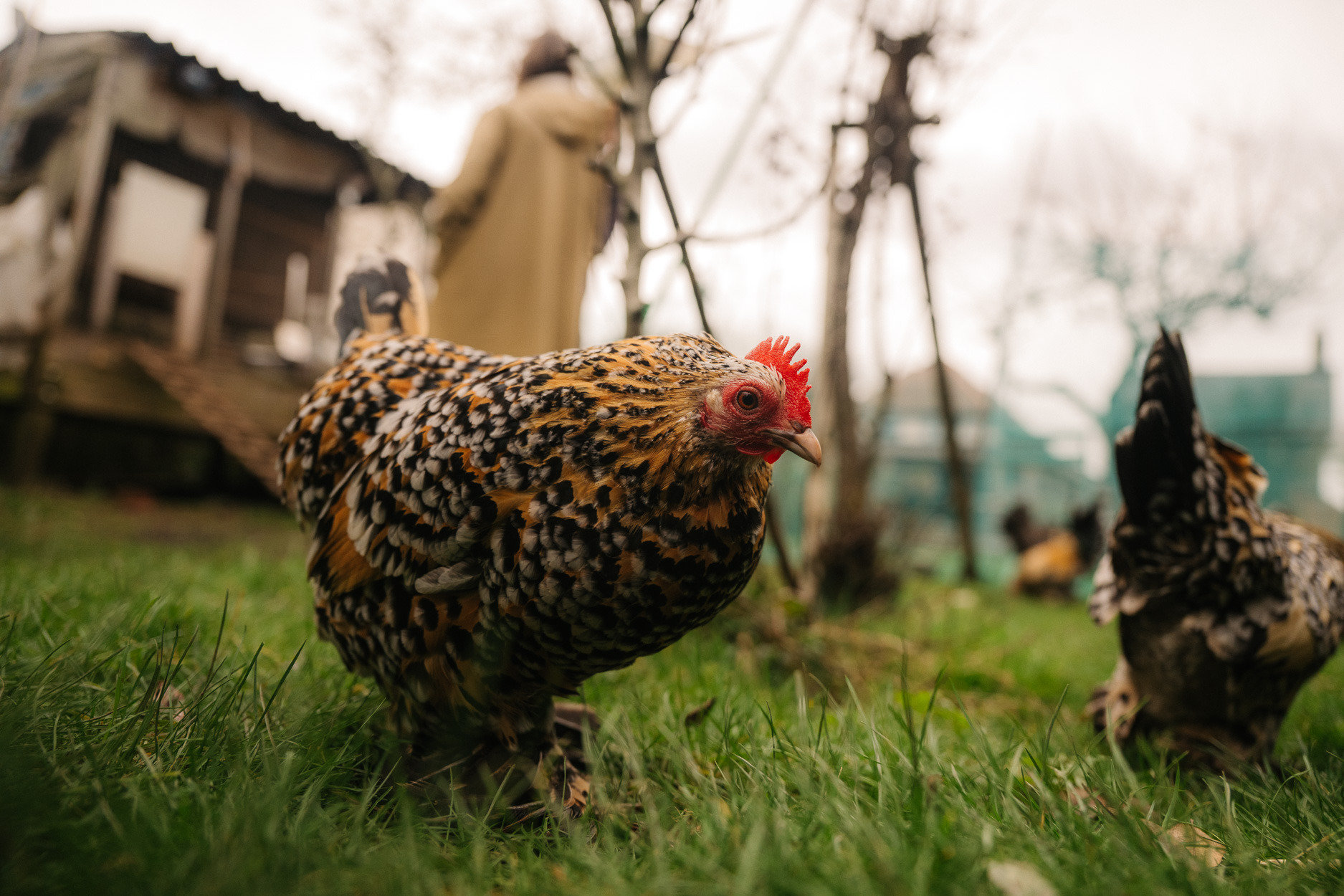
Hearing a cockerel, I couldn’t wait to visit the small flock of little Sablepoot Lemon Millefleur bantams, described by Arthur as “Dutch painting-worthy”, and joined by two elderly Cream Legbars in their makeshift run to protect the burgeoning spring garden from hungry beaks.
Protection is the key word when gardening with hens. You must protect your birds from vermin, horticultural dangers and from predators – and you must somehow save your precious plants from your flock. How you achieve this juggling act is the measure of your success as a garden hen keeper.
Arthur believes you should designate part of your garden “a chicken-themed park,” or maybe offer them a fruit cage. My theory has always been to not have too many; to allow them prescribed daily access to your garden that has been protected with various measures (see ‘Garden Clippings’ below). We agree on the importance of giving them as much space as possible, including regular access to short, protein-rich grass.
Within their vermin-proof run, you need a dust bathing area and a small house with daytime weather protection for your flock, plus private nest boxes and an automatic door, then suitable bedding and a rat-proof metal lidded bin to store your feed – as Arthur says, “It’s chicken feed that attracts rats, not chickens.”
We recommend galvanised feeders and drinkers, and feed from reliable suppliers, all of which are mentioned in Arthur’s charming new book. Choose a breed you fancy from his drawings, then give your hens a good start, a daily routine and a stress-free life, and they’ll provide you with lots of eggs, endless amusement and a lifetime of interest.
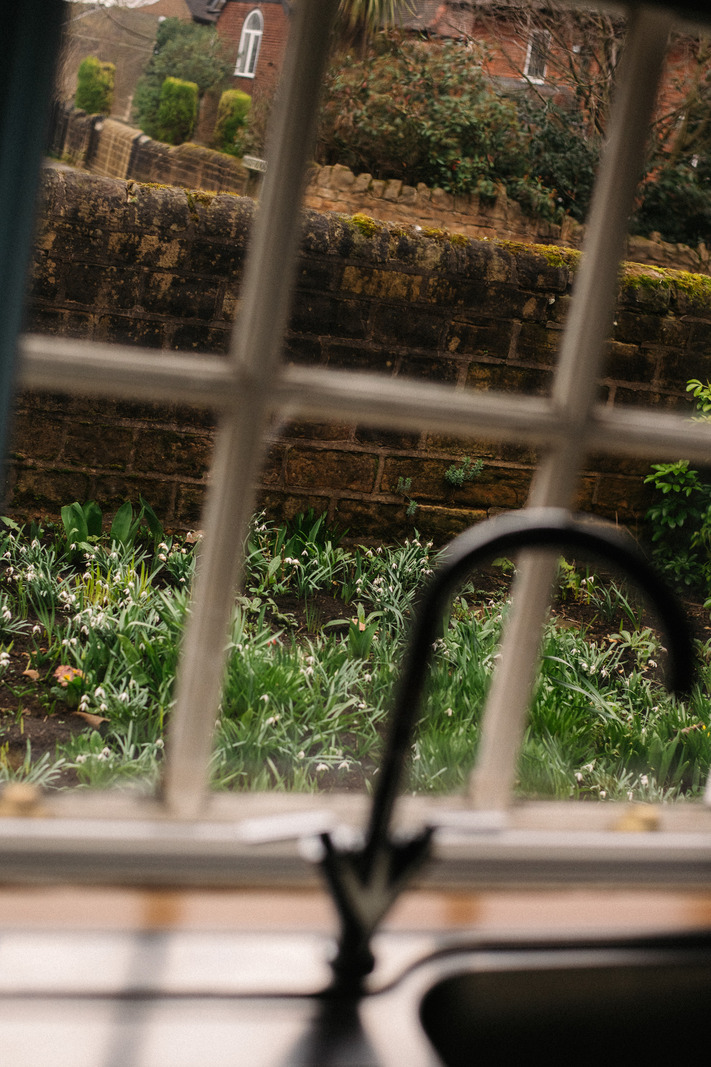
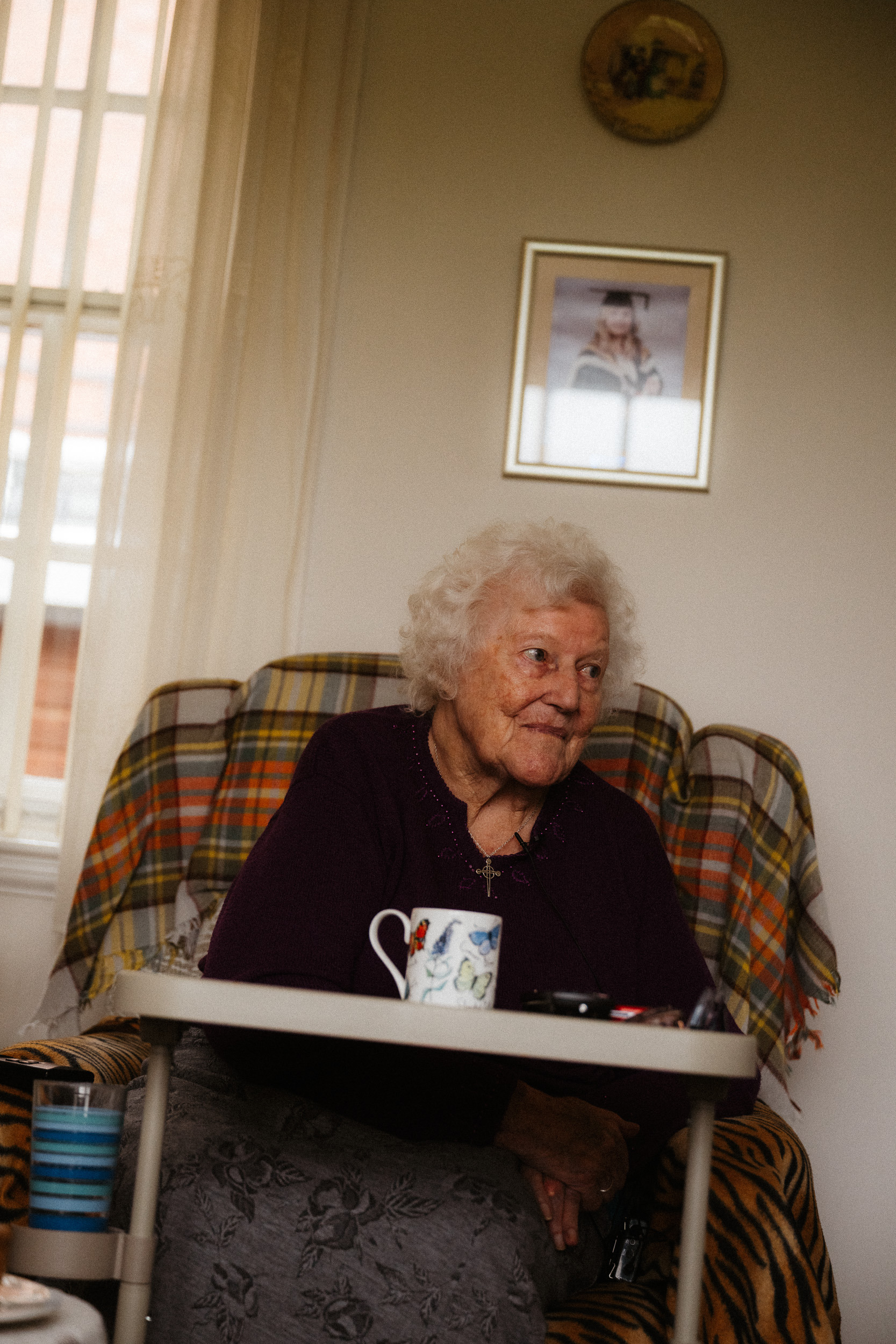
Our final stop on Arthur’s autobiographical garden tour is his Grandma Sheila’s cosy home, in a historic almshouse. Ex-president of Hucknall Flower Club, you can see immediately that this is where Arthur inherited his love of flowers and arranging, and his passion for the countryside. The tiny, shared garden is full of snowdrops, the first in a calendar of flowers to cheer throughout the year and be seen from Sheila’s front room.
As a boy, Arthur and his grandmother ganged up against his grandfather’s penchant for evergreens and planted flowers, arranging them for the church. They also went on long visits to the local countryside where Arthur developed his passion for farming and hens, particularly at Chatsworth and at a family friend’s allotment, “who had a coop full of brown hens and would let me collect the freshly laid warm eggs from old fruit boxes.”
Thank you Arthur, for giving us clues to where you got your passions in life, and for sharing your deep and personal care for wildlife.
Garden Clippings
How to protect your garden from your flock
*Hazel pea sticks will deter hens from scratching, and can be used to stake your plants.
*Hens love disturbed soil, so after planting, put some kind of protection over your plants to give them time to settle. I use upturned hanging basket frames.
*Vegetables are top of your flock’s menu, so grow them in a fenced-off area or a fruit cage, or cover them with netted frames.
*Net tunnels offer excellent protection for brassicas and other hen favourites.
*Galvanised wire mesh panels (available from builders’ merchants) can protect areas.
*Protect the run from mud with hardwood chippings or mud mats.
*Large pebbles around the base of newly planted trees and shrubs will stop dust baths forming around the roots.
Our favourite chicken breeds
*Arthur’s favourite breed is the Cochin, which he is bringing back from the doldrums and breeding for Chatsworth. Huge, golden charmers with feathery feet, they are friendly, hungry and very fluffy.
*The hen love of my life is similar: the Buff Orpington. Tame, docile and large, with the cockerel weighing in at 14lbs, and the hen at 10lbs. Also available in black, blue and white. Often broody, they lay surprisingly small tinted beige eggs.
*We both adore Pekins, pretty bantams with feathery feet, who I always said scratched less in the garden, but having just watched my flock of four in the garden, it’s not true. Available in a wonderful range of colours and patterns, they are friendly and great for a small plot.
*Arthur also loves bantam Barbu D’uccles, mega egg-laying Burford Browns, Copper Black Marans, and Derbyshire Redcaps.
Hen Party, Arthur’s latest book, is published by Penguin; follow Arthur on Instagram.