How My Garden Grows: A pint-sized coastal plot thickly cloaked in climbers
September 4th, 2025
This article is more than a year old and may contain information that is out of date. Sorry about that.
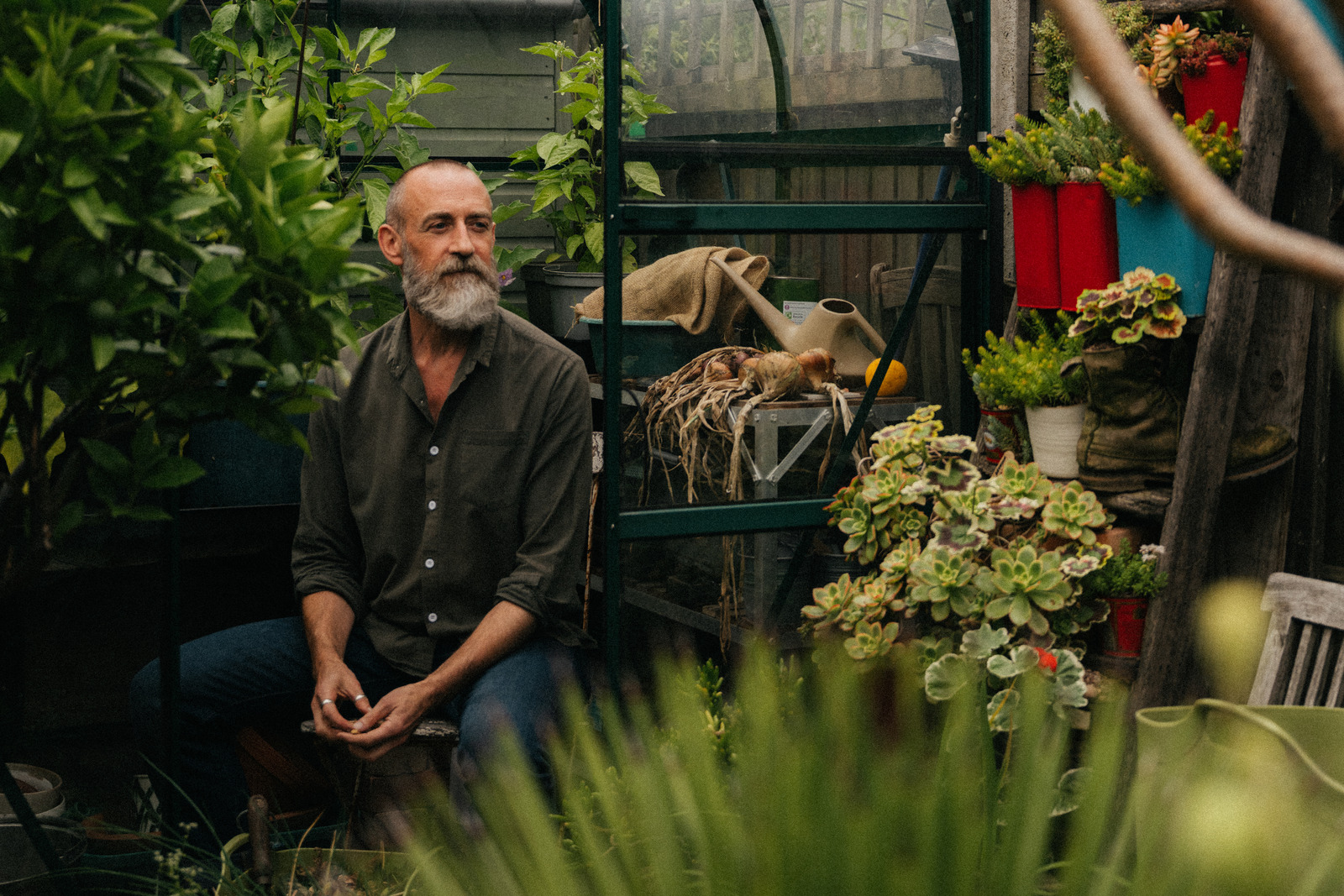
Welcome to the first instalment of our new gardening series, How My Garden Grows, hosted by lifelong gardener and journalist Francine Raymond. "I have visited hundreds of gardens, some for work and others for pleasure, but what excites me most about gardens is their atmosphere and the stories they tell," she says. "In this series of garden get-togethers, I want to explore real gardens going through the seasons; gardens that have been grown with passion and patience."
Each garden visit will be accompanied by a feature, a podcast and a short film. In this first episode we meet creative consultant Phil Gomm, who lives in a terraced house by the sea with his husband Paul Carey. Together, they have created a plushly planted urban sanctuary in wind-swept Whitstable. "It's late August, so there will be rain, and there will be hungry seagulls," Francine warns. And so our backyard adventure begins ...
Words Francine Raymond
Photography Ellen Hancock
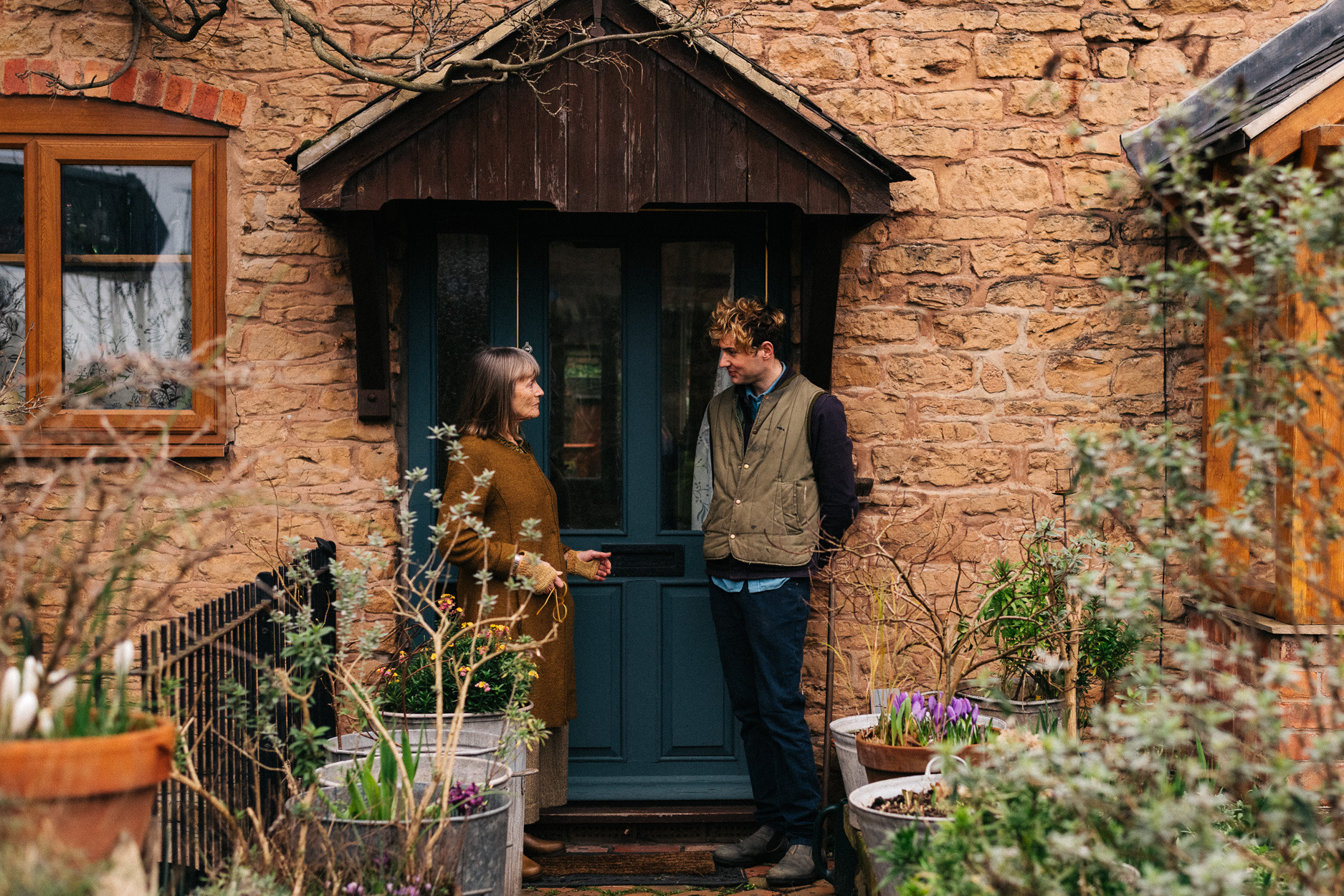
Our first view of Phil Gomm and Paul Carey’s Victorian terraced house is worth navigating the holiday traffic for. Packed tight with potted foliage plants (pittosporum, myrtle, bay and olive) shoe-horned into a walled space that stands on a windy corner in full sun, it gives a hint of the back garden’s promise.
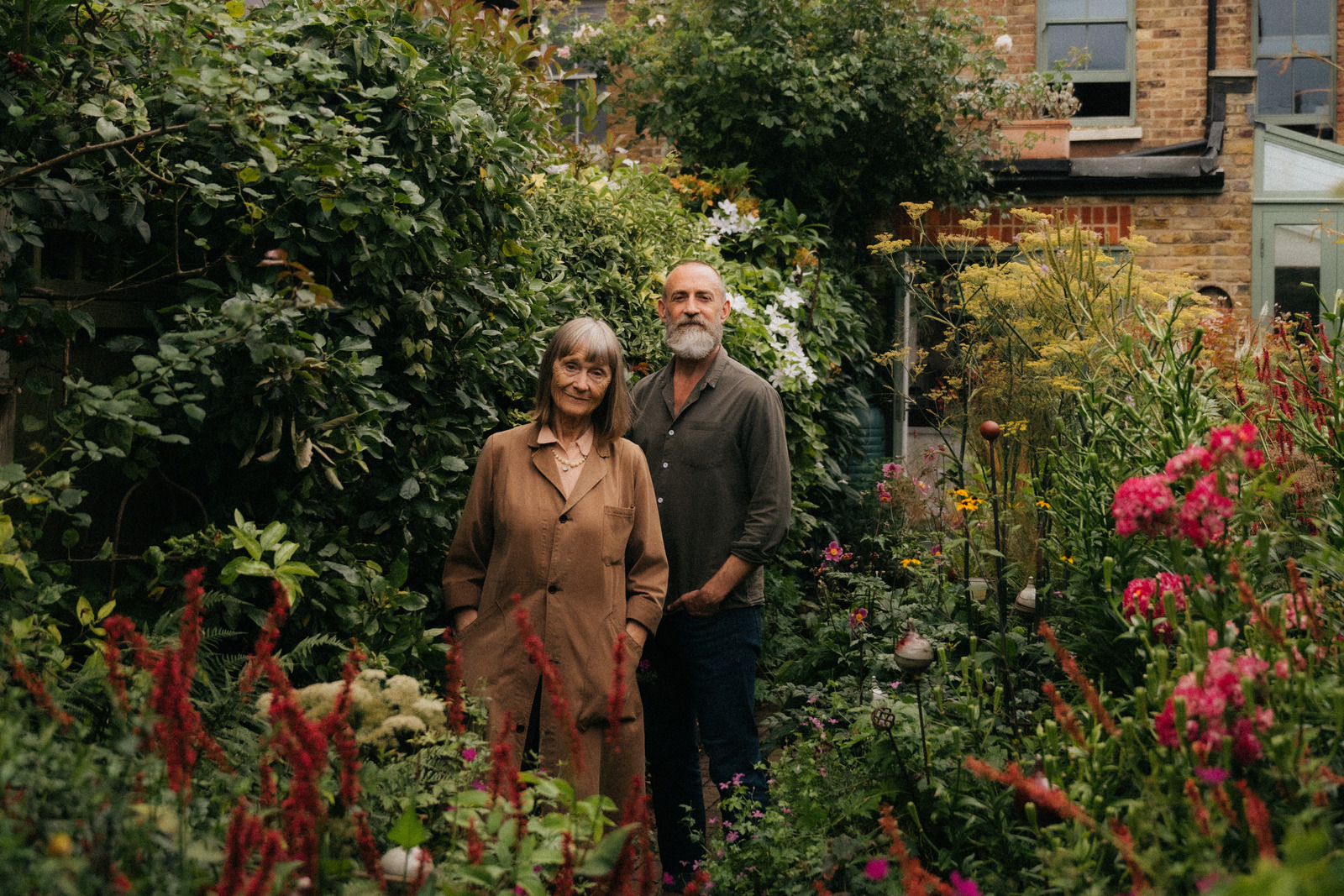
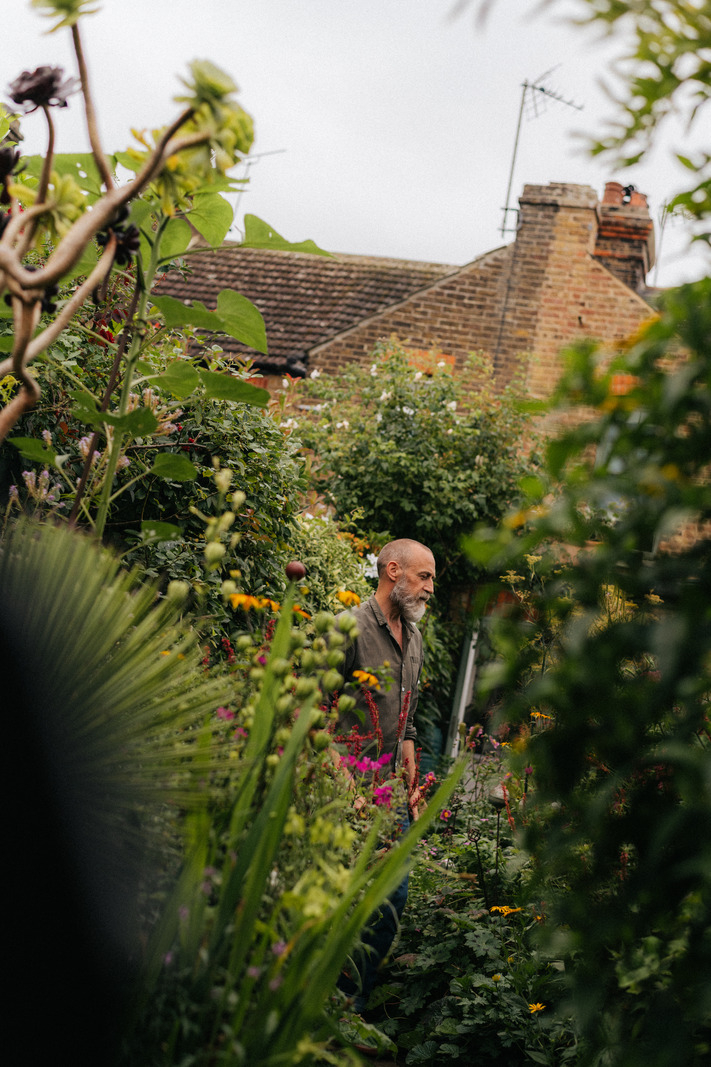
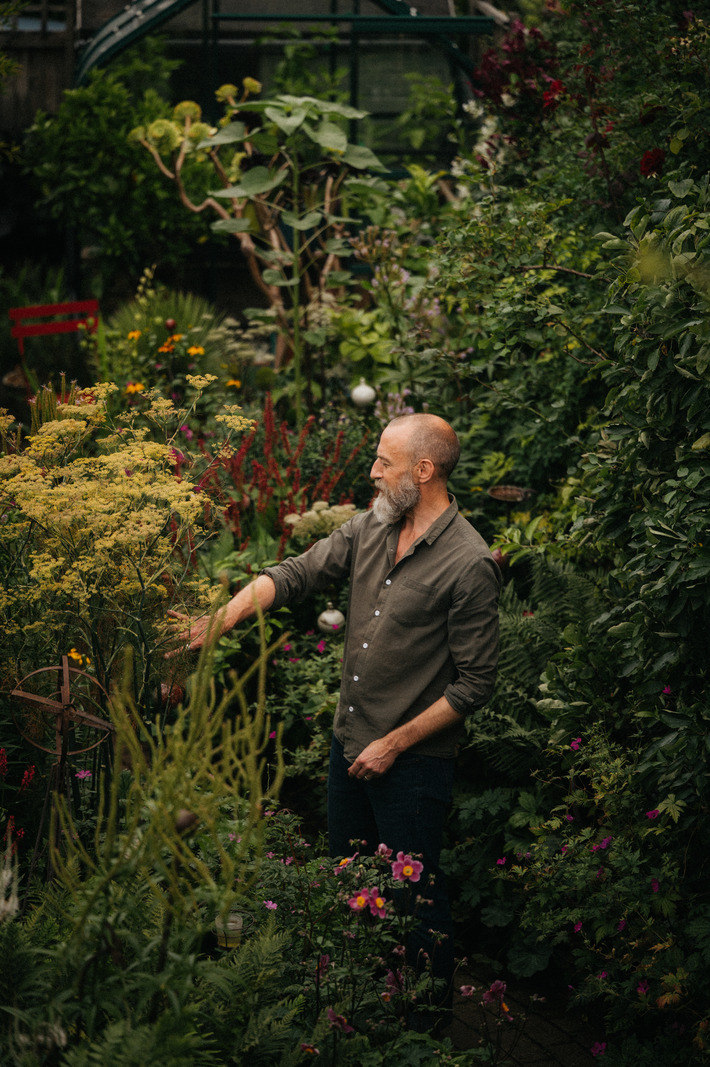
This must have been the couple’s first view too, arriving 20 years ago from east London with a lorry load of plants in pots liberated from their tiny roof garden. What they found behind the façade was a 14 x 4 metre fisherman’s yard with two thin borders. Phil told me how they went on between them to create a pint-sized garden with a bravura that belies its proportions: “First, we laid eight tons of imported topsoil and a soaker hose, because plants need to be well watered to achieve this lush look – especially as most of them grow in the rain-shadow of our tall boundary fences”.
They then planted colonies of plants in layers, starting with bulbs and corms, topped by the perennials they love. Phil explains: “Our most successful combinations involve see-through plants that don’t mind competition packed really closely together to crowd out the weeds, even the snails seem to be overwhelmed. We go for an impressionistic effect with backlighting from the sun, and plants with a long period of interest. No one-hit-wonders here.” He adds: “Of course there are winners and losers in such a small space, and we prune the over-active growers every day to referee competition and make room for our two different gardening personalities”.
“Our challenge was always how to marry our varying colour choices in such a small garden,” he continues, “especially as one half of the plot spends most of the day in the shadow of the house. Our compromise was to plant the northern end with ferns and potted shade lovers and the sunnier end with wilder colour schemes of purple, mauve and magenta, much-loved by Paul, whose mother comes from St Vincent Islands in the Caribbean. We’ve tried to calm this technicolour with my favourite foliage plants in every shade of green”.
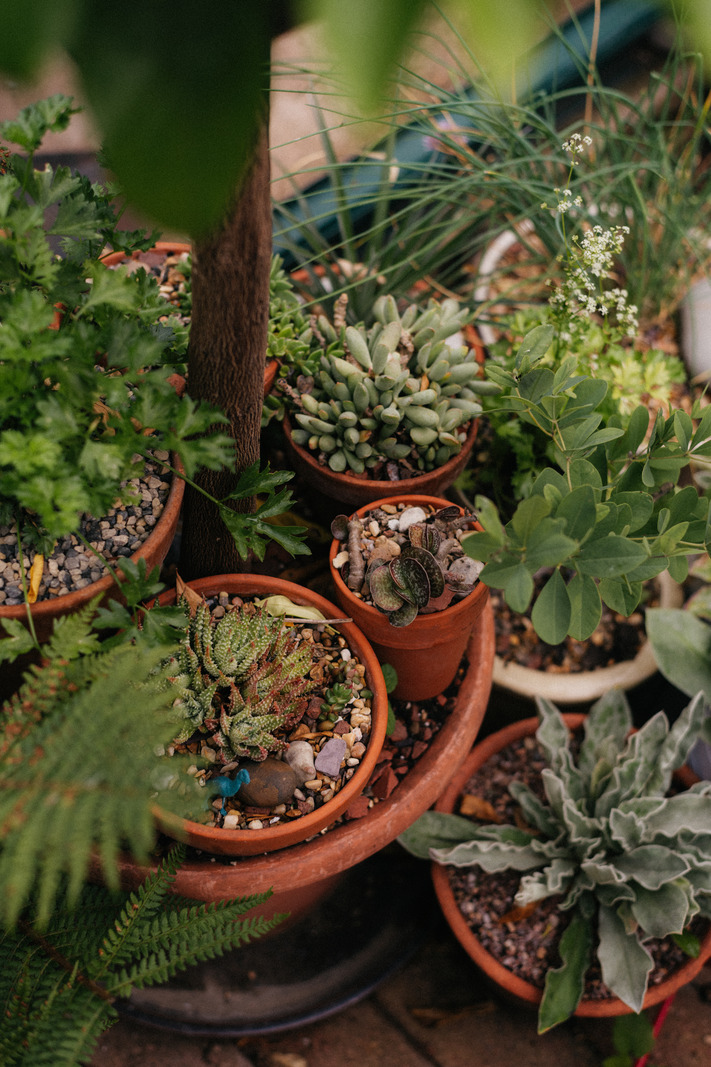
Unbelievably, there’s even a tiny greenhouse at the bottom of the garden – Paul’s province – where he grows chilies, tomatoes, aubergines, and even a Charantais melon. (“It grew, matured but never really ripened enough to taste good.”) Frost-free, this shelter doubles up as a winter home for the orange and lemon trees and the less hardy succulents, including huge, fragile aeoniums and spikey Echeveria stricta that are manhandled inside with great difficulty every autumn.
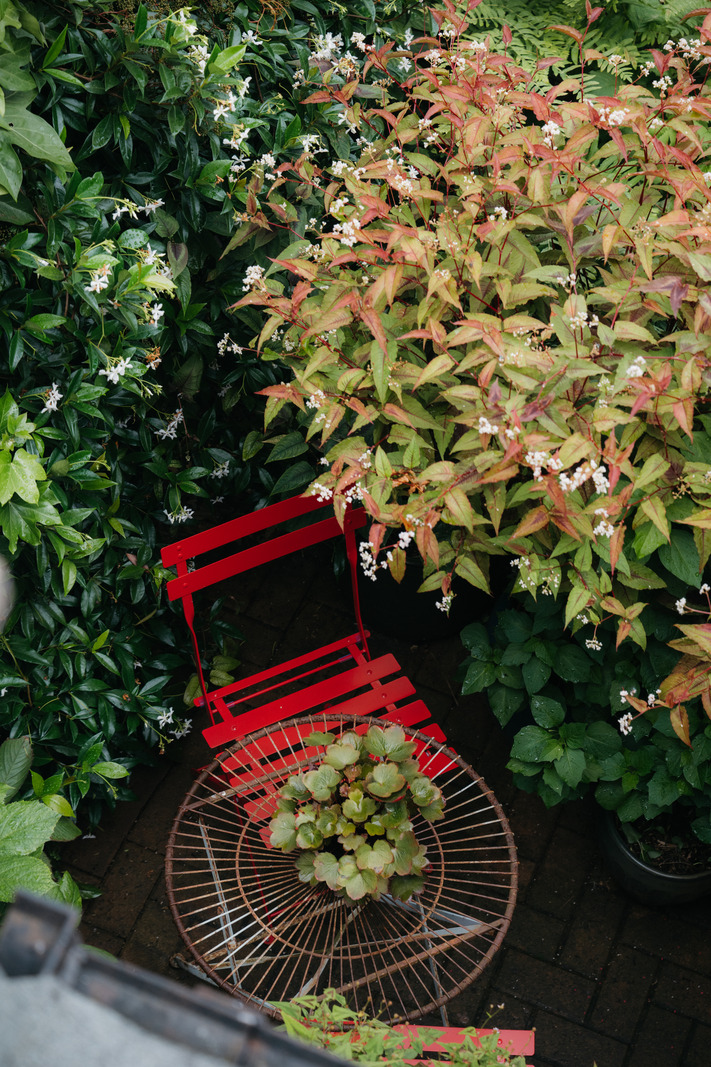
The couple also have a perch at either end of this sanctuary to sit at both ends of the day, listening to the drone of bees, engulfed in the rampant beauty of their favourite plants and the garden’s uniquely intimate atmosphere. In this scented bower, the plants create a glorious pot pourri – a magnet for pollinators. “On still evenings between these two cushioned hedges, one of us will get a waft of scent and shout to the other to come and have a sniff”, says Phil.
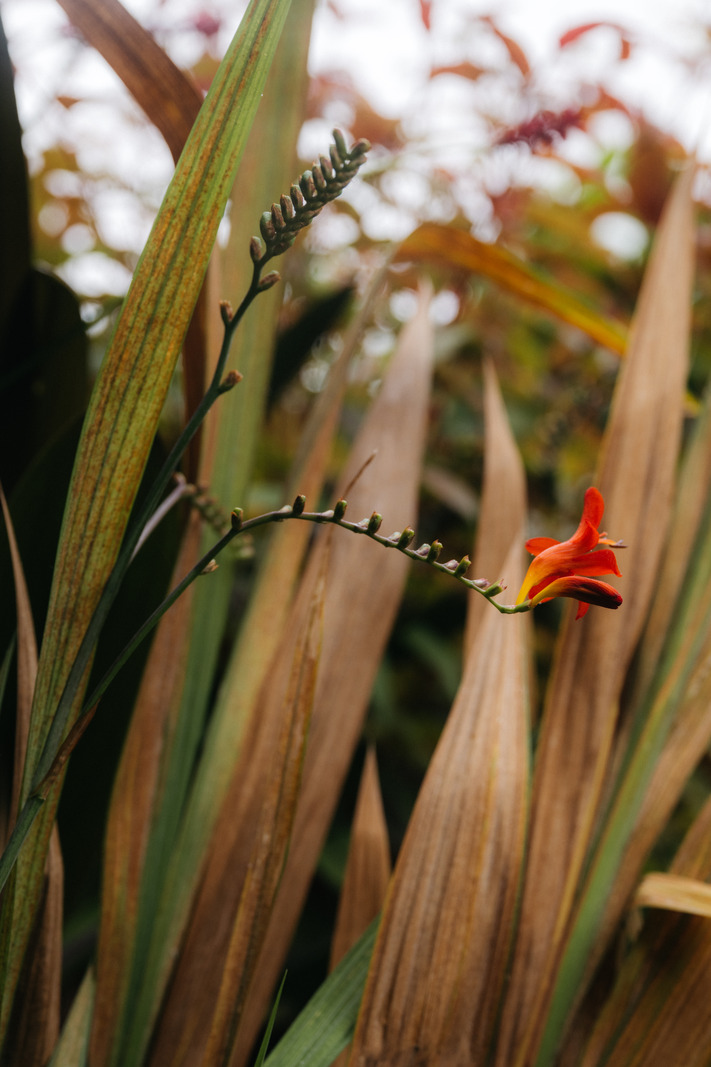
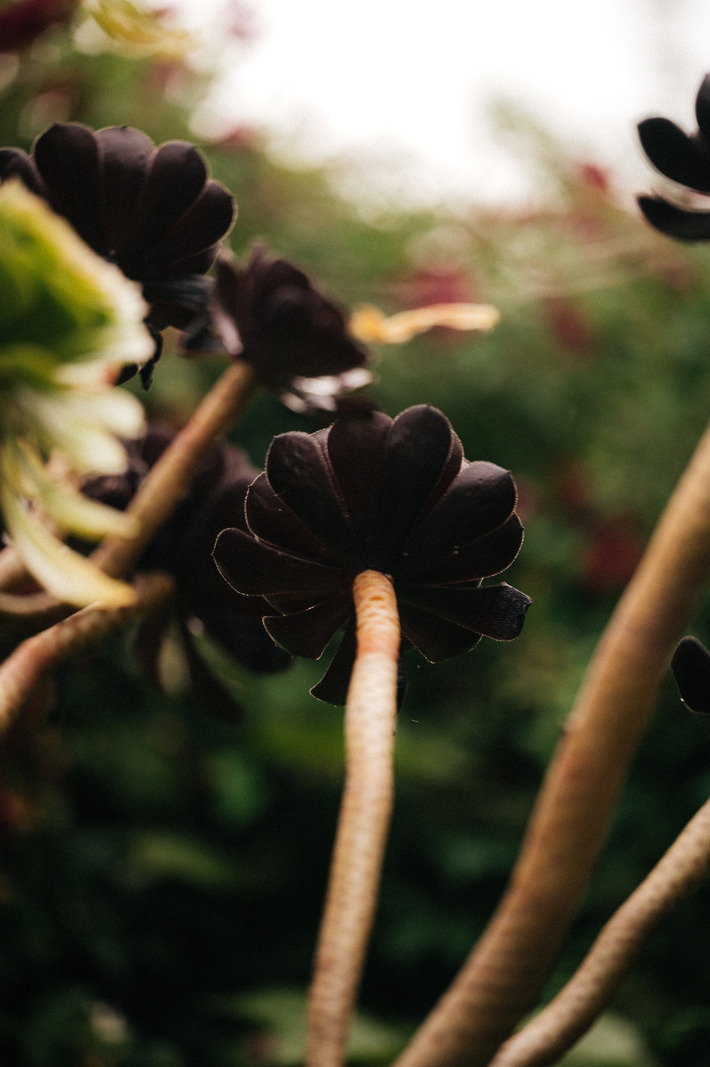
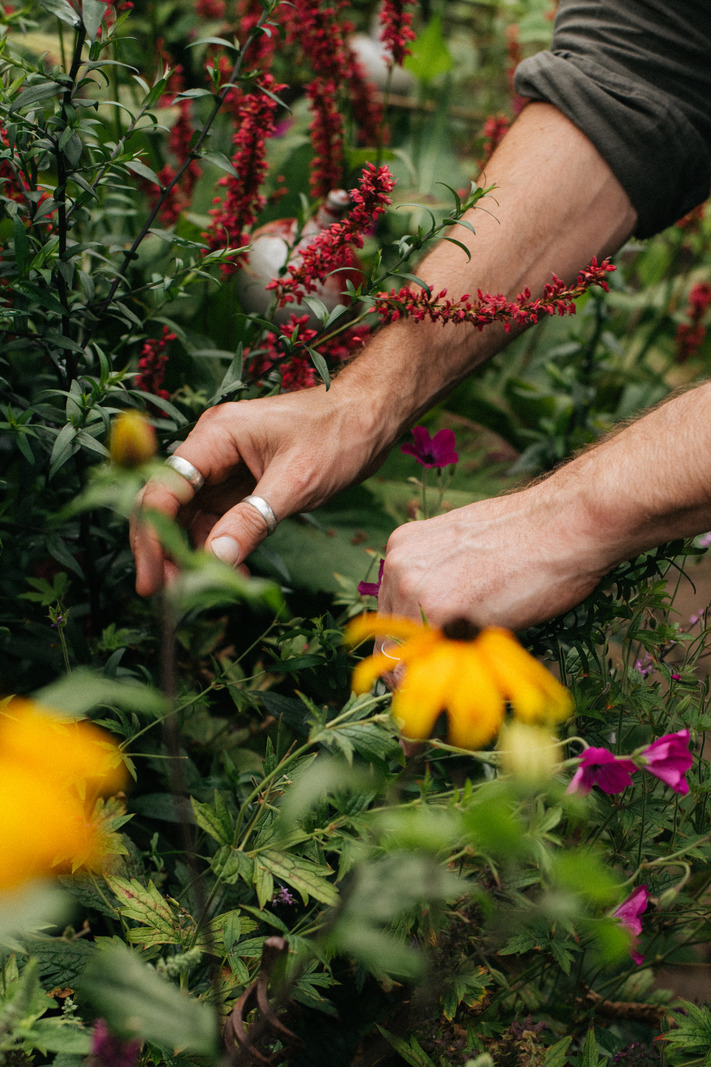
Looking out from their kitchen, it is obvious that every garden surface has been used effectively, most of all, the fences which are thickly cloaked with at least forty climbers, some absurdly vigorous, such as Clematis montana and winter flowering C. cirrhosavar. balearica, a tangle of golden hops, plus Aktinidia kolomikta, all needing almost daily pruning so as not to overwhelm their more delicate neighbours. “Silly things to grow in such a small garden”, admits Paul. Staging, ladders and tabletops are all covered with plants to bring interest to every eye level. This is gardening with conjuring tricks, so there’s always something to see.
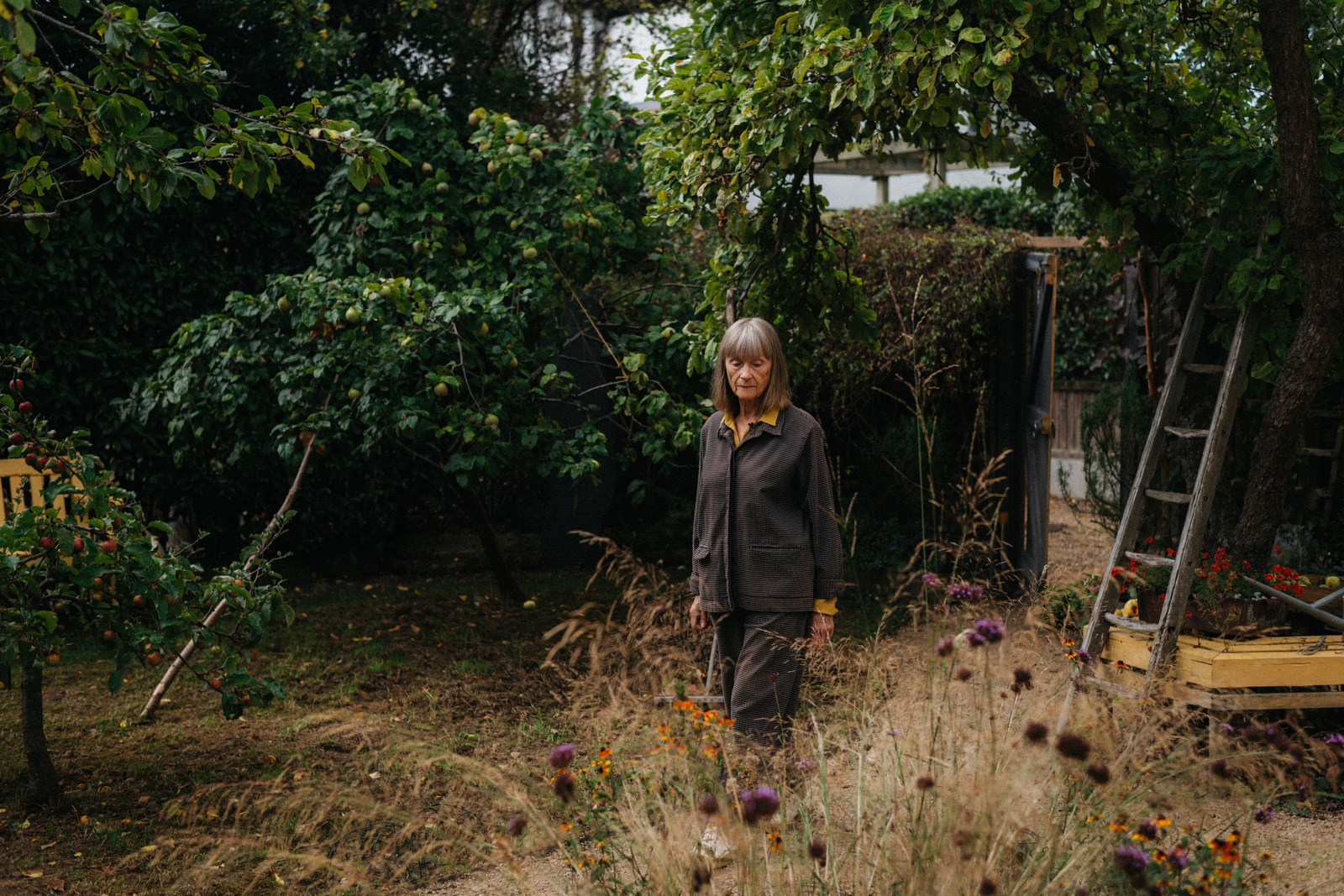
With the season over and winter’s onset, the garden passes into elegant decline, most plants benefitting from the seaside’s fabled climate, the rest go to seed and fade beautifully. “We just let stuff die, prolonging the season of interest with seedheads, always hoping for that elusive hoar frost that never comes and then tidy as the first snowdrops appear. This garden flourishes on the remains of dead plants”, Phil says, “We have learned as much from our failures as successes, but you end up surrounded by the survivors: those plants that love you.”
Garden snippings
Front gardens
Although modern life requires a lot from the average roadside plot, don’t miss the opportunity to make yours a pleasure for passers-by and local wildlife: grow hedges rather than put up fences; try flowering and berried plants such as grey-leaved sea buckthorn or ornamental Pyrus nivalis ‘Catalia’, striking purple forest pansy or cherry plums. You could prune a stilted hedge for high level privacy. Above all, make sure your garden’s surface absorbs rainwater.
Structural plants
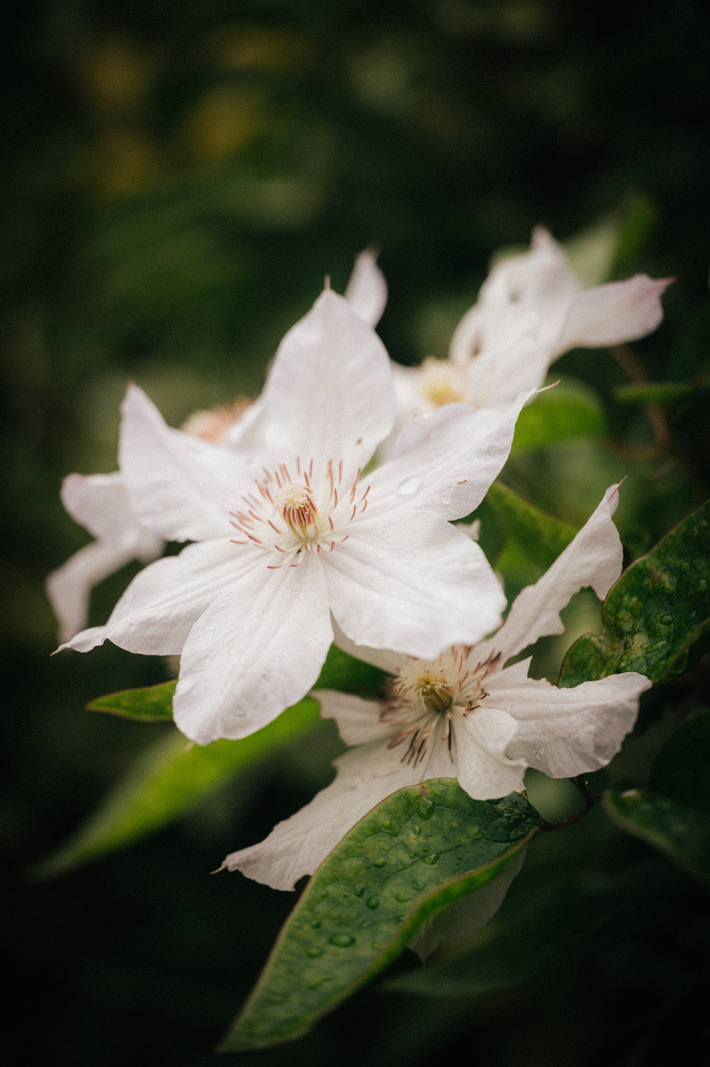
Clematis love this sort of garden, with their feet in shade and flowers heads up in the sun, Paul and Phil grow over 20 varieties, threading more delicate treasures through rampant backdrop plants. Clematis ‘My Angel’ with flowers like little yellow and purple bees, C. ‘Voluceau’ – late flowering and a rich red, and C. ‘Madame Julia Correvon’ with fluffy seedheads, all peek out among the lavish greenery.
Clay soil is loved by climbing roses, grown in this garden for their wide range of colour and their intoxicating scent: dark crimson Rosa ‘Guinee’, thornless R. ‘Madame Alfred Carriere’ for its sweet fruity smell, and free flowering deep rose-pink R. ‘Zephirine Drouhin’.
Signature plant
Lilies: intoxicating in texture, colour and smell. Grown from bulbs planted in September. In Spring, the foliage is exotic (but beware of the bright red lily beetle, which can be discouraged by a homemade garlic spray); glorious in summer in scented bloom with long-lasting architectural seed heads that will survive the winter gales. These stunning plants are perennial especially if fed with a high-potassium liquid fertilizer during their growing period. Paul and Phil especially love the tall (1.5 metres) speckled throated yolk yellow Lilium leichtlinii, and Lilium ‘Night Flyer’ that can reach 2.5 metreswith the darkest red flowers, sometimes up to 15cm wide.