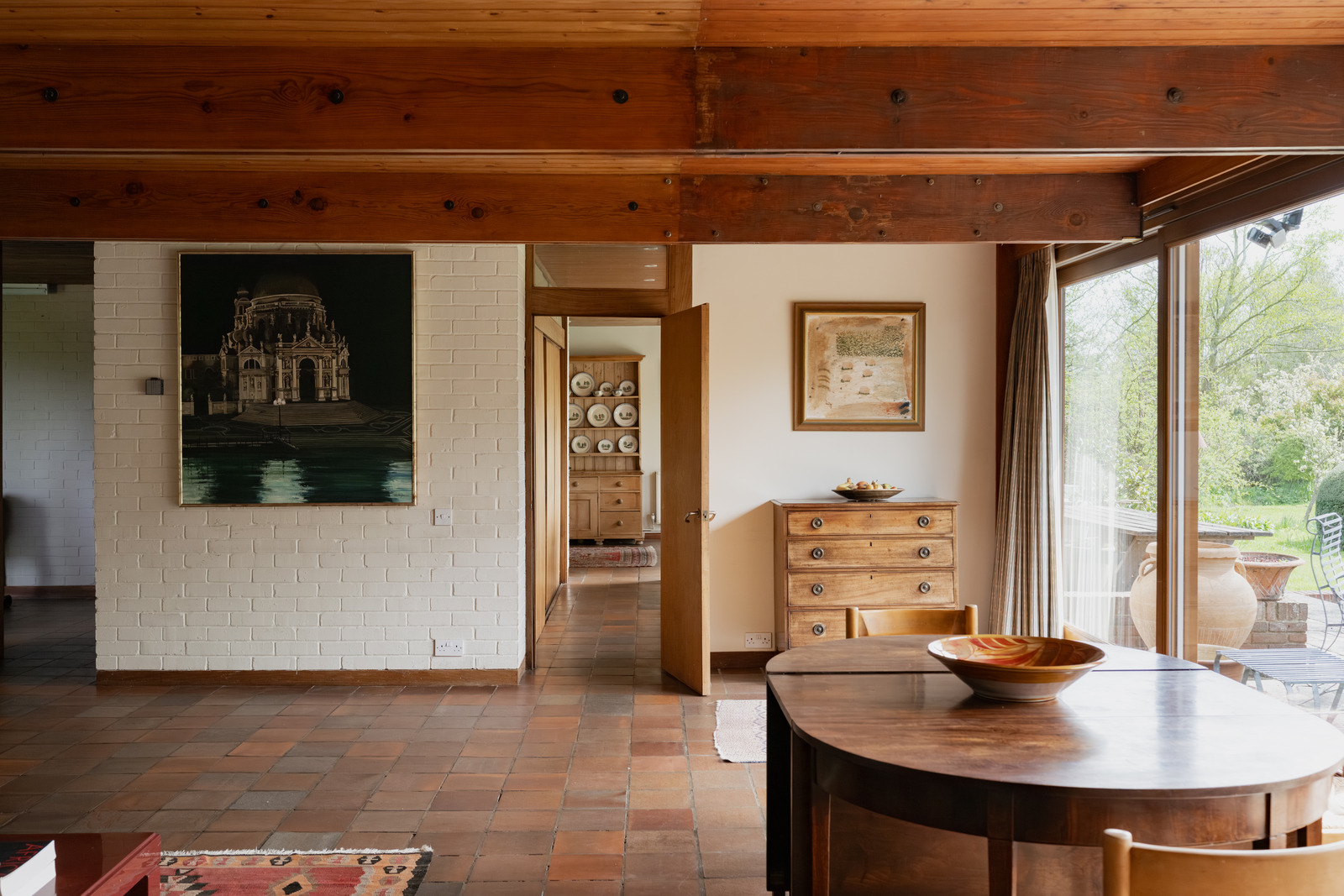
Co-founder Albert Hill on buying, and living with, the art you love
October 30th, 2025
Film and photography Luke & Nik
Words Victoria Woodcock
For Albert Hill, co-founder of The Modern House and Inigo, launching an estate agency wasn’t the first business venture he considered. “What I really wanted to do initially was sell art and furniture,” he says. And now, 20 years on, he is returning to those roots with the launch of two new initiatives that he has “wanted to do forever.”
A degree in art history led to a career in journalism, and, in the early 2000s, a dalliance with art dealing sparked by a love affair with the boldly graphic 1980s Memphis Milano design. “I was like, my God, I love this stuff, and it was crazy cheap at the time,” he recalls. “I went on a bit of a buying spree and filled up my dad's garage in Dorset with big, bulky Italian furniture.” But the plan didn’t quite pan out. After Albert's dad “tripped over a bit of Sottsass for the tenth time, he was absolutely furious,” he recalls. “I remember it well. He called me up and said, ‘Get this shit out of here!’”
Instead, Albert decided, with his friend Matt Gibberd, to sell architecture – “partly because I didn’t have to store it in my dad's garage”, he laughs – and together they launched The Modern House in 2005. Now, though, Albert is returning to his art roots with two new initiatives: sales gallery Flowers, Mountains Etc and art (and also property) advisory service November. “It’s just really a way for me to indulge something that I've wanted to do forever,” he says, adding that the parallel businesses are “less of a launch, more of a sticking of my head above the parapet”.
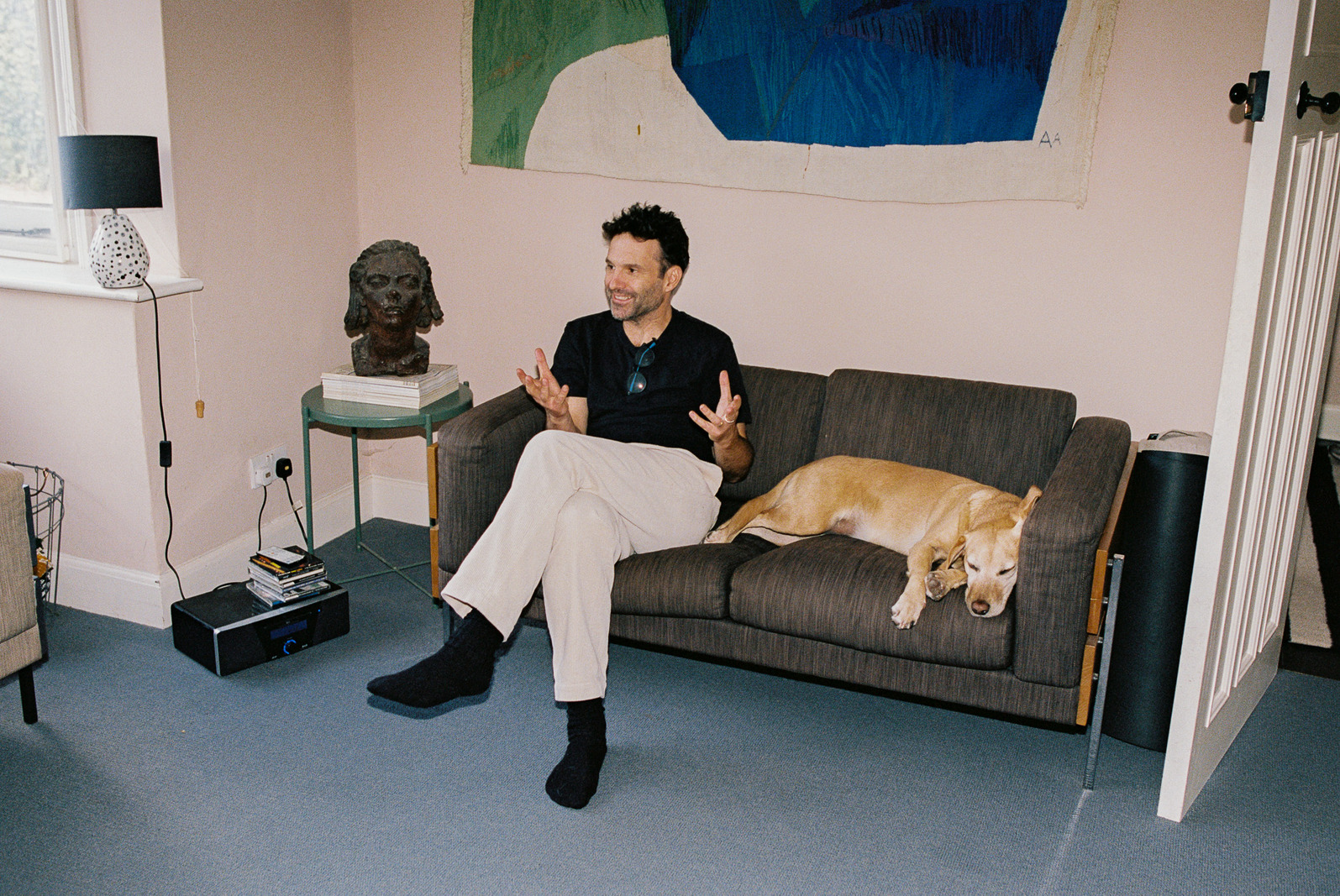
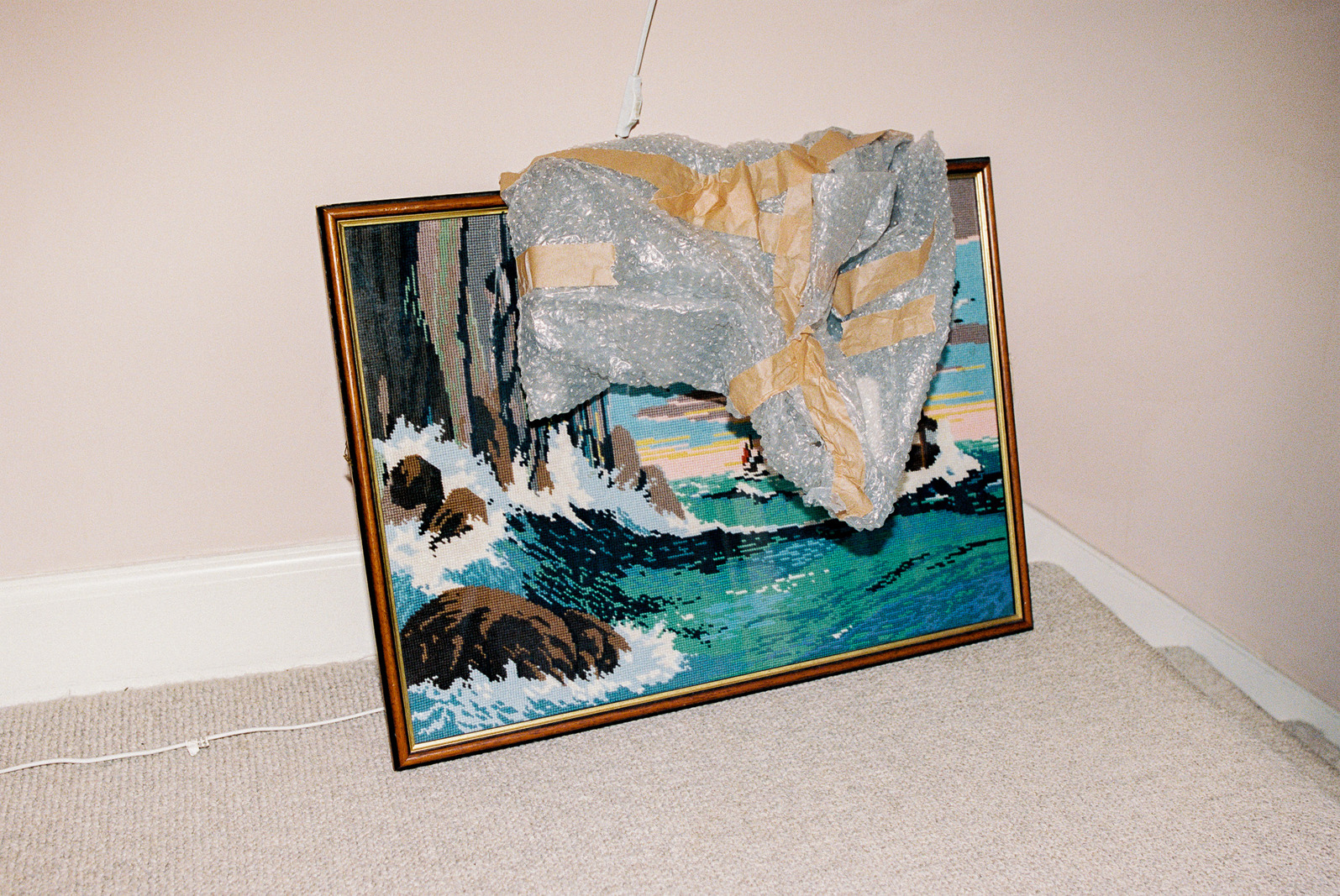
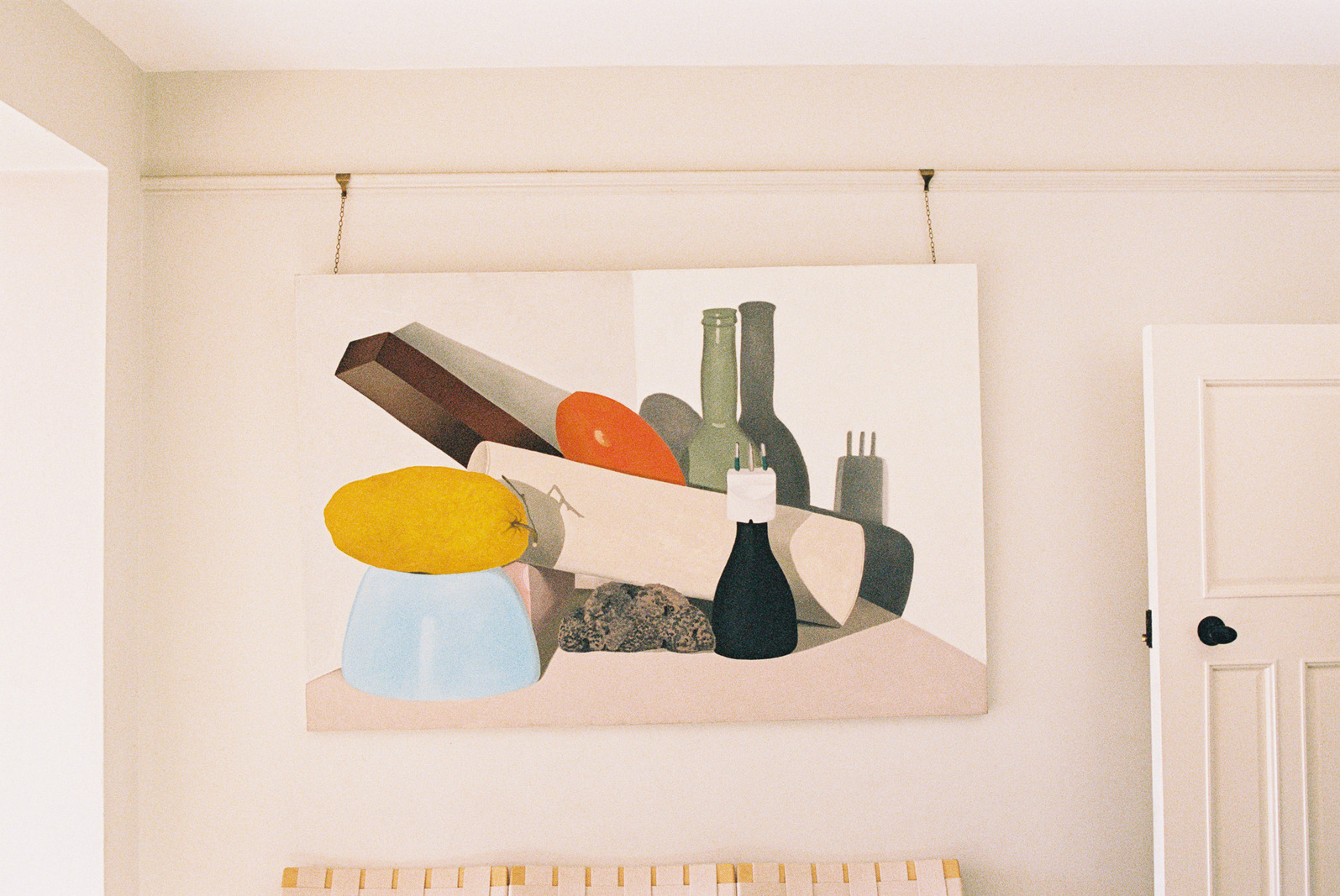
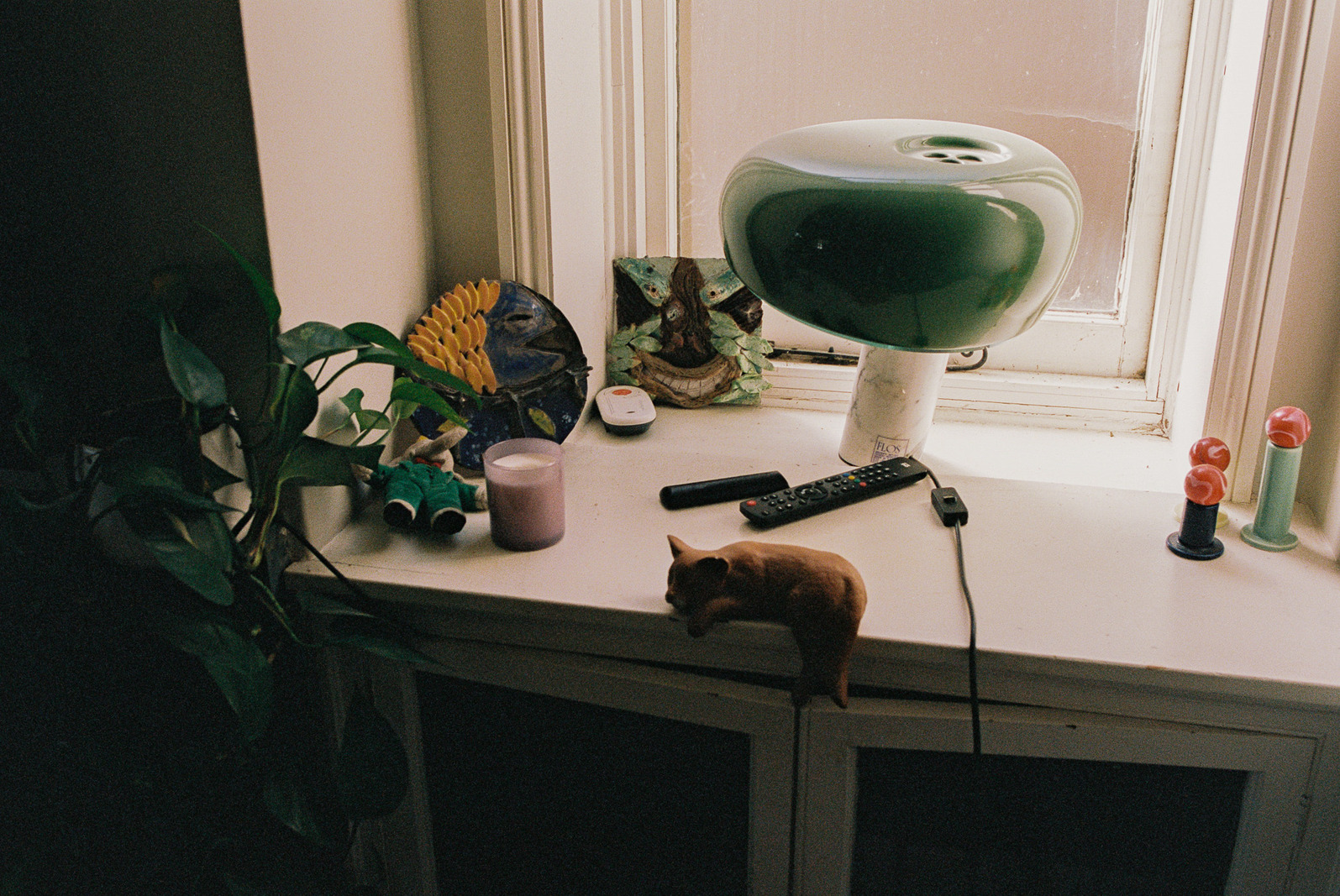
Albert credits his dad, the artist Rod Hill, for his life-long “collector slash hoarder” tendencies, and his “non-hierarchical” approach to buying art. “My dad’s house was just filled with stuff,” says Albert. “He wasn't really interested in names, he was interested in good pieces, and this meant that he had some by very famous people, and lots by absolutely nobody; a Fernand Léger next to a drawing by his neighbour's five-year-old daughter.”
Flowers, Mountains Etc displays a similar eclecticism. “There are things on there for £50 and for £50,000,” says Albert, adding that the wide range chimes with the ethos of The Modern House and Inigo, to purposefully combine the expensive with the relatively inexpensive, show-stopping masterpieces alongside wild cards.
The new platform brings together “paintings, tapestries, prints, drawings, generally 2D stuff”, loosely focused, as the name suggests, on the pictorial themes of flowers and mountains. You’ll find a 1960s still life of a blue hydrangea by Belgian-born artist George Weissbort for £520, while an atmospheric 1940s depiction of France’s mountainous Rhône Valley by British painter John Mansfield Crealock recently sold for £420.
“I started collecting by just going, ‘Oh I like that’, by trusting my eye, and while coherence in a collection is totally overrated if you ask me, I did think I needed to come up with some parameters,” he explains of the selection. “Artists have been painting and drawing flowers and mountains since classical times, and it's just something that I'm drawn to. I really like abstract paintings, and paintings of flowers and mountains are semi-abstract, they're more about form and colour.”
More hard-nosed abstraction is also represented in the mix. An edition of American minimalist Robert Mangold’s Book of Screen Prints is offered as a framed series of nine colour-blocked geometric forms (£6,950). There are nods to Albert's Memphis starting point, too, with works by onetime Memphis members, such as Nathalie du Pasquier’s Untitled (Still Life), £6,950, and George Sowden’s View of an Interior (Milano), £1,200.
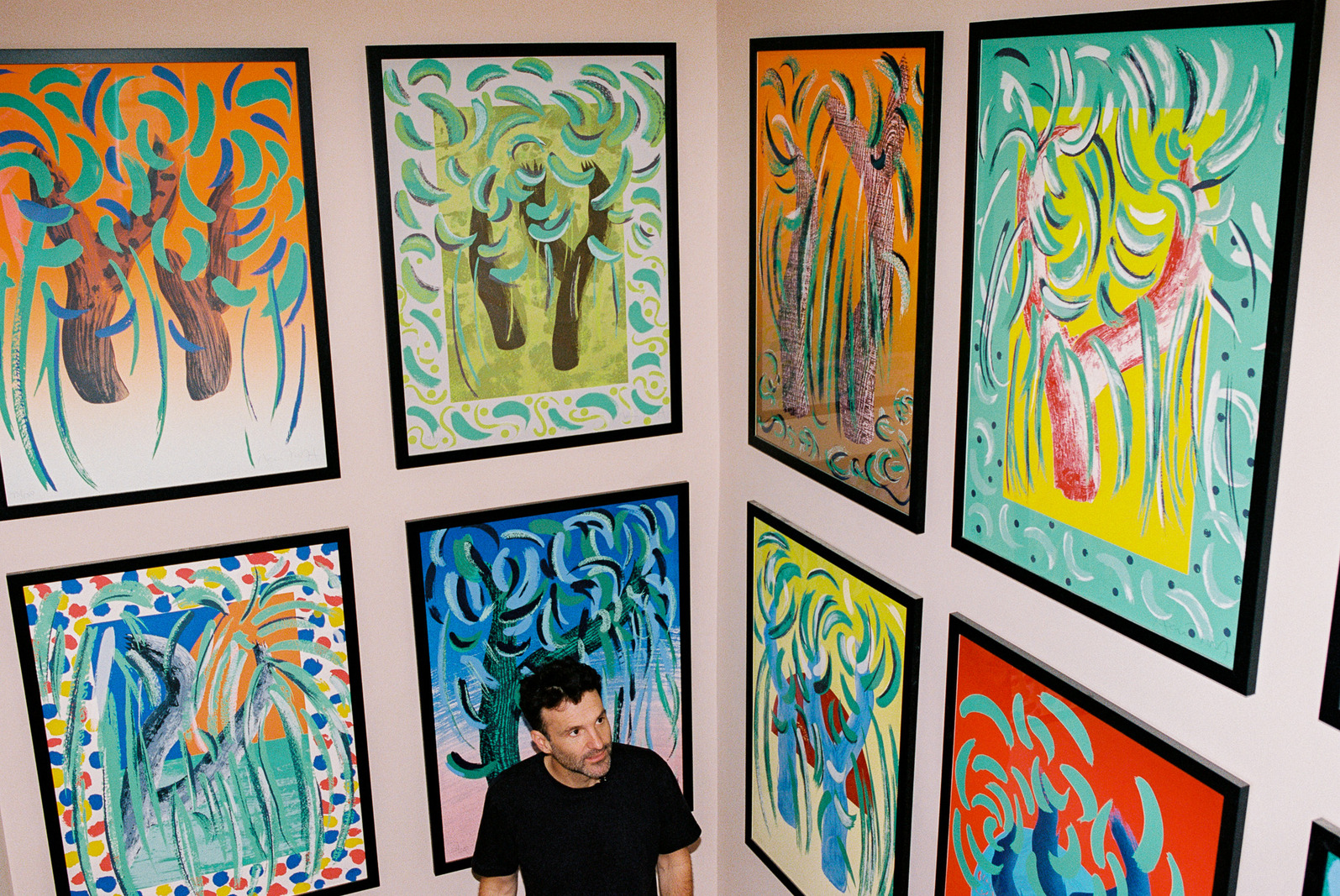
“My taste has changed a little bit,” admits Albert. “I used to be really all about the colourful abstract, and I still love all that stuff, but I also like Victoriana – and if you had told me that 10 years ago, I would have got very angry at you!”
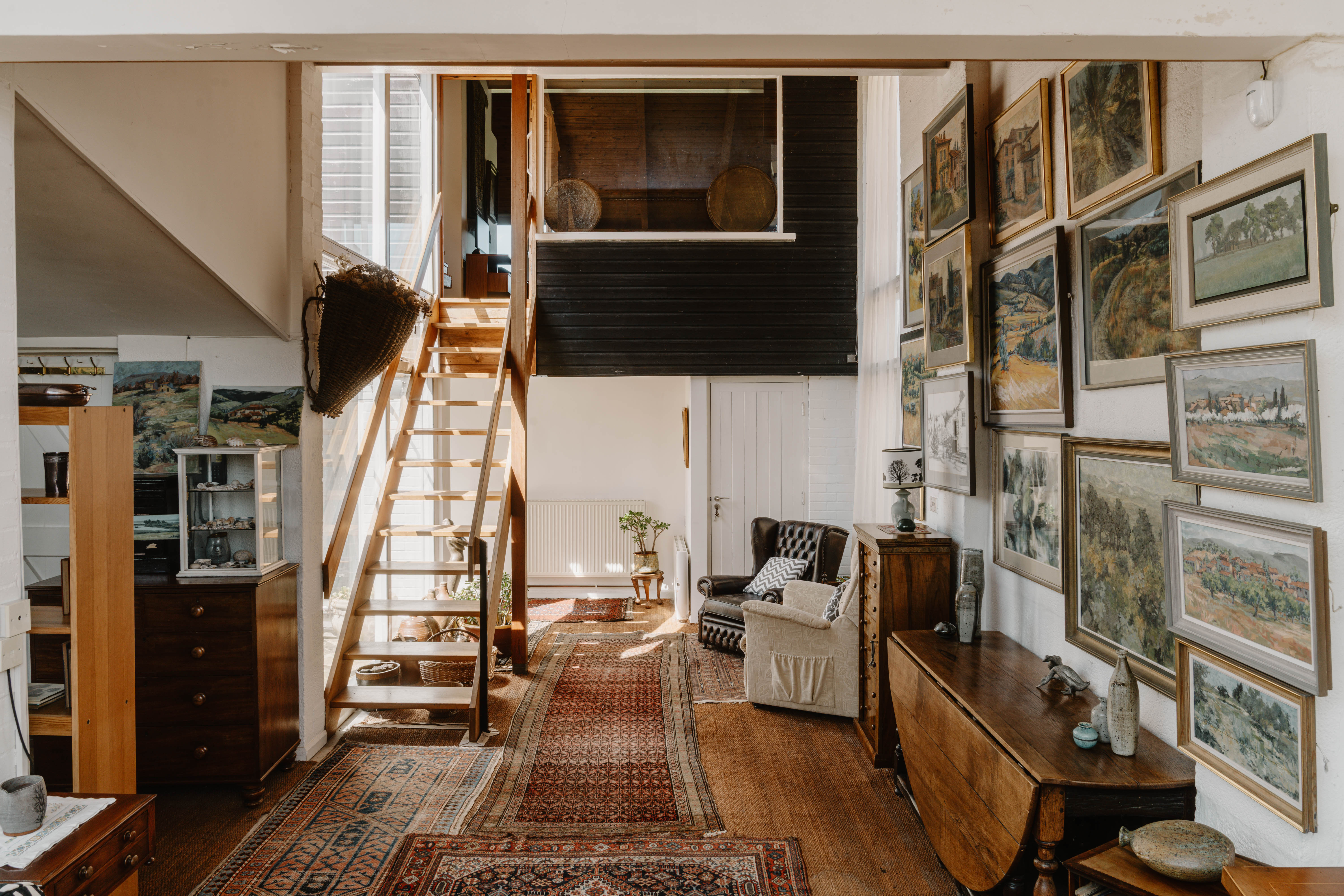
Tapestries are one of Albert's vested interests. “They add a different dimension of texture and warmth to a room,” he says. “But people tend to place it lower down the pecking order in terms of price. It's often seen as a hobby rather than serious art.” He gives the example of American artist Alice Adams, who studied tapestry in Aubusson, France, before exploring sculpture in myriad materials and site-specific land art. Now in her 90s, she was recently featured in an exhibition at London’s Courtauld Gallery alongside Louise Bourgeois and Eva Hesse, while a large woven work by Adams hangs in Albert's living room. Titled The Alps, and dating to the 1960s, the boldly abstracted composition is also included in the Flowers, Mountains collection, priced at £31,000.
This proclivity for textiles has also been passed down the paternal line. Another piece in Albert's home is a latch-hook tapestry by his dad, who, as well as being a painter, “made amazing rugs – often in collaboration with Tim Nicholson, [the artist] Ben Nicholson's nephew,” says Albert. “Throughout my childhood, he would always have a rug on his lap. And he was always adamant that they should never be hung on the wall because rugs are supposed to be domestic objects that are there to keep your feet warm.”
It’s one detail that Albert and his father disagreed on within a broader consensus about the importance of living with art. “I'm really interested in art in the home; I'm not so interested in either art in museums or art in Swiss freeports,” asserts Albert. “I’m a strong believer in the positive effect art can have on your life.”
This standpoint is at the heart of November, Albert's art advisory service that has grown out of informal conversations with friends and colleagues on the subject. He sums up his approach: “I really like advising people on art they're going to actually enjoy in their home, but I'm also obsessed with money, quite frankly, so I also enjoy making sure people don't buy something stupid.” Even when buying something you love, and to live with, it should still, at the very least, retain its value, Albert adds.
One of his top tips for burgeoning collectors on a budget is to buy old books and present the printed pages in frames – either together in series or individually across the home, considering both the impact of where something hangs (he cites the way artworks are hung at “knee-height” at Cambridge house-museum Kettle’s Yard, for instance).
One particular book he recommends is The Picture of Everest – a book of colour reproductions of photographs by Alfred Gregory from a British Himalayan expedition first printed in the 1950s. “You can buy copies on eBay for £30 but it has magnificent full-colour prints, 43 of them, which you can take out and frame, and they look incredibly good,” he says.
When it comes to making more of an investment, though, “try spending little bits of money before you spend big bits of money”, advises Albert. “And don’t just go for a name, because artists have their off days." He gives the examples of a client in the market for one of Wolfgang Tillmans’ photographs. “I love Wolfgang Tillmans as well; he’s pretty prolific, there's quite a lot out there,” says Albert. “Rather than buy the first available work, just wait and spend four times as much on a really good one.”
Albert's collection of paintings, prints and objects is available to view at Flowers, Mountain Etc and on Instagram