Back to square one: a perfectly-proportioned Georgian house, masterfully reimagined
June 9th, 2026
Words Kate Jacobs
Photography James Tarry
When this grand house was built, back in the 1700s, it sat on the edge of the countryside that surrounded the City of London. Since then, the capital has steadily enveloped the land here in what is now Hoxton, with orchards giving way to busy streets. This house remained buffered from the more hectic aspects of the city by the verdant Charles Square, where it is the last of the original buildings still standing.
Along the way, the house itself has experienced many different existences; first as a stately residence; then, with the addition of another storey, as the Shoreditch Magistrates’ Court. Later it became the headquarters of a city guild devoted to haberdashers and needleworkers. Most recently it became the Labour Party HQ, instrumental in the victories of Prime Minister Tony Blair in 1997, and London Mayor Ken Livingstone in 2000. Marta Nowicka, the designer behind this ambitious project, is enchanted by the building’s storied past. “I love that layering of history here. Even before this house was built, it’s thought that another mansion stood here, where Charles II was supposed to have wooed Nell Gwyn. The incredible vaulted cellars date back to that time,” says Marta.
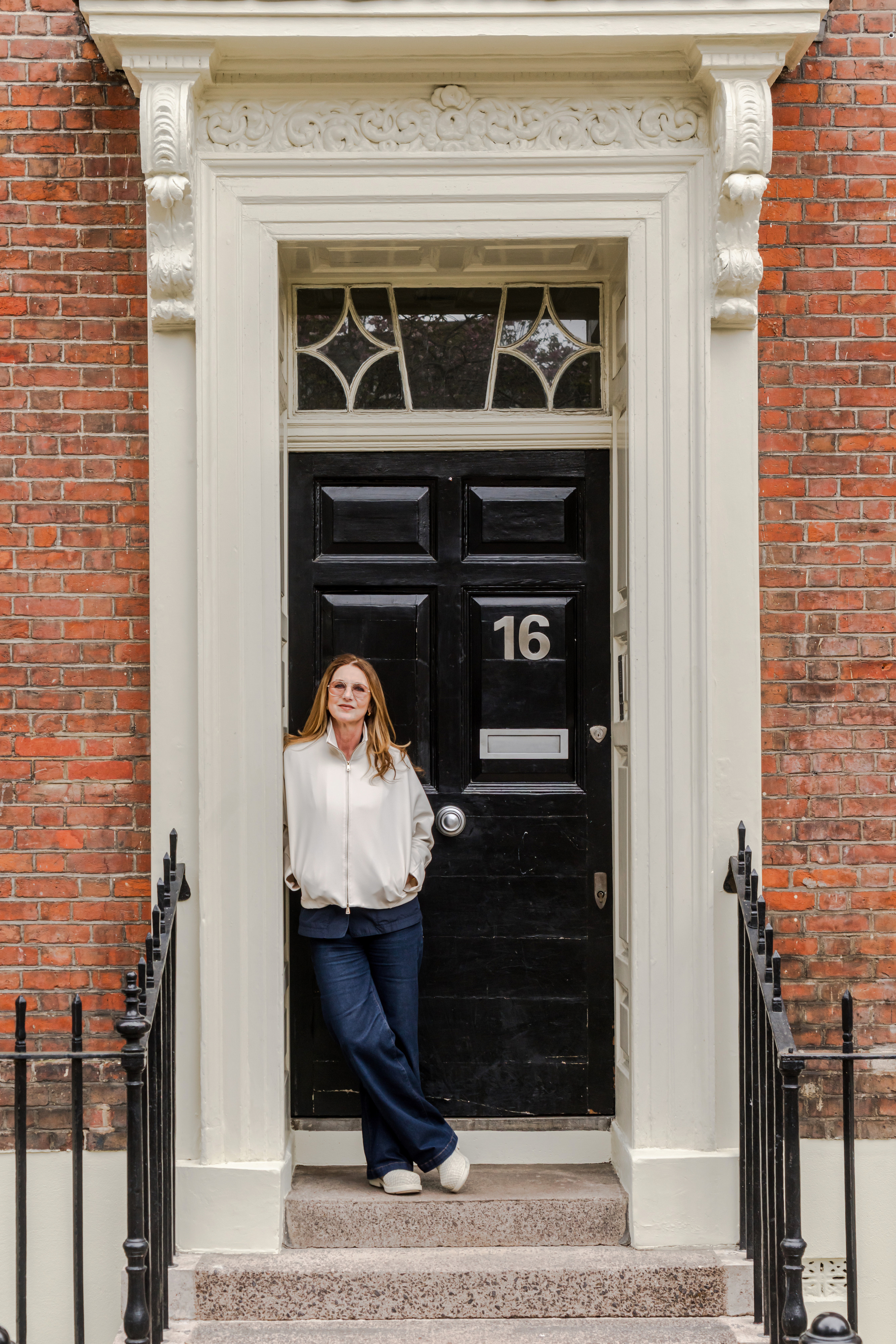
Marta, the founder of multi-stranded property brand DOMstay and an interior architect specialising in adaptive reuse, found the place quite by chance. When roadworks rerouted the commute to her studio, she found herself passing the square on a daily basis. “Every morning I kept seeing this beautiful building,” she says. “When I contacted the estate agent, he told me it was Grade II*-listed and English Heritage didn’t want it carved up into lots of small apartments. So far, none of the property developers he’d met could make it work.” But Marta was determined to reawaken the house’s residential past. Now this expansive and elegant building has been sensitively portioned out into five unique and generously sized apartments, two of which are now for sale.
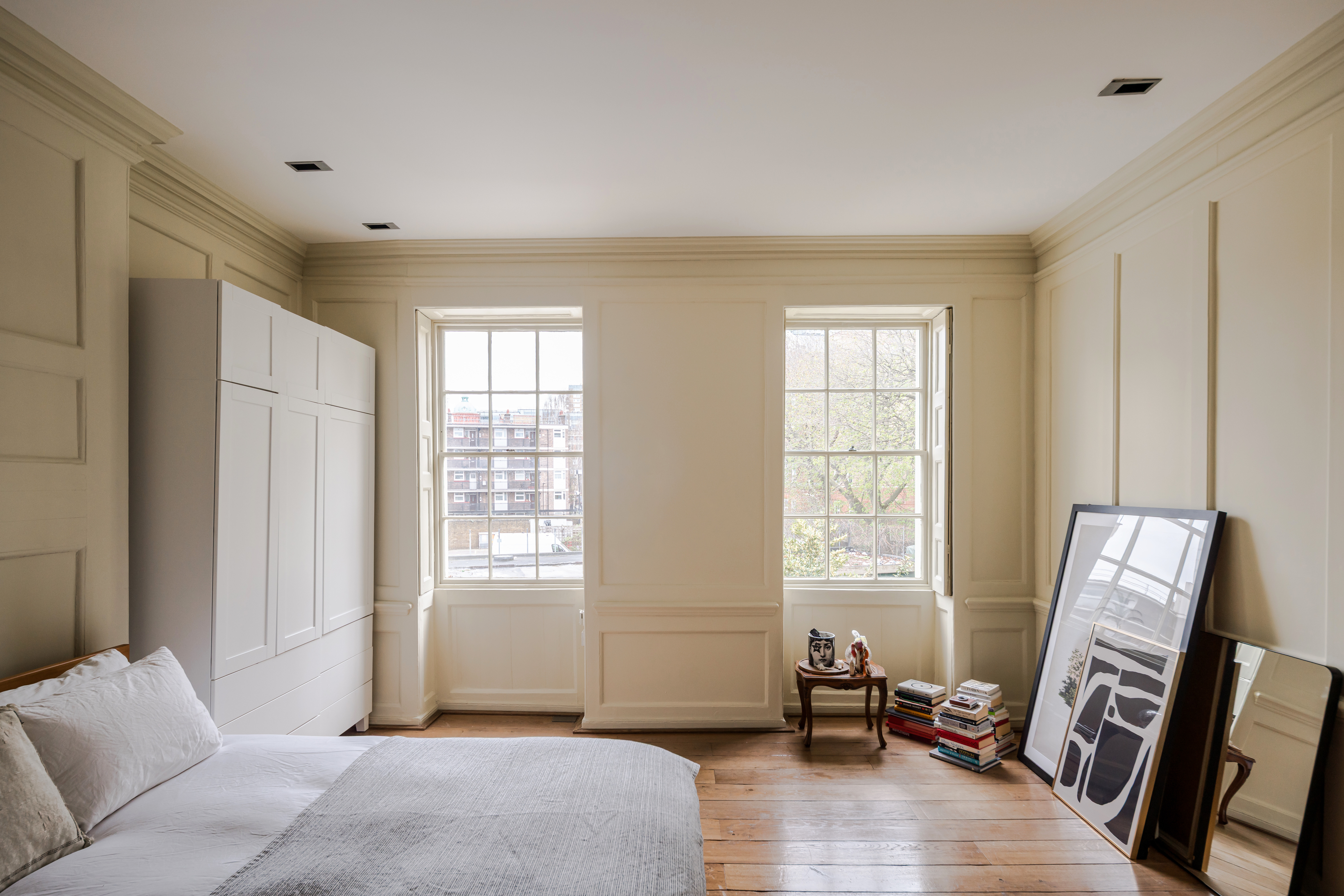
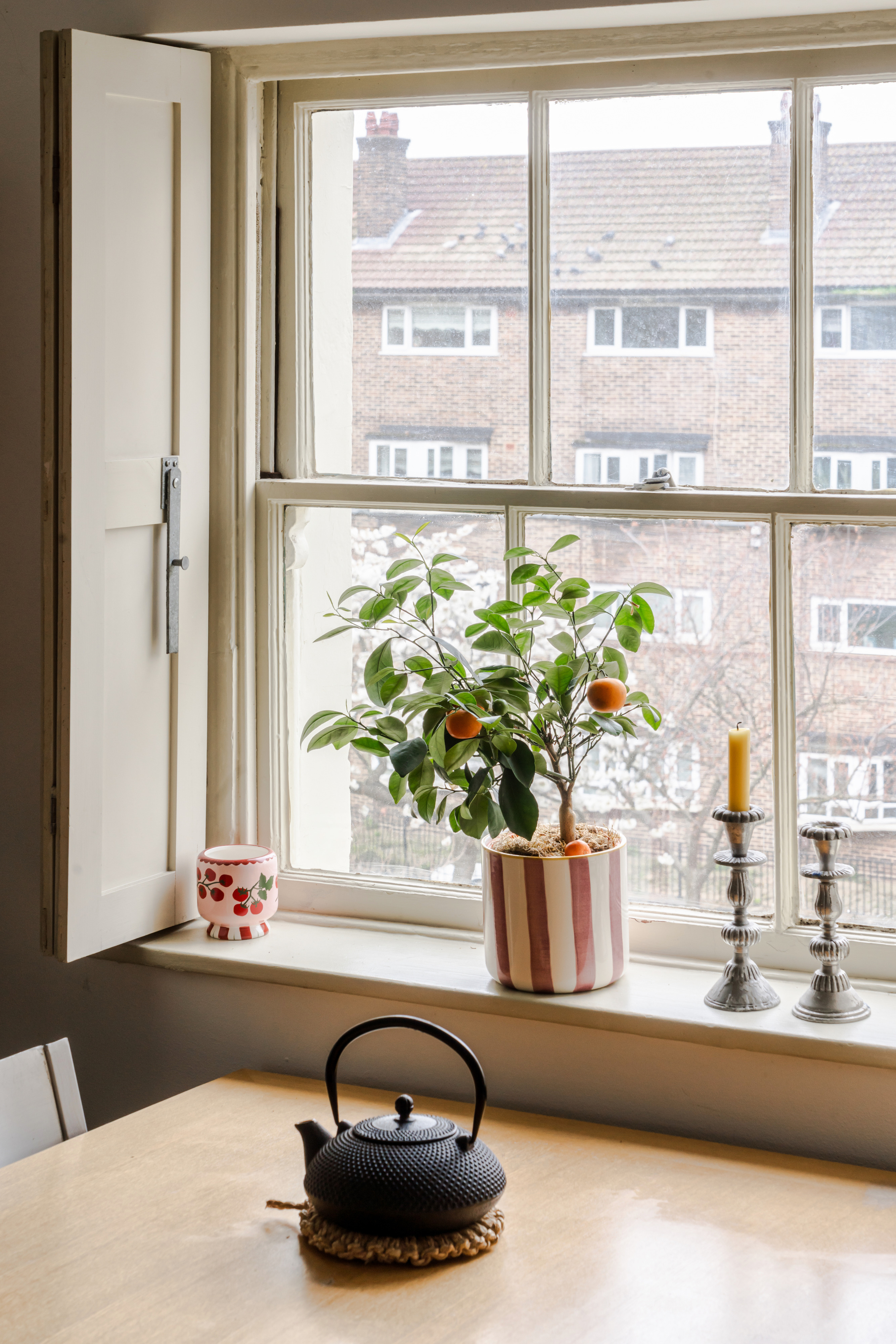
While the building undoubtedly has a rich and layered past, its many twists and turns had resulted in numerous inconsiderate interventions that obscured much of the historic charm. “After all its years as an office, it felt like it had been trashed, with cladding and partitions over the original panelling, fluorescent strip lights on the ceilings and cables running up and down the stairs,” Marta recalls. “I was saddened by the disrepair and disrespect, but I was also inspired by the potential I could see. The house had these incredibly generous, golden proportions and perfectly lit rooms thanks to the high, Georgian windows.”
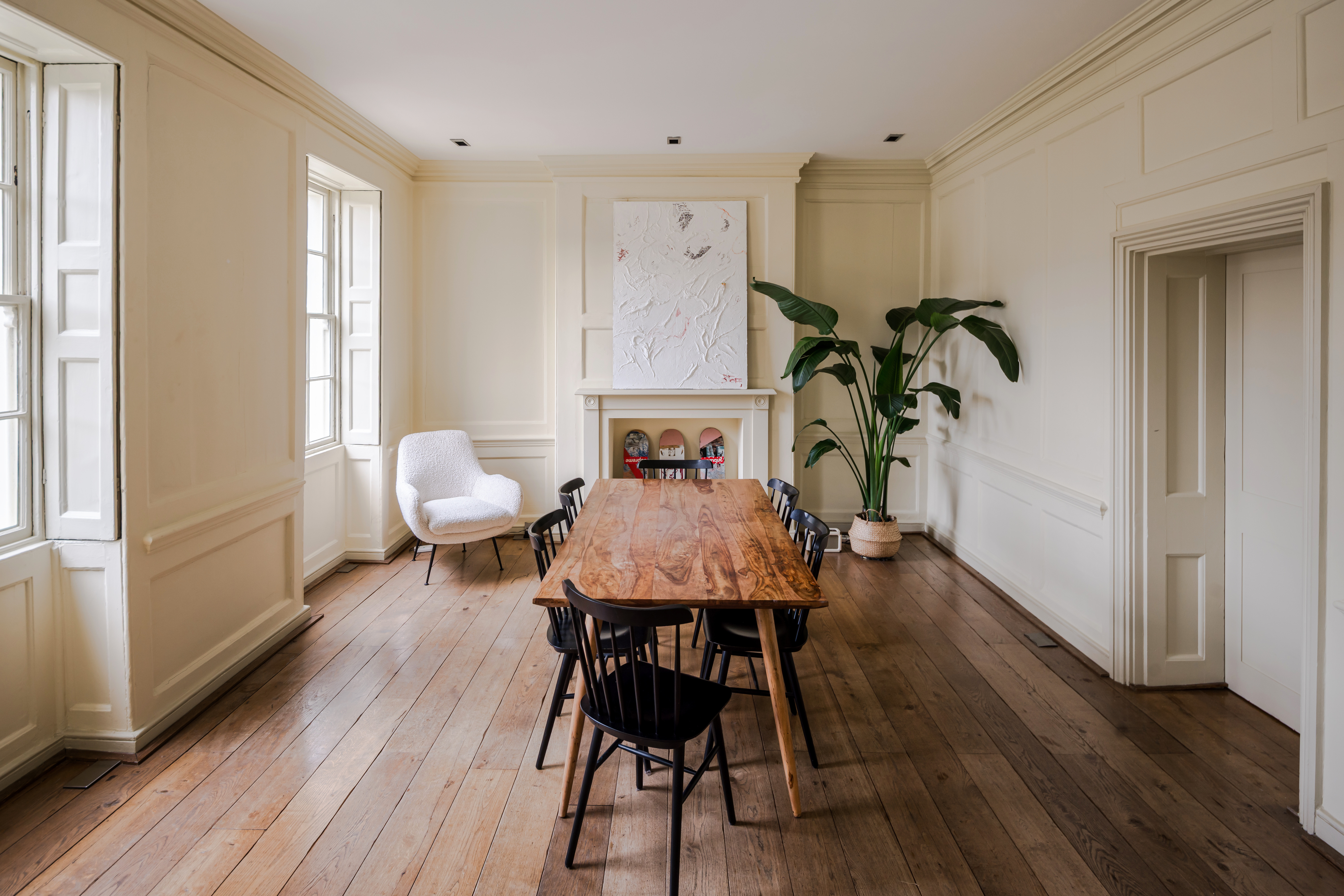
Because of the historical significance of this house, Marta worked closely with English Heritage to reinstate its residential origins. “I spent a lot of time just walking around the house. There’s a wonderful dichotomy between the original building and the centuries of change. I’m a modernist at heart but I have a huge respect for history. Both the modernists and the Georgian were masters of light.” Throughout the house, Marta has carefully stripped back the layers to get to the original fabric of the building – the wood panelling, the stone floors, the cornicing – restoring and reconstructing along the way.
The grand central hallway sets the tone, with a carefully restored statement staircase and original flagstone floors (these were previously hidden under layers of flooring, latterly Labour-red carpets). Elsewhere the floorboards were unsalvageable and have been uniformly replaced with distressed smoked oak, while the walls are all painted in a warm chalky white.
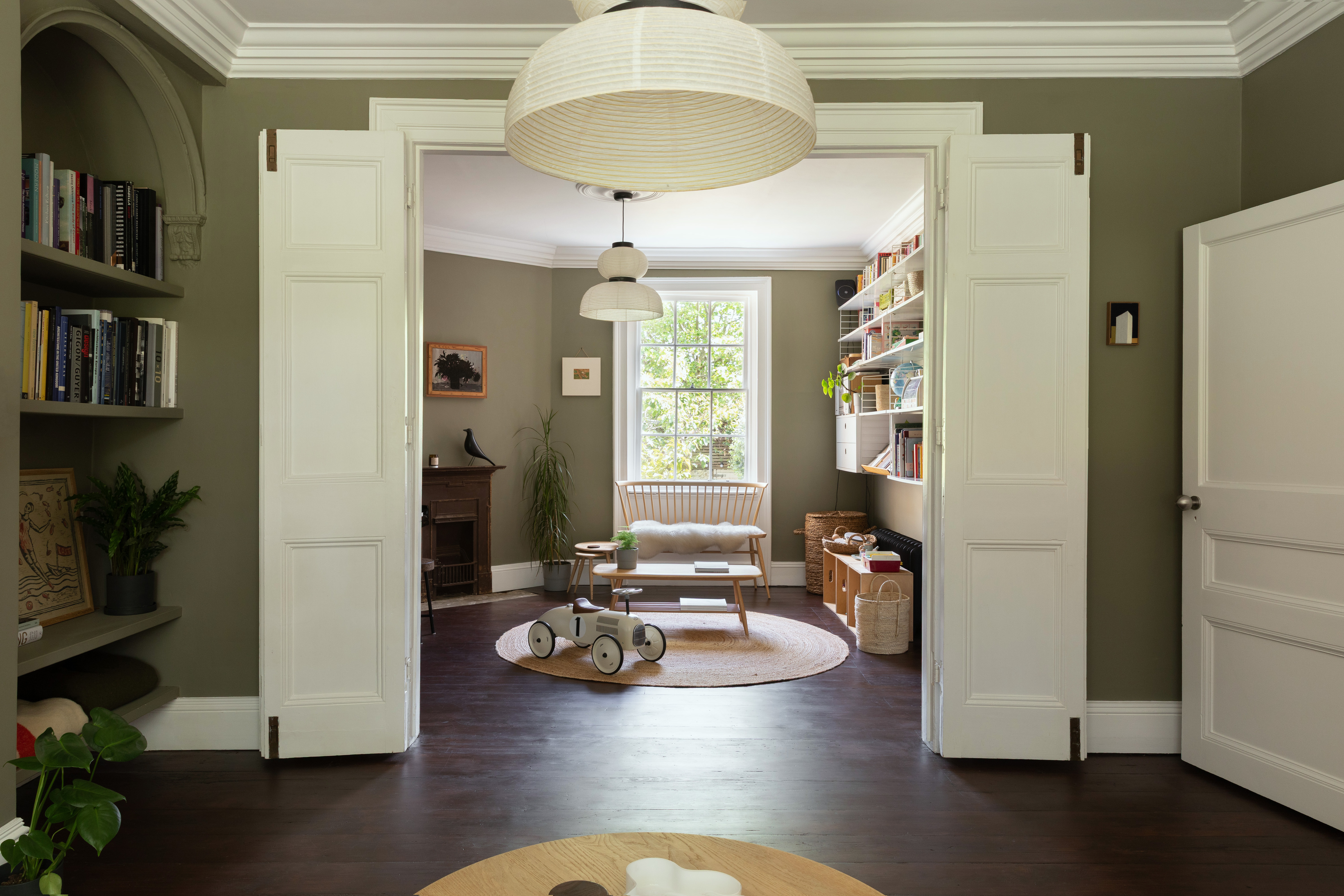
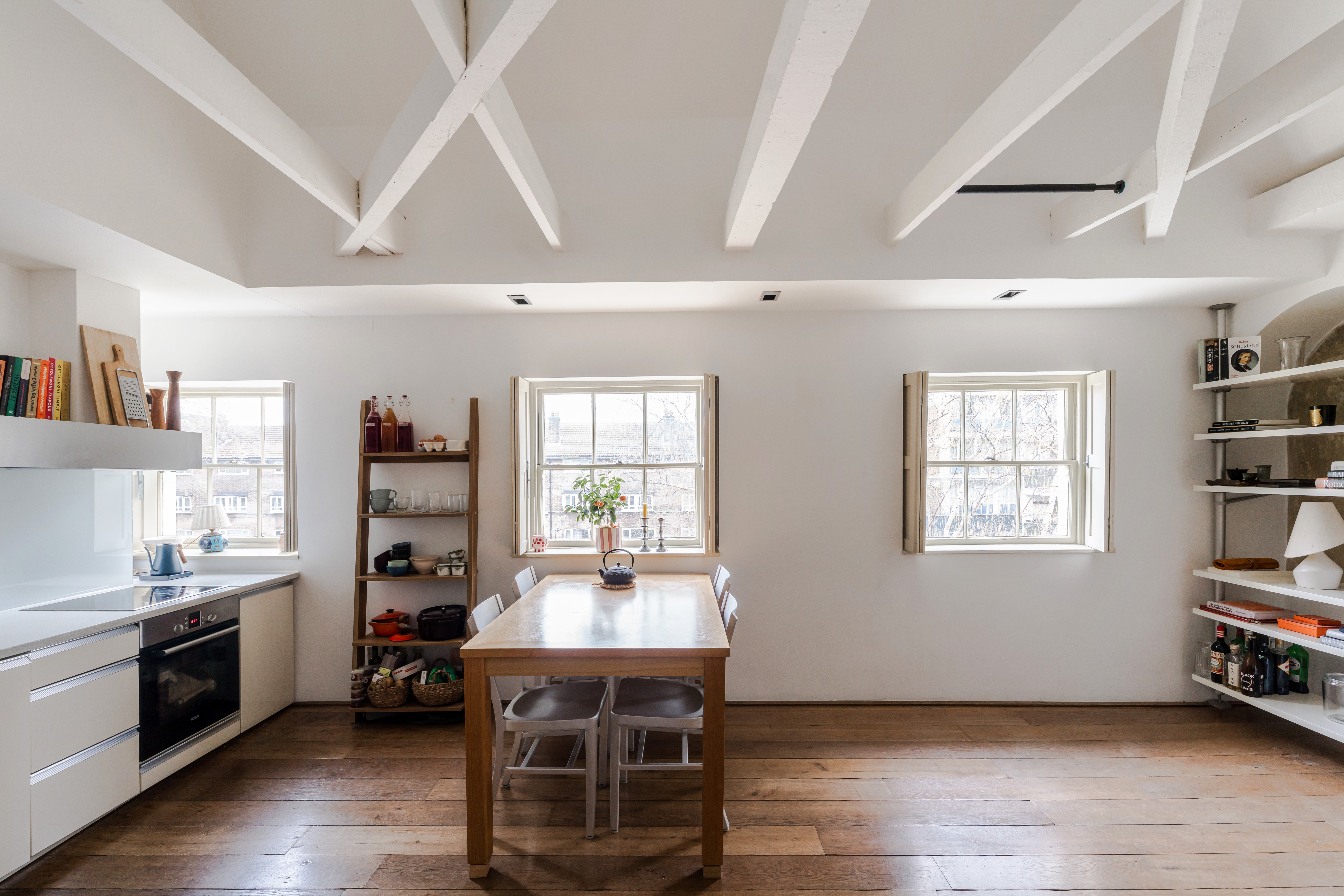
Apartment 3, with two bedrooms and two bathrooms, is all about the light and proportions. “The three interconnecting rooms feel very continental, the windows and shutters are beautifully elegant, as is the panelling. The whole kitchen was designed as an island to avoid interrupting the panelling. Meanwhile, on the top floor, Marta has exposed the rafters, creating lofty double-height spaces. “I wanted to embrace the sense of space and to maximise the generous proportions throughout this house.” Apartment 4 is tucked up under these eaves. It has one bedroom and one bathroom, but still feels like a generous space. “It looks out over the garden square and has lots of historical character, with slightly wonky floors and a beautiful fireplace,” explains Marta.
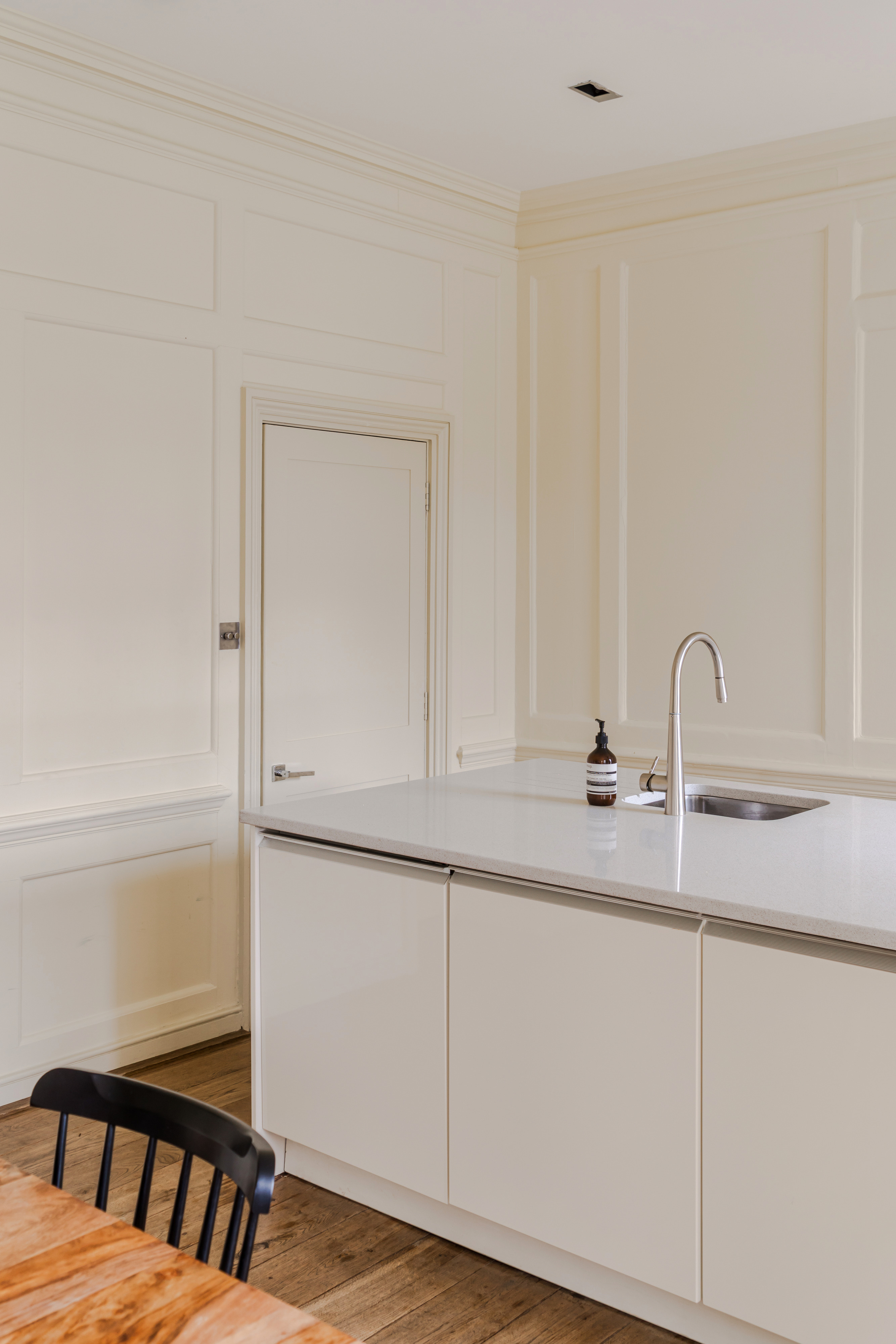
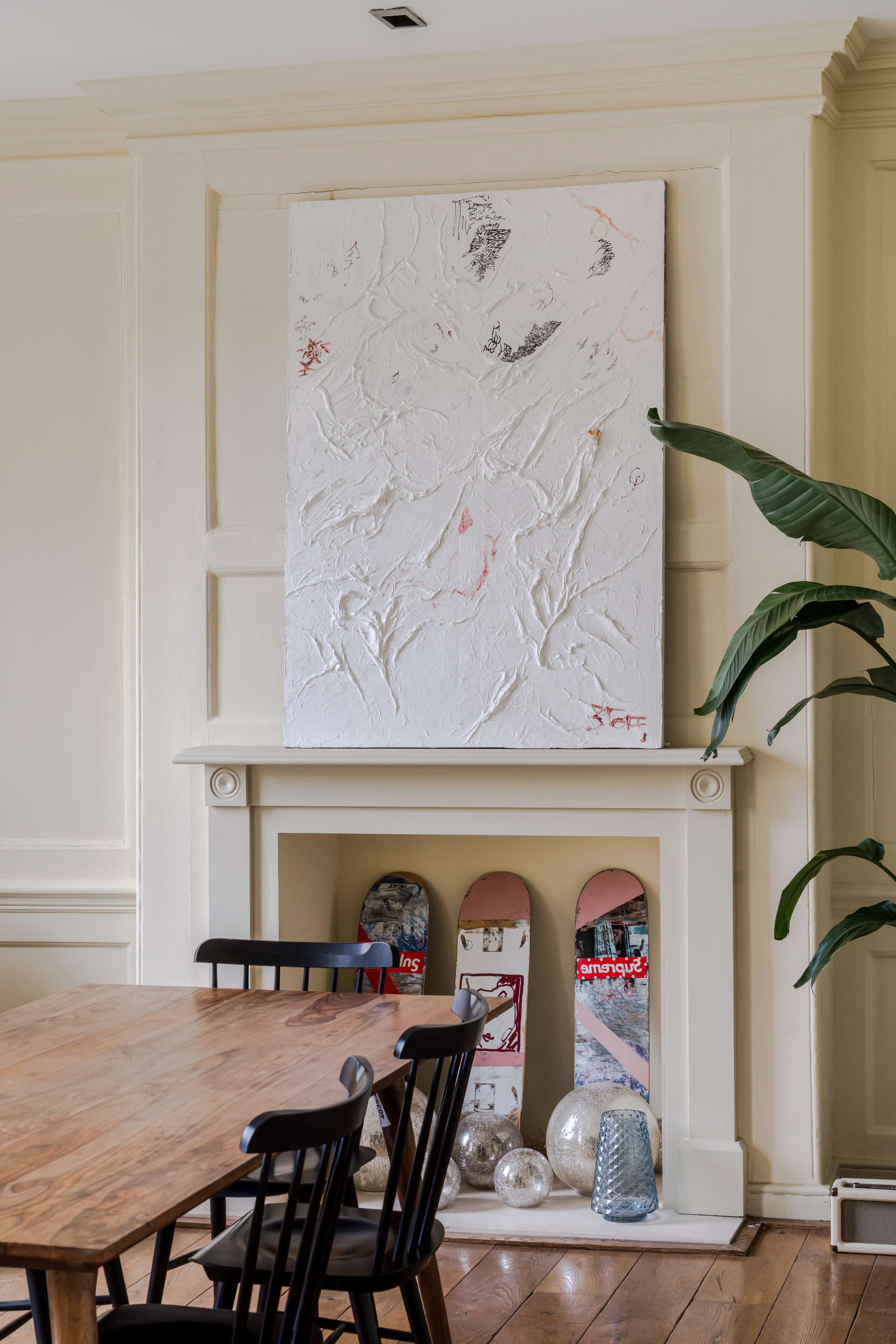
To draw a clear distinction between old and new, the kitchens and bathrooms are all strikingly modern, with a carefully constructed sense of timelessness and simplicity. The white Rotpunkt German-engineered kitchens with resilient quartz countertops are deliberately devoid of detailing to ensure that they don’t date. Meanwhile, the bathrooms feature resin floors studded with marble chips, and bath areas enveloped in mirrored panels. “I try to avoid using tiles because grout ages so badly,” says Marta. “I want to reflect the original Georgian architecture rather than add onto it, so it made sense to use mirror. It reminds me of Sir John Soane’s use of convex mirrors to bounce light and create new viewpoints.”
“The square itself is very peaceful now that no traffic is allowed through it. It was recently refurbished with flowering plants and silver birch trees that form a canopy. Like the setting when the house was first built, it feels like living in the countryside: quiet, tucked away, but with the City, Hoxton and Shoreditch on your doorstep, vibrant, creative and ever-changing. It’s the best of both worlds.”