Colour blocks: painter Rob Wyn Yates on the joys of loft living
September 15th, 2025

This article is more than a year old and may contain information that is out of date. Sorry about that.
Words Lily Le Brun
Photography French + Tye
When artist Rob Wyn Yates bought his flat in a converted factory, it was an unplanned decision – “I wasn’t even house-hunting,” he laughs. But one visit to the art deco building in Forest Gate was all it took. After two decades of carefully considered living, his apartment, now for sale, is a study in instinctive design: flooded with light and framed by his sculptural paintings.
There are panoramic views of London from the roof terrace of the converted Trebor Sweet Factory Rob calls home. He is pointing out its immediate neighbour, a primary school, telling a suitably sweet story: “Workers from the factory used to throw sweets into the playground for the children,” he says. “The sugar for the sweets came from the Tate & Lyle factory, which lies on the river just south of here.” The sweets are now long gone from the neighbourhood, but happily they have been replaced with an extraordinary variety of fresh fruit and vegetables sold on nearby Green Street Market.
When Rob bought the flat just over twenty years ago, he barely knew the neighbourhood. He had been living in Richmond, having recently relocated from Sydney, where he worked as a designer. Flipping through a copy of the London Evening Standard one day, he happened to see a picture of the 1930s art deco factory, which was being converted into residential spaces by Burwell Architects.
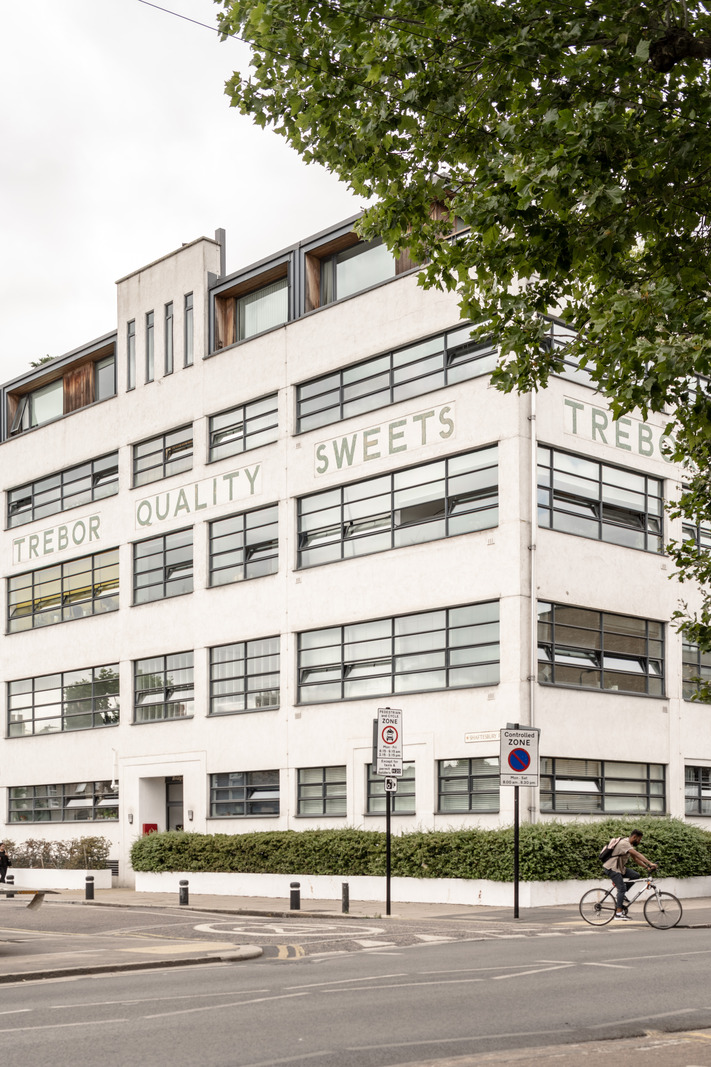
Intrigued by the building, he arranged a visit. “I had friends around here, so it wasn't totally random, but I'd never been to this area before.” Not only was he unfamiliar with this part of London, but he wasn’t even looking for a new place to live. “I just saw this particular space and I thought: this is it. It's just brilliant.”
Although he looked around the whole building, it was a unit on the second floor that he was drawn to. With its high ceilings, neat layout and generous wall of southern-facing windows, his response to it was “immediate.” However, when he spoke to the agent, someone had already made an offer on that exact flat. No other unit would do, so Rob walked away.
But then, to his surprise, “The agent ran after me, asking if I could put a deposit down then and there. I had my chequebook on me, so I just did it, thinking I’d worry about moving the money around later. Then I thought, ‘Oh my god, what have I done? This is a ridiculous situation. No one buys a flat like that!’”
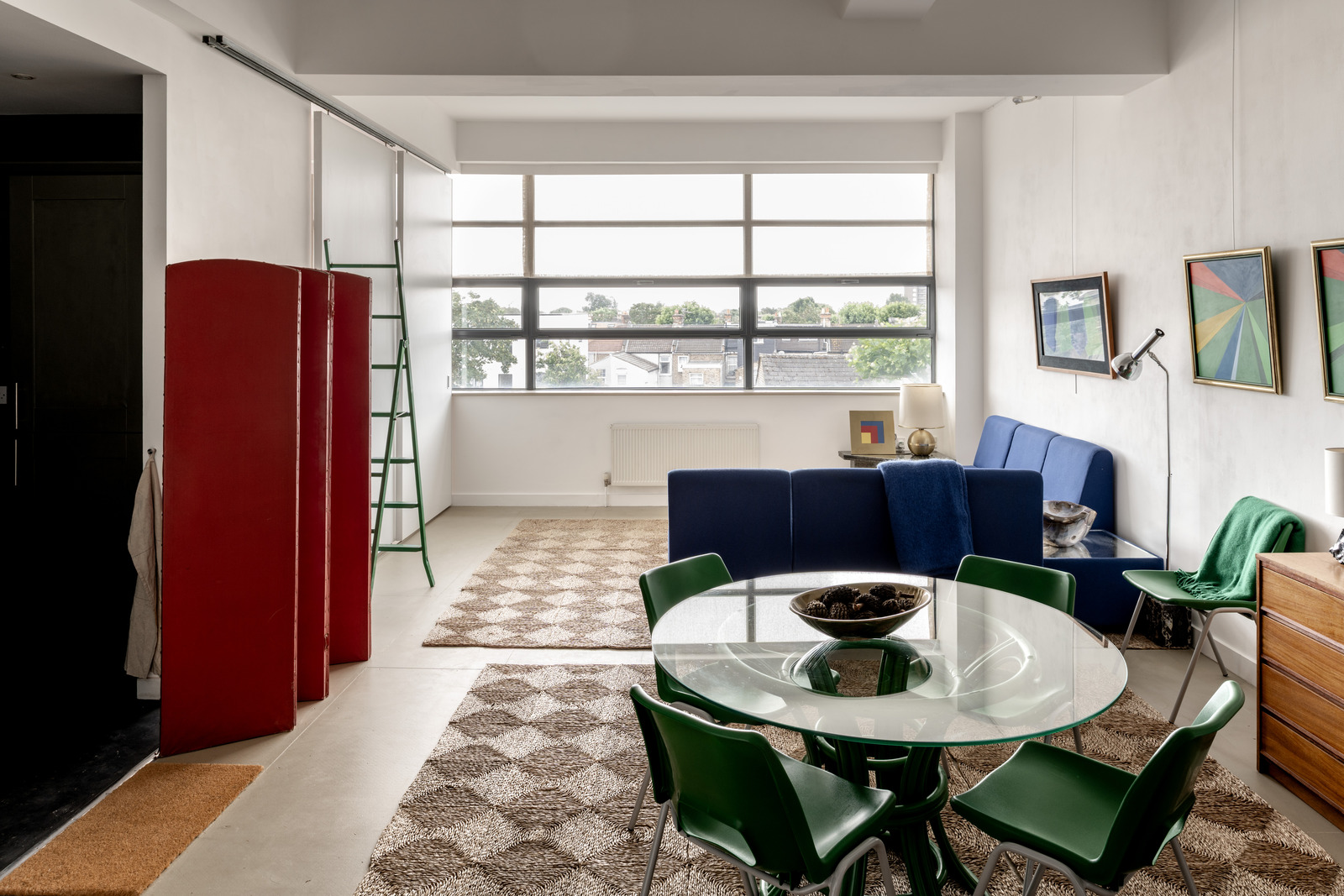
Yet as a designer and painter, Rob was well-placed to trust his aesthetic instincts. He needed to make only minor adjustments when he moved in, retaining the layout exactly as designed, with the kitchen at the centre of an open-plan area and the bathroom concealed between the main bedroom and a corridor. To maintain the generous feeling of space, he opted for large sliding doors rather than fixed walls to have the option of dividing off the two bedrooms. “I got a few things tweaked, but essentially, the layout has stayed the same. I haven't made any big additions. I've tried to keep it light, airy, open and flexible, and I wanted to make sure you could appreciate the scale of it.”
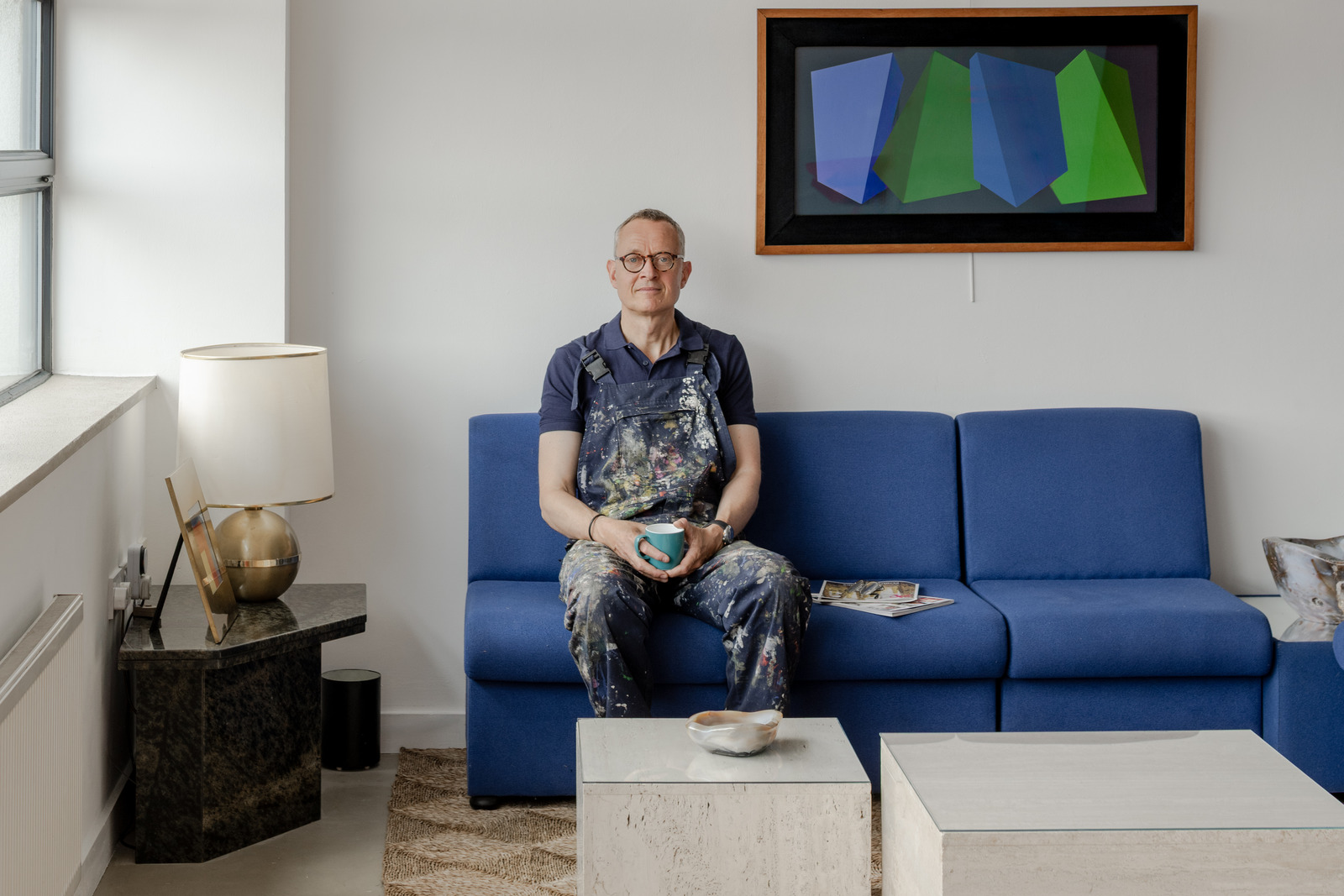
The openness of the flat means that the expansive sky, uninterrupted above rows of quiet residential streets, is a constant yet ever-changing presence from every room. “Yesterday morning, there was a line of stormy-looking clouds on one side and on the other side, it was bright blue – so dramatic. And the view is even better at night. To the west, you can see the lights of Canary Wharf, and you’d be amazed at all the lit-up cranes. We’re at roof level here, so it feels very private.”
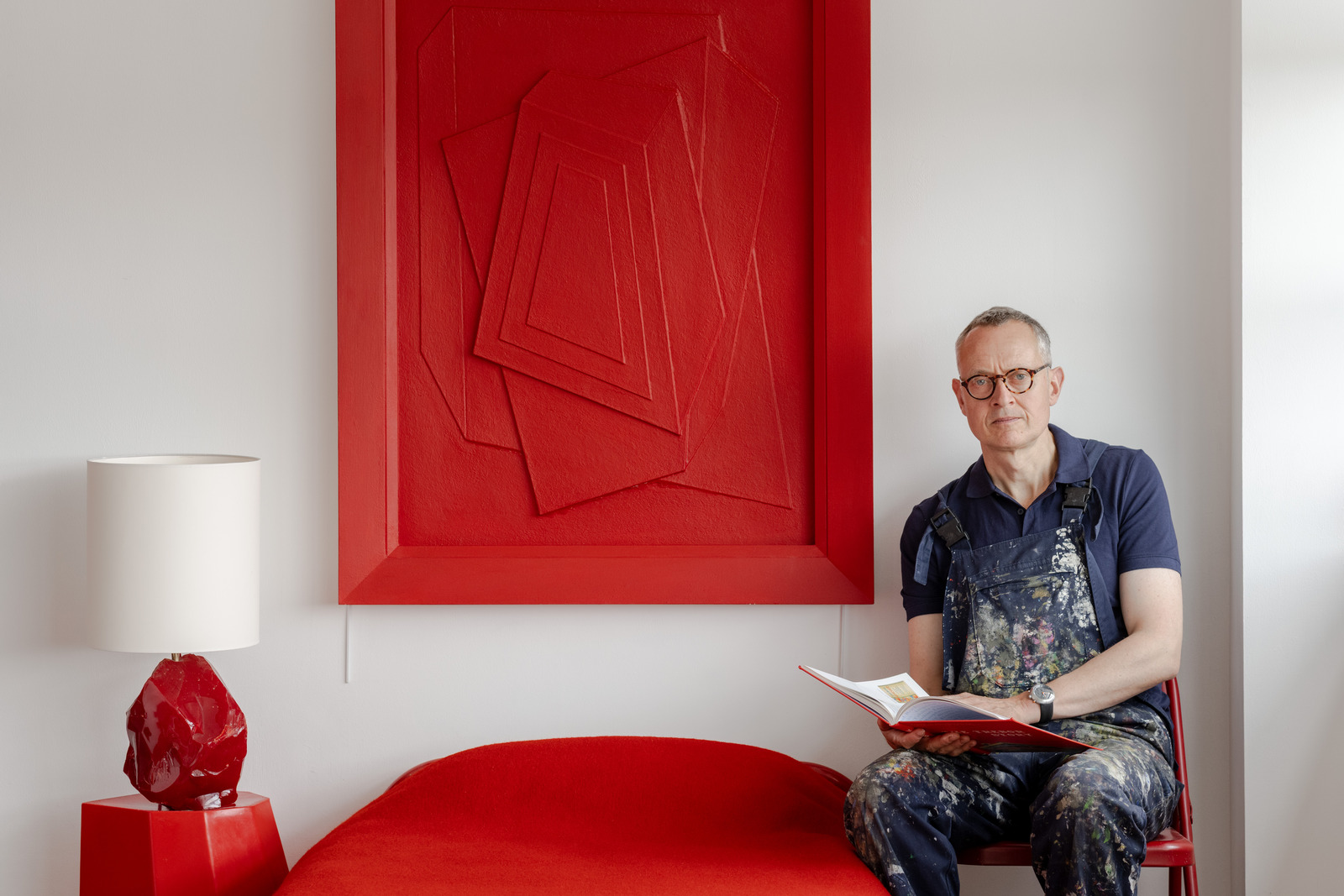
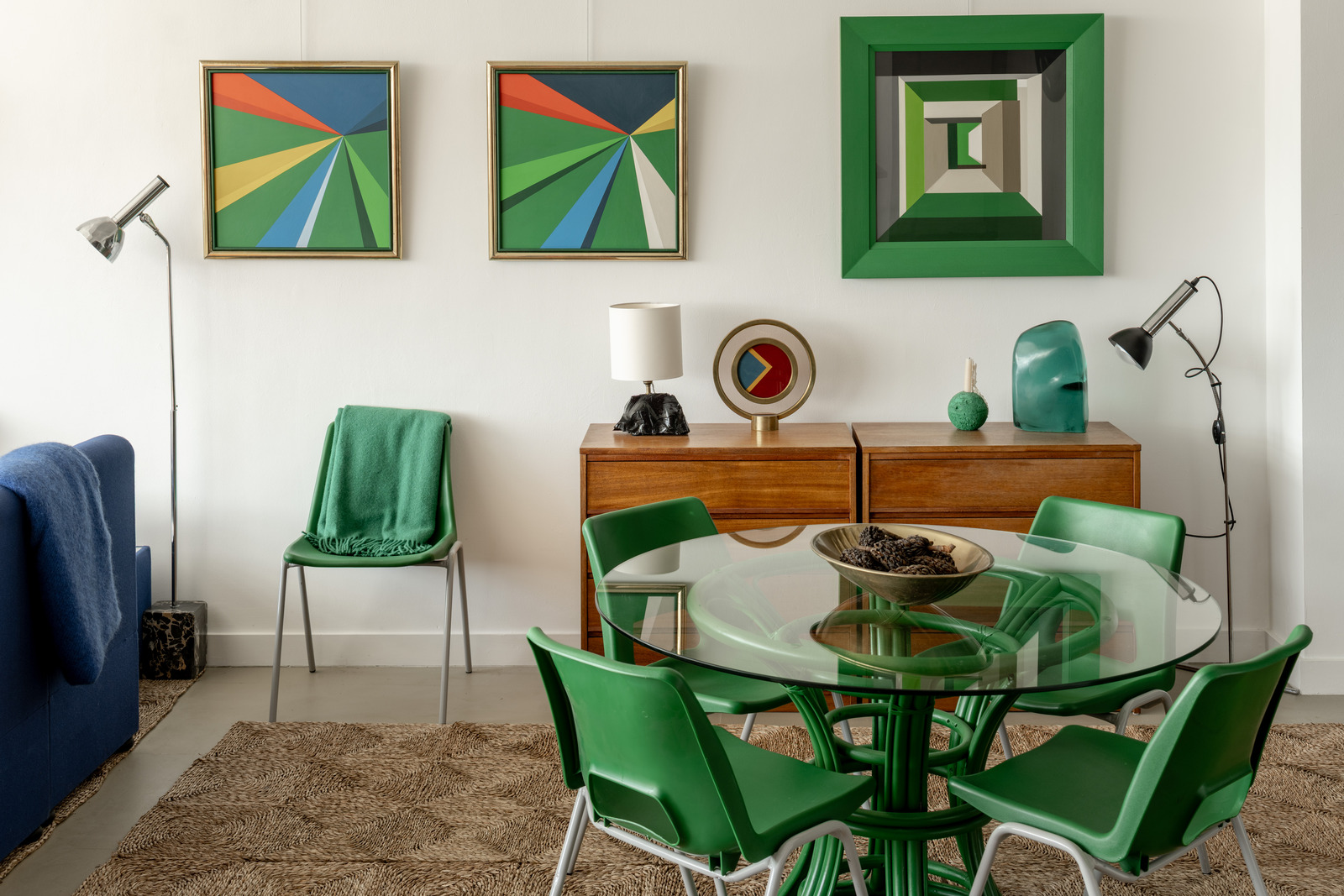
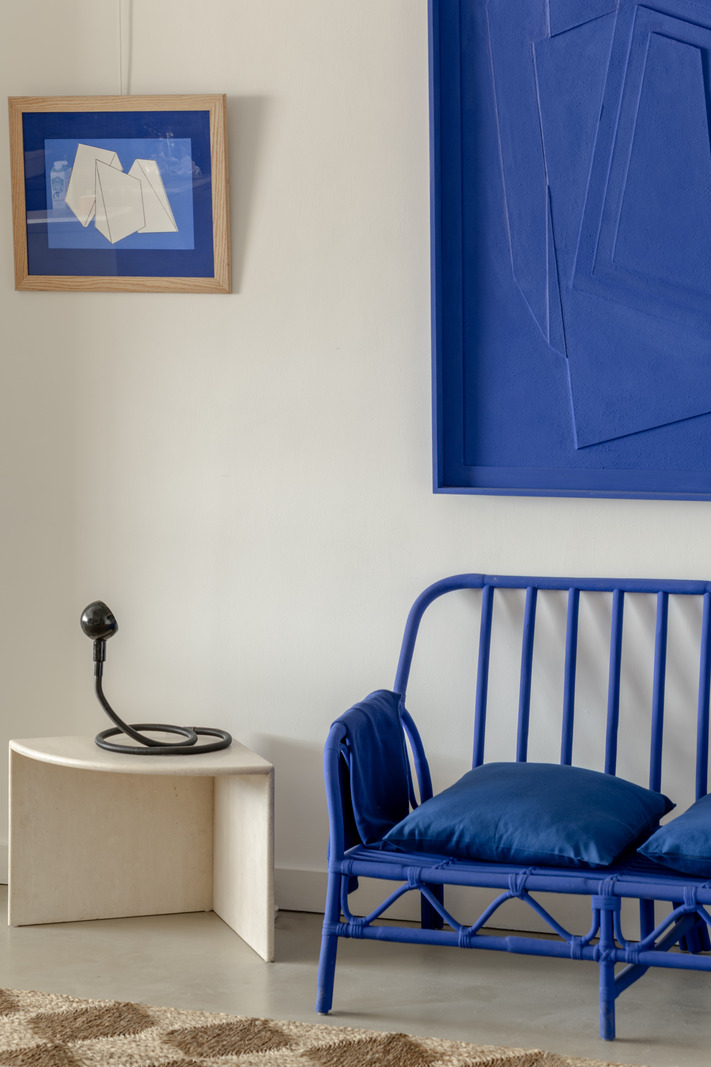
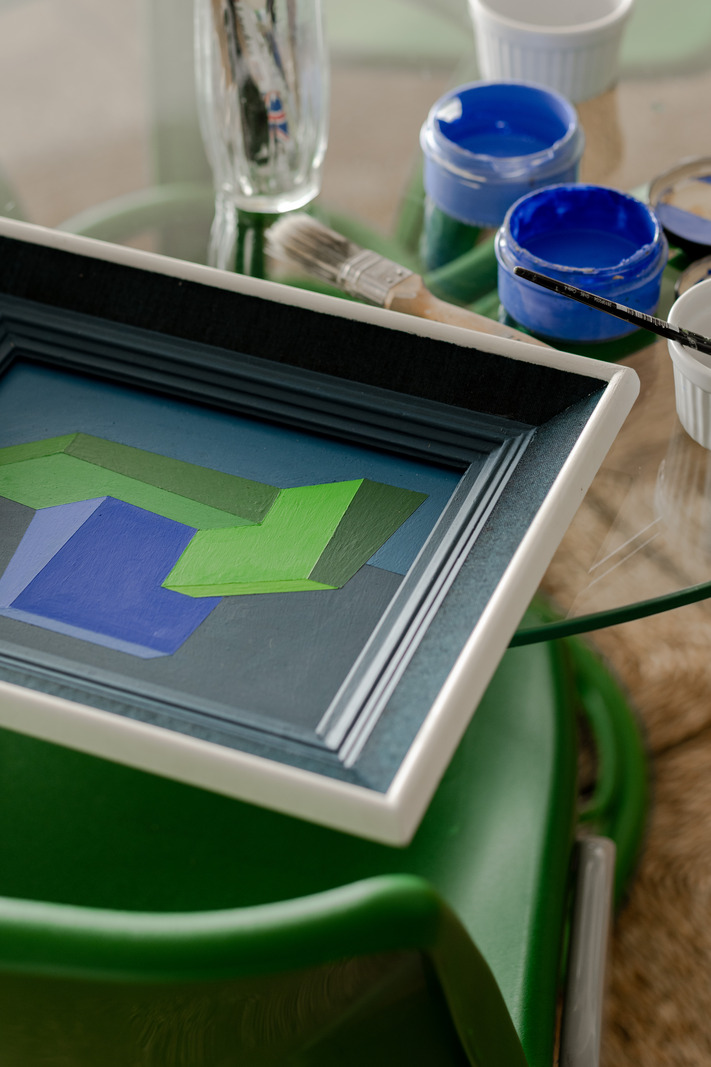
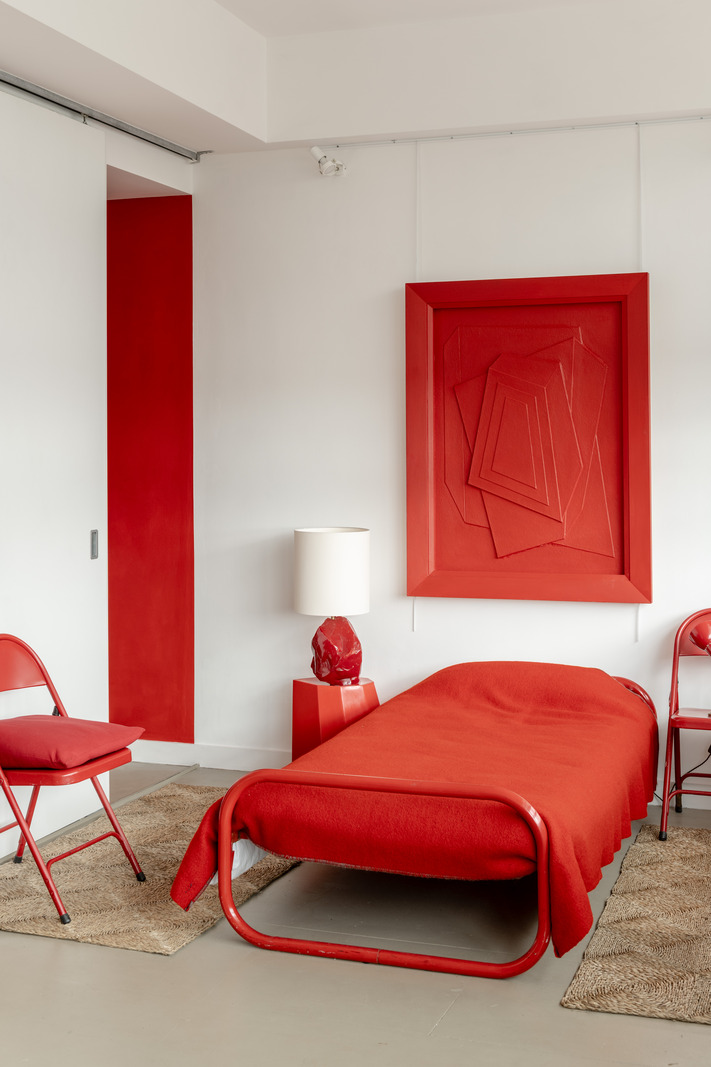
Incorporating colour into the interiors was very important to Rob. The colours in his artworks are paired with the furniture, while the clean lines and roomy architecture of the flat are echoed in the paintings. In the main bedroom, a wooden bench painted in a Yves Klein blue sits beneath one of Rob’s relief paintings, saturated in the same colour. In the dining room, a set of green chairs nest around a glass dining table, where the base has been painted the same hue as the chairs. The bedroom off the sitting room is themed around another of Rob’s relief paintings, this time in scarlet red. Throughout the flat, rush matting unifies the space, bringing a note of organic softness.
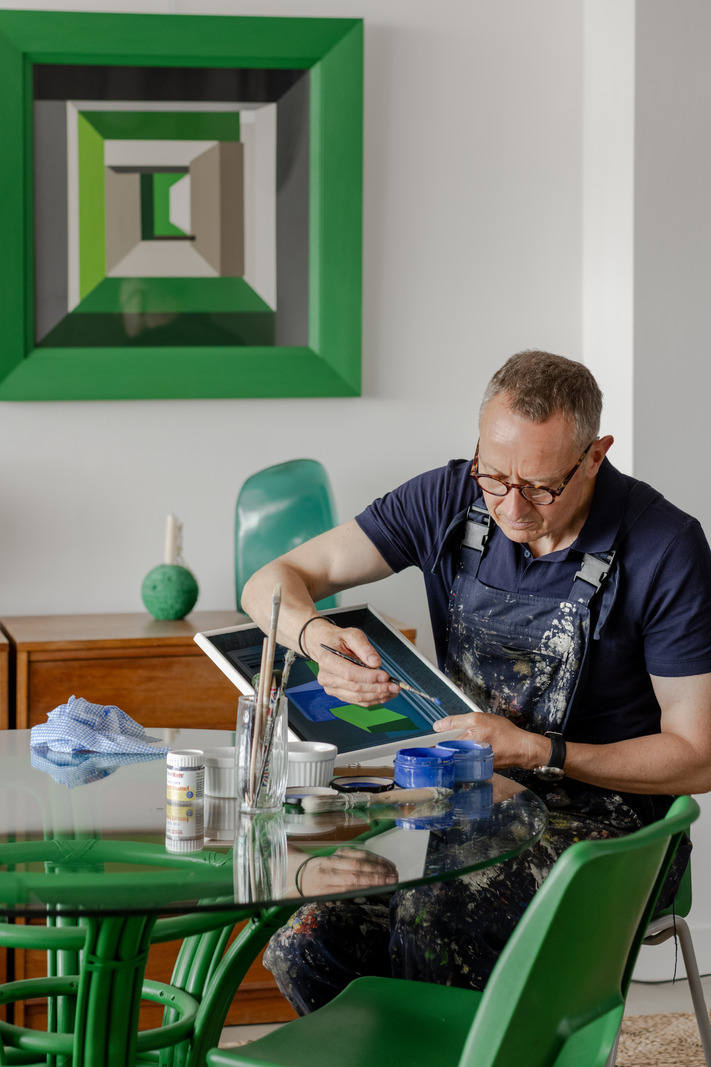
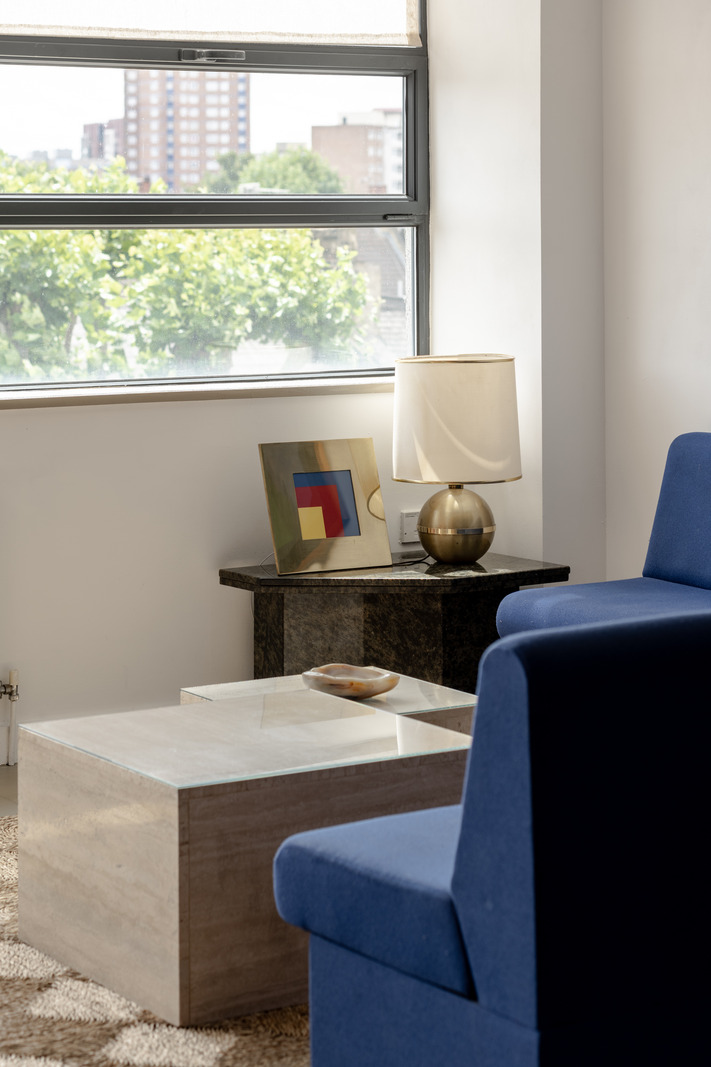
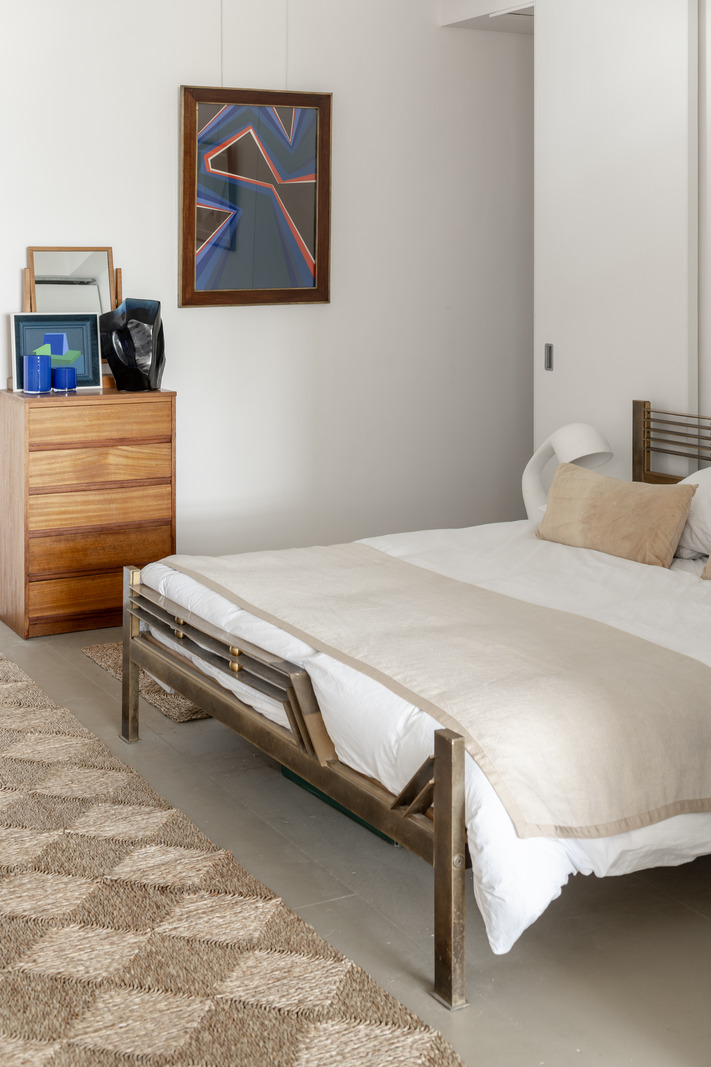
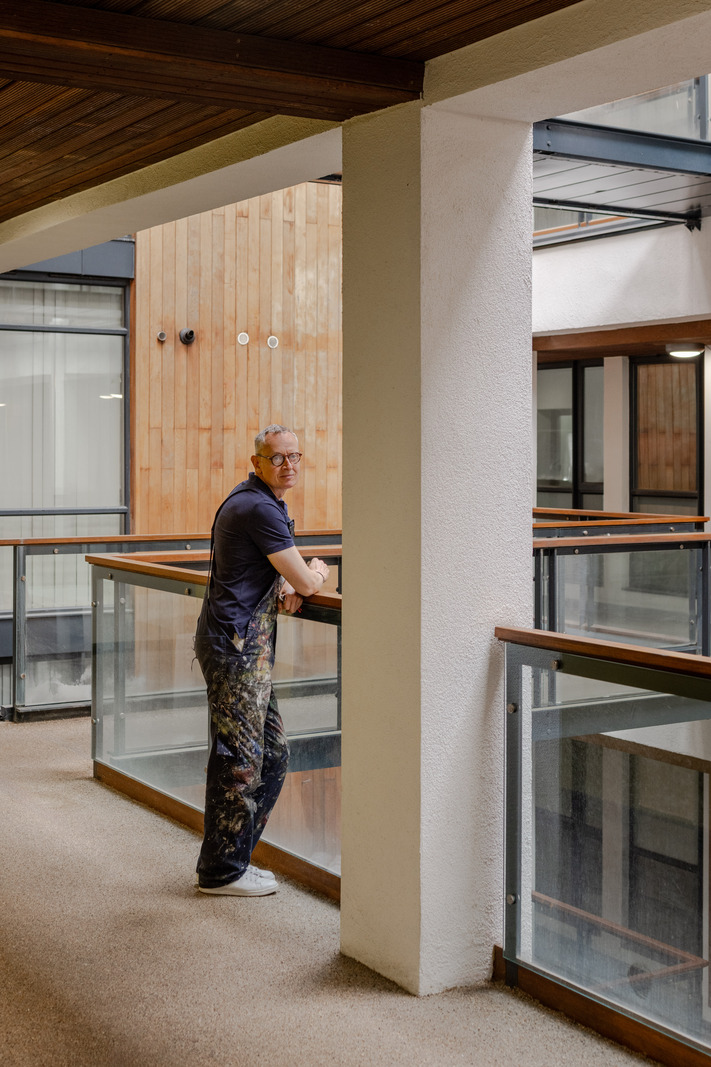
“I try to keep things simple – I believe in letting things breathe and giving them space," says Rob. "It’s the same with my paintings. I try not to let things become too congested. The space around the forms means that they can shine. I trained as a 3-D designer," he continues, "and I approach painting as a designer. I plan my paintings in a meticulous, careful way. I always start with the frame, which I make myself. I view the frame as part of the painting. To take one away from the other would diminish the whole.”
It’s clear that the paintings are integral to the flat, and vice versa. “I've always had quite a strong aesthetic,” Rob says. “I recently found a sketchbook dating from when I was at Chelsea College of Art, and it wasn’t a million miles away from the work I am doing today. My career in design is based on having a creative view of things. I’ve always lived my aesthetic as well as worked it. It’s always been that way. It’s a way of life.”
Rob is currently exhibiting his recent works at And Objects, Newson's Yard, Pimlico Road, London SW1W 8NE