Do books furnish a room? Vintage book seller Emma Hammar argues the case
September 7th, 2026

Words Emma Hammar
Photography The Modern House archive
John Waters famously said, “If you go home with someone and they don’t have books, don’t f*** them!” Dating or not, a person’s book collection can give a huge insight into their personality and taste. But if our bookshelves are an extension of ourselves, how do we live with our books?
My career as a book dealer started when I found a bunch of books in a bargain bin outside my favourite bookshop in London’s Bloomsbury, the epicentre of books and an area I was living in at the time. The books were both beautiful and peculiar, and I ended up buying the whole box, trying to decipher where such a collection might have come from. The shop owner not willing to share this information, I made up stories of the person that might have owned such a collection. The box seemed to come from the US and most of the books were about interiors. Maybe they belonged to an interior or set designer? Someone who was interested in summer houses in Maine, sand sculptures on Fire Island and the most beautiful books on seashells.
As a vintage book seller, I have stocked three books with the title Living with Books. The oldest, by Rita Reif, was published by the New York Times in 1968. It traces book collections in the home from the close of the second world war, where a home might have one or two bookshelves that were kept behind glass cabinets, to books spreading from studies and libraries, out to all the rooms of the house. Reif’s book explores how and where we read at home, where we keep our cookbooks, how we can fit enough shelves, and where the overflow goes.
In it, we learn that the actress Arlene Francis keeps her books in her Manhattan bedroom and likes to read on her bed, which matches her bookshelves: gold brocade covers the bed and the shelves. There are the “cookbooks squirrelled up in a kitchen wall” in the Connecticut home of a Knoll associate. The writer Leo Lerman’s book collection overflows underneath his tables, but are still in alphabetical order, his cookbooks kept in the kitchen within easy reach for “a man who likes to cook well and dine sumptuously”. There are library corners, books underneath windows and built into walls, books in cupboards and cubicles, floor-to-ceiling shelves and mobile book towers. Kenneth Isaac’s Superchair is featured – a chair and shelf combination which comes with a book stand and reading light.
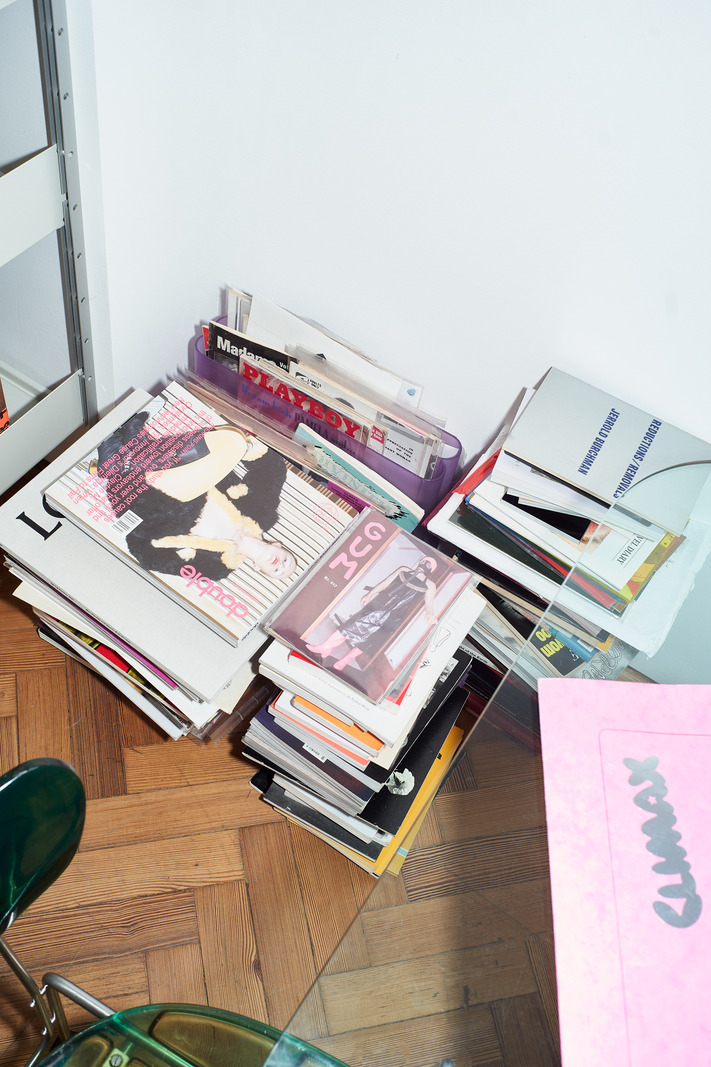
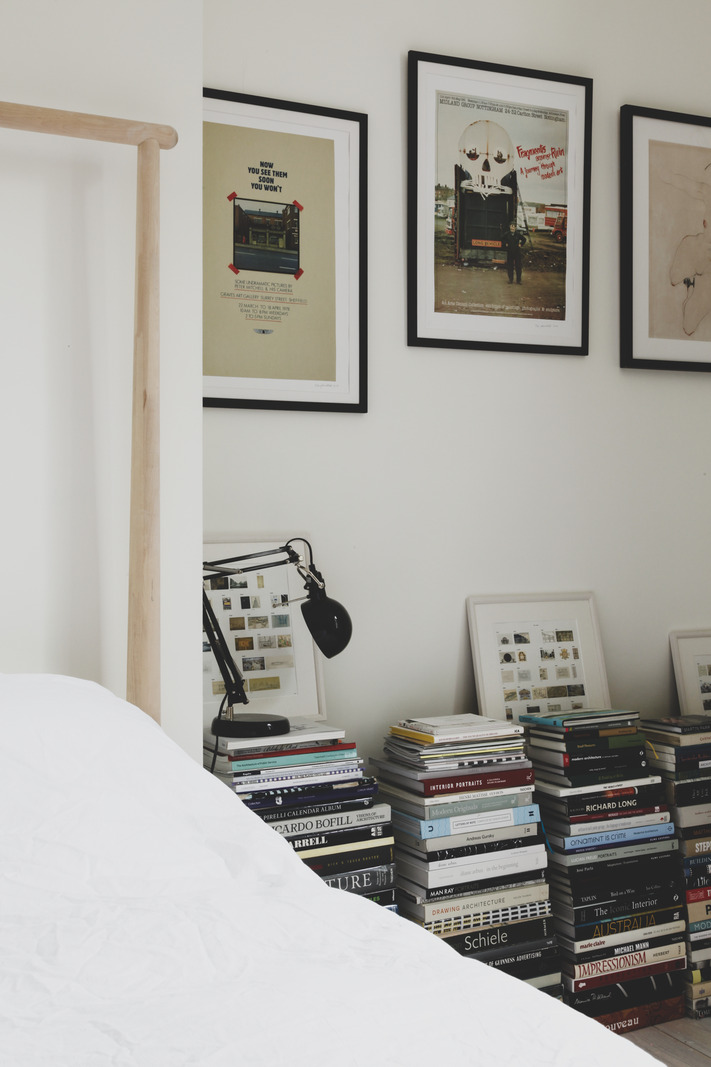
Alan Powers’ Living with Books was published 30 years later, in 1999. This version starts by looking at the history of book collecting from the origins of the book, which became popular at the same time as “private silent reading”. It tracks the origins of the printing press in Mainz, Germany in the 1450s, to printing technologies in the 1960s which made books easier to produce.
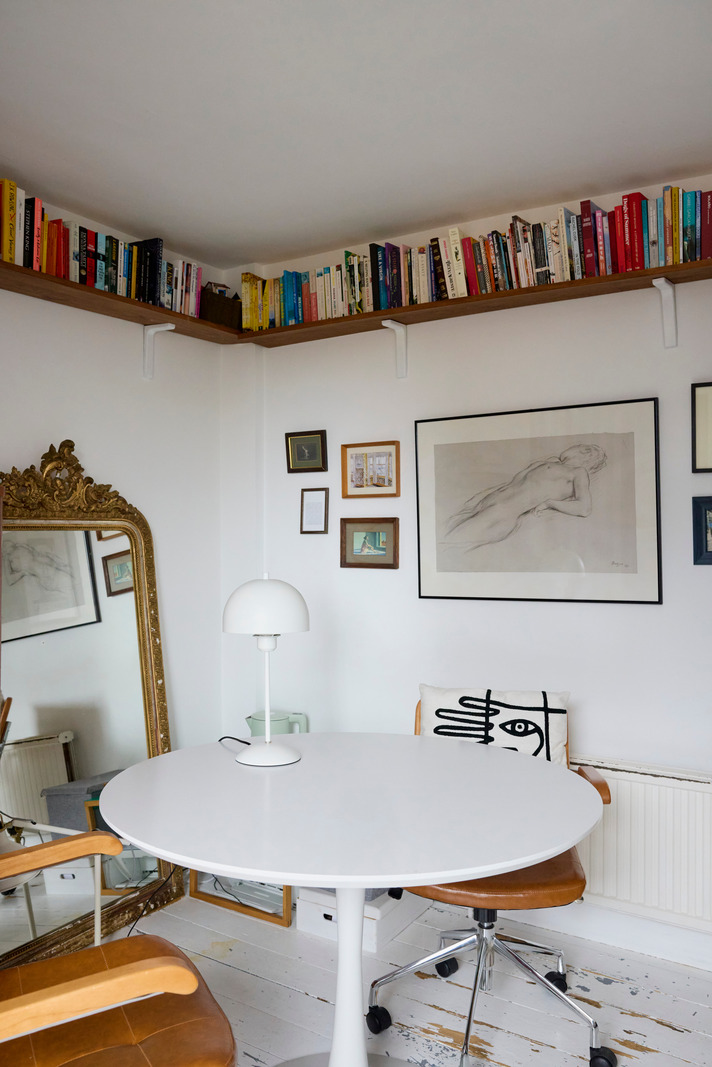
Powers’ book is beautifully illustrated with photographs of home libraries, home offices and workplaces. There are examples of books in corridors, up staircases and on landings, shelves that display books horizontally and in curved spaces. We see examples of books being displayed in places that seem practically impossible to get to, maybe with a ladder hidden away somewhere out of sight. Books around doorways and windows always look great.
Anthony Powell’s novel Books Do Furnish a Room from 1971 was inspired by a remark from a book reviewer when a pile of books fell on him because the shelves could not take the strain. In July 2026, Mendel Uminer, a 31-year-old scholar from New York City, was evicted from his Manhattan apartment for having so many books that the building manager deemed it a fire hazard. Uminer had collected over 10,000 books; stacks and shelves lined the walls, filled the bathroom, blocked windows and barricaded his bed. A scattering of books may be “an indicator of a civilized home”; too many could get you evicted.
On to coffee table books, a genre of books that was once used pejoratively, as a book that had more pictures than words. In Seinfeld, Kramer famously publishes The Coffee Table Book of Coffee Tables, where the actual book can be turned into a coffee table. This episode aired in 1993 but, looking at images of the book, it would suit any coffee table today. I would argue that books tastefully displayed on a table are as indicative as a piece of art on a wall or a sculptural sofa. (Sydney Smith, the wittiest Englishman of the Regency period, once said, “No furniture is so charming as books.”)
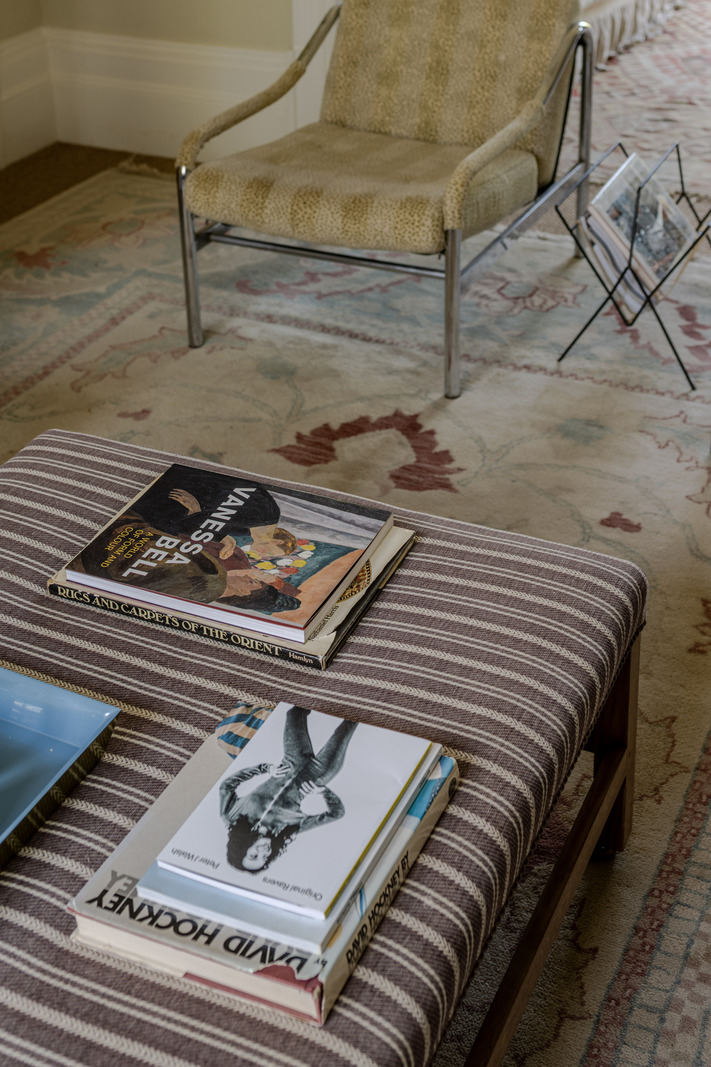
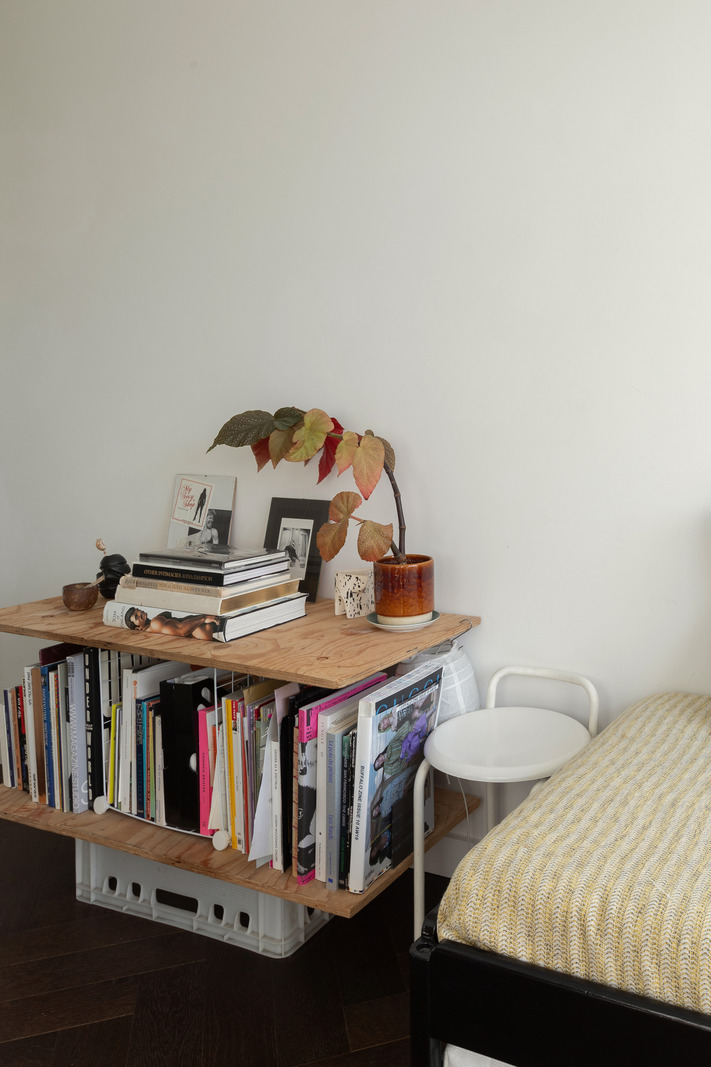
Books in the bedroom might not be encouraged in feng shui, but seeing as we do most of our reading in bed, it is natural that books spill out into this room too. The bedroom of 2 Willow Road, Ernő Goldfinger’s house in Hampstead, London, is dominated with a set of bookshelves that cover one wall, but as the rest of the room is sparse, the atmosphere is still that of calm. Books in bathrooms might be a little more unusual, and maybe it’s not the best place to preserve them as the heat and steam will loosen the glue, but people still do. Cookbooks are part of a kitchen, but how does one display them? Underneath a kitchen island, in cupboards, on metal rails; what’s important is that the books are easy to reach and that they don’t get too damaged, although a splash of sauce on the pages is encouraged.
The art critics Jerry Saltz and Roberta Smith share their New York City apartment with over 40,000 books. Jerry describes their apartment as a “Bohemian dump” completely overtaken by their book collection. Famous for not using their kitchen for anything else than making coffee or heating up food in the microwave, books are also stored in the kitchen.
Thames & Hudson published Living with Books by Dominique Dupuich and Roland Beaufre in 2010. The book focuses on the collector, whether they are a purist, with immaculate library shelves of antique collections, or eclectics, where the books are displayed in “creative disorder”. According to the authors, a book collector’s goal is not to create a research library, but to build their own collection, a kind of mini museum of their lives and tastes. The collection is the décor and not the other way around: no shelf, alcove, cabinet, trunk, cupboard or floor is safe.
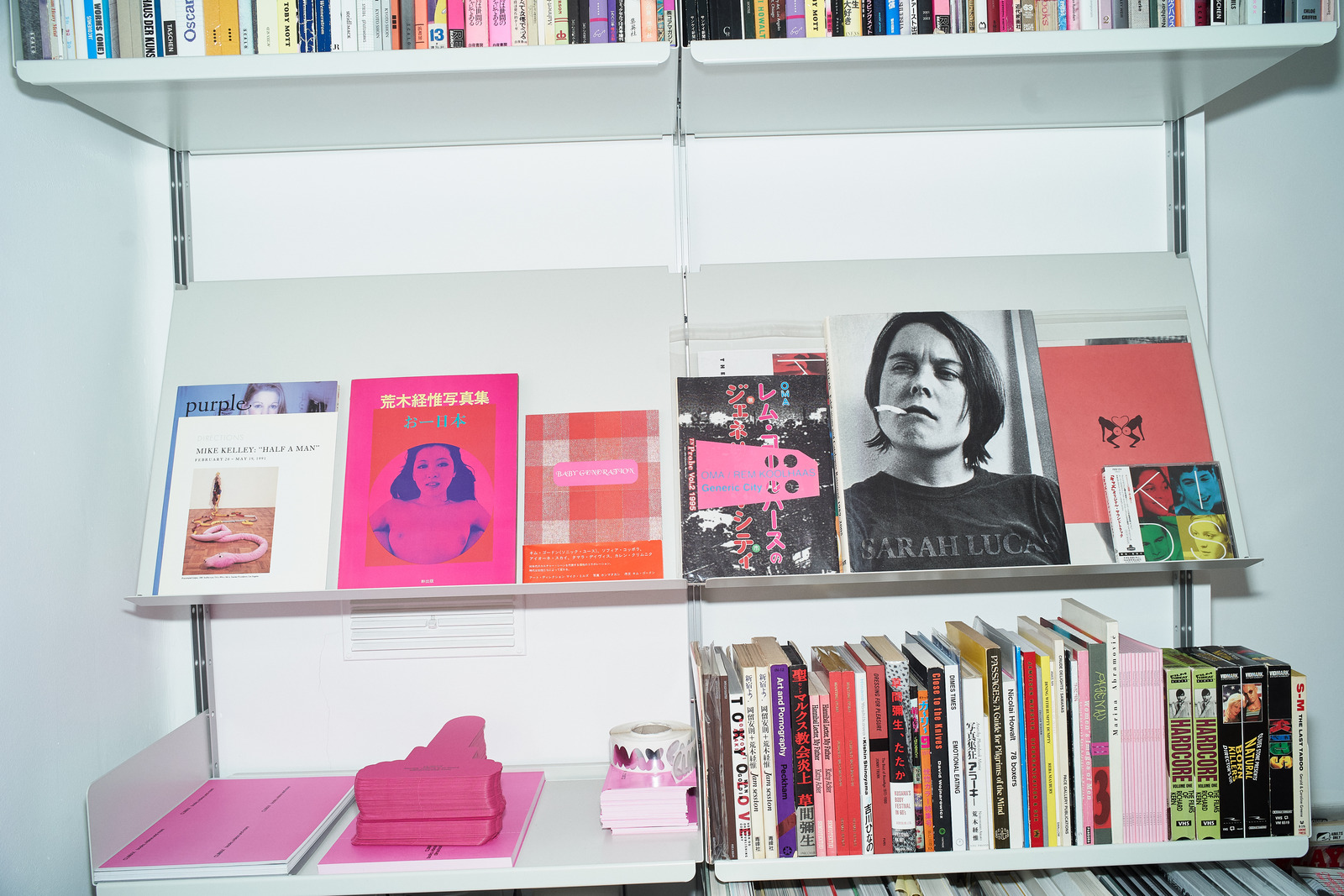
Books can be displayed as artworks, propped up to show the covers, like paintings. Or a lectern or magazine rack can be used to display a single book, transforming it into an object much like a piece of art.
There have been attempts at new ways of designing the bookshelf, my favourite example being Ron Arad’s Bookworm, which is both fun and practical. Some bookcases are used as a design object in themselves. An example of this is the Nuage bookcase by Charlotte Perriand. Originally designed as a room divider for her daughter Pernette, it can be hung on a wall, function as a wall bookcase or be displayed in the middle of a room. Another example is the totemic Carlton room divider by Ettore Sottsass for Memphis Milano.
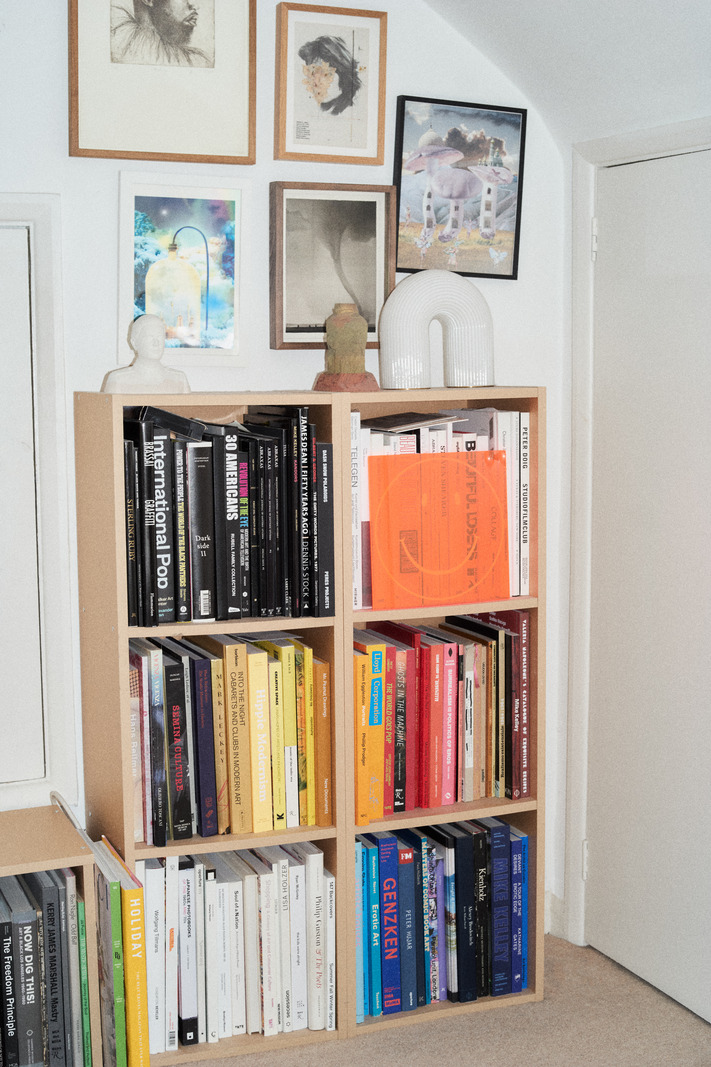
How does one organise books on the shelves? Books can be organised in alphabetical order, by category or subject, colour coordination or publisher. Sunlight can be dangerous as it damages the spine, so it’s advisable to store more valuable books away from natural light. Books on shelves can be interspersed with objects, artefacts, mementos, framed photos, albums and souvenirs.
Remember when the Kindle launched almost 20 years ago and everyone thought it would replace the book? Well, it didn’t, and for now it doesn’t look like any screens or technology will completely replace the printed book. Living with books is just too joyous. Until it’s time to move …
Emma Hammar is the founder of Lookbooks; @_look_books_
Photo credits: © Dan Glasser; © Jonathan Gooch; © Kane Hulse; © Kristy Noble; © Rachel Ferriman; © French + Tye; © Elliot Sheppard; © Adam Firman