What a Ryde: inside the modernist family home that’s a creative journey of light and colour
March 25th, 2025
This article is more than a year old and may contain information that is out of date. Sorry about that.
Words Dominic Lutyens
Photography Emily Marshall
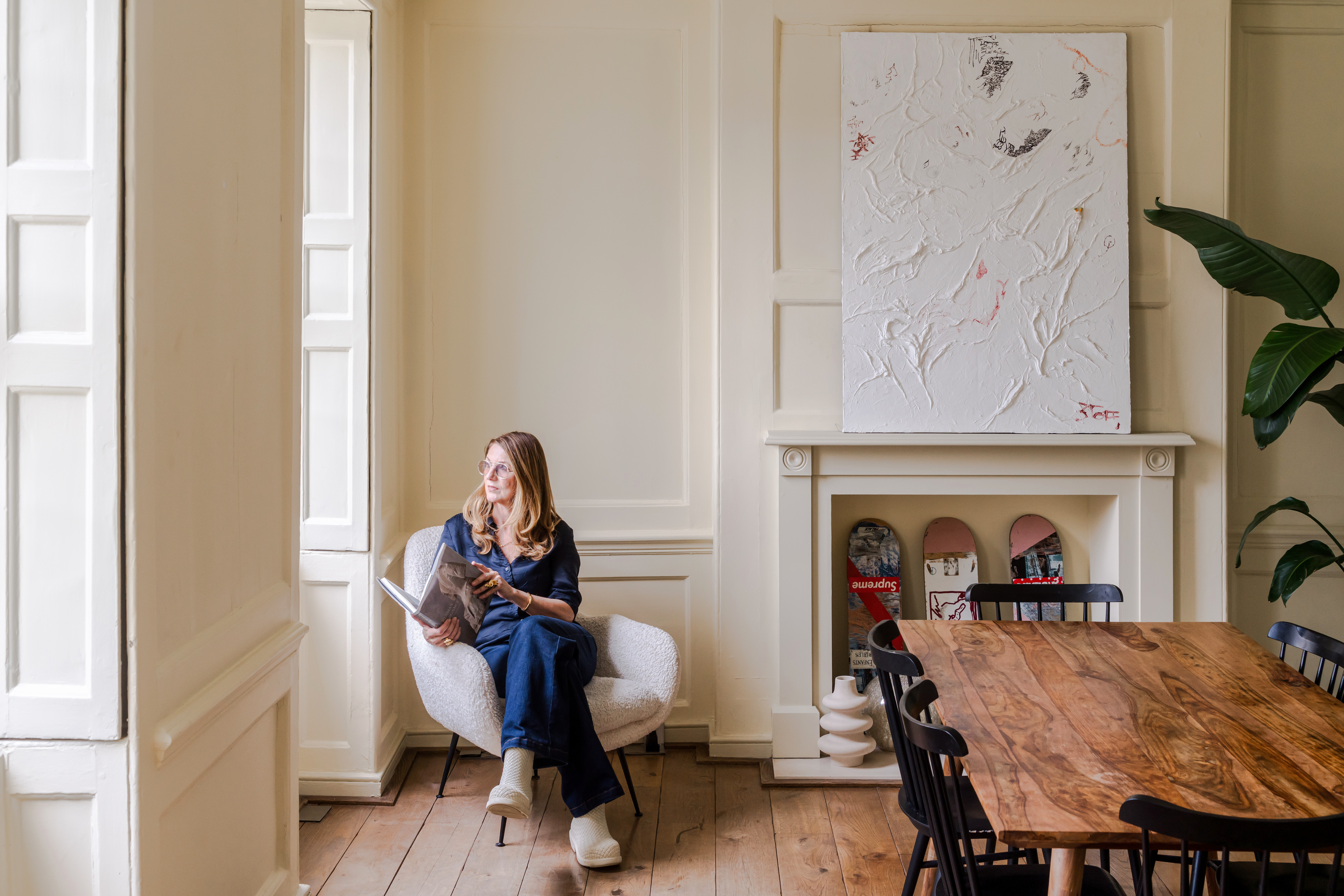
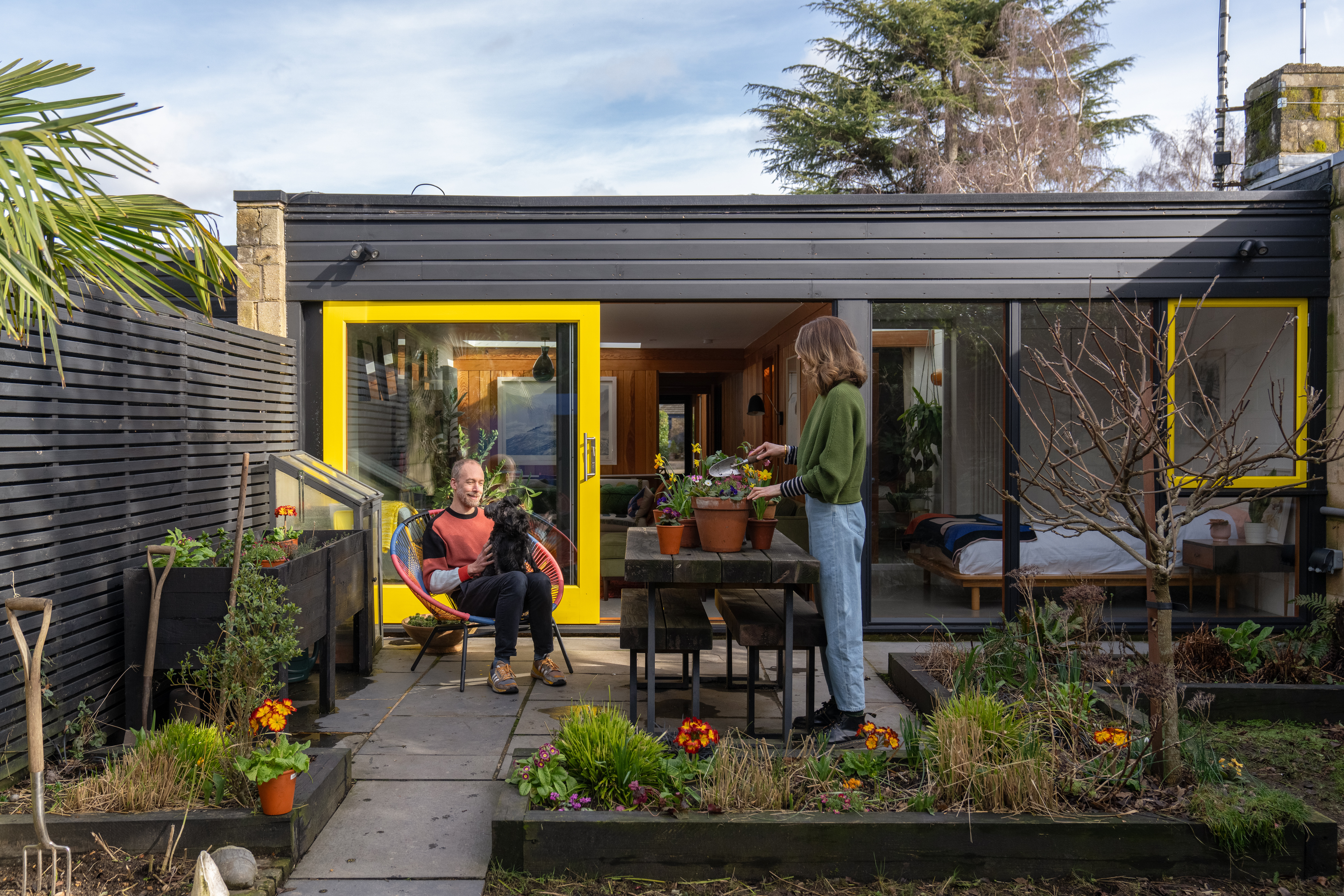
Artist Freya Pocklington and her partner Nick Lovegrove, a graphic designer, have lived in their modernist, single-storey house in Hatfield, Hertfordshire, for five years. Shared with their son, Freddie, six, and three energetic Affenpinscher dogs, their home boasts an uninterrupted sightline from the front door to the back garden and original sliding partition doors. Now for sale, Freya and Nick have worked to open up darker spaces – letting air and light flood in – and created a family home full of joy, in blissful suburbia.
Freya and Nick’s home is part of the Grade II-listed Cockaigne Housing Group and has impressive modernist beginnings. The brainchild of Michael Baily – a travel correspondent for The Times – the scheme was inspired by his fascination for the contemporary Scandinavian housing he’d experienced in Denmark. Driven to create a similar set-up in the UK, he placed an ad in The Times in 1962: “Anyone interested in a co-operative venture to build a group of imaginative homes for their owners?”
And so, The Ryde housing scheme was formed in Hatfield, with the help of architects Peter Randall and David Parkes – now made up of 28 one to five-bed houses with a comparable community spirit.
For the couple, it ticked all the boxes of an authentically mid-century, clean-lined home, featuring typically neutral colours and natural materials. But it was crying out for some changes – the reconfiguring of certain spaces and a need for more natural light. Ahead of its sale, the couple recounts the changes that have elevated their already exceptional house into a flowing and harmonious creative sanctuary.
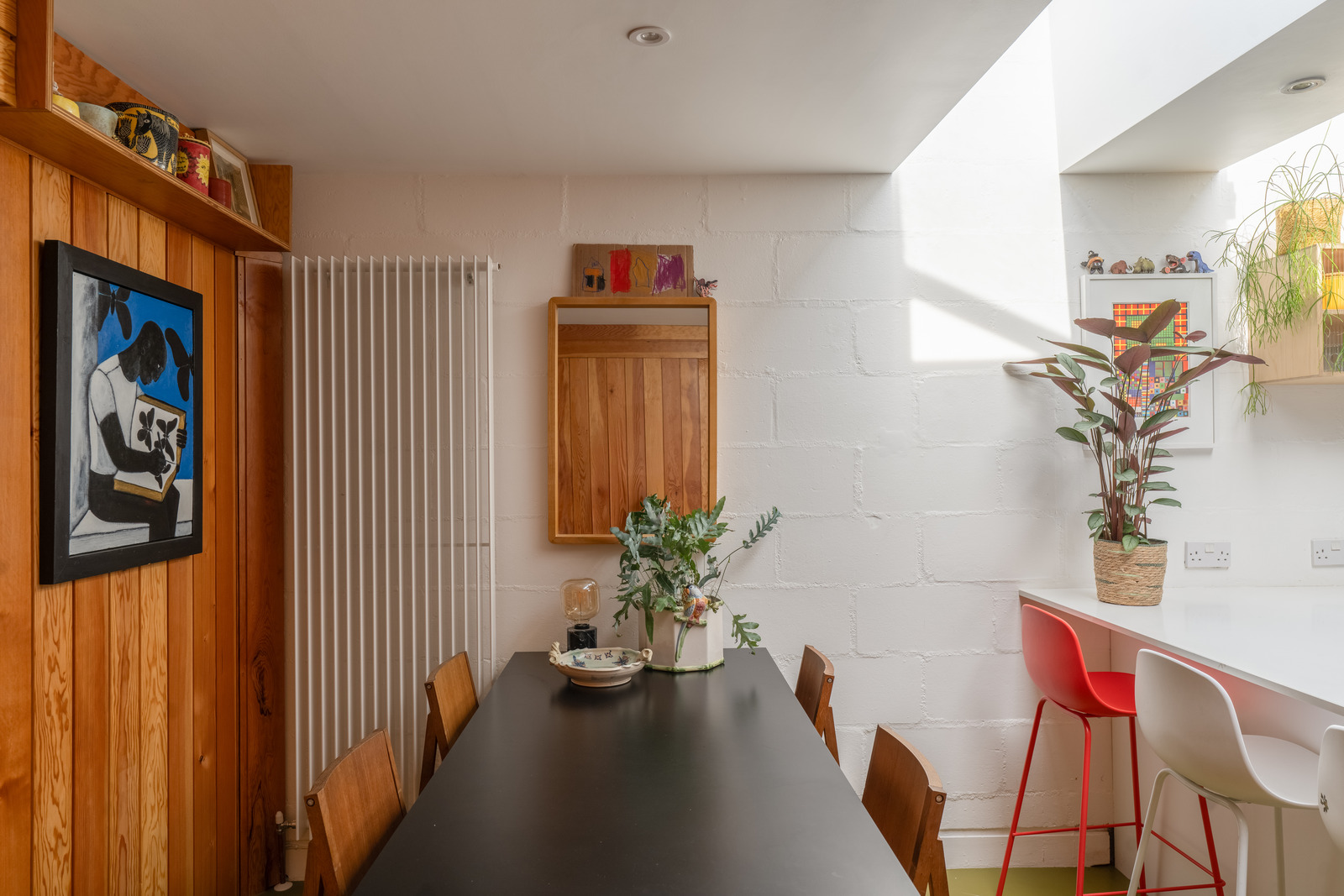
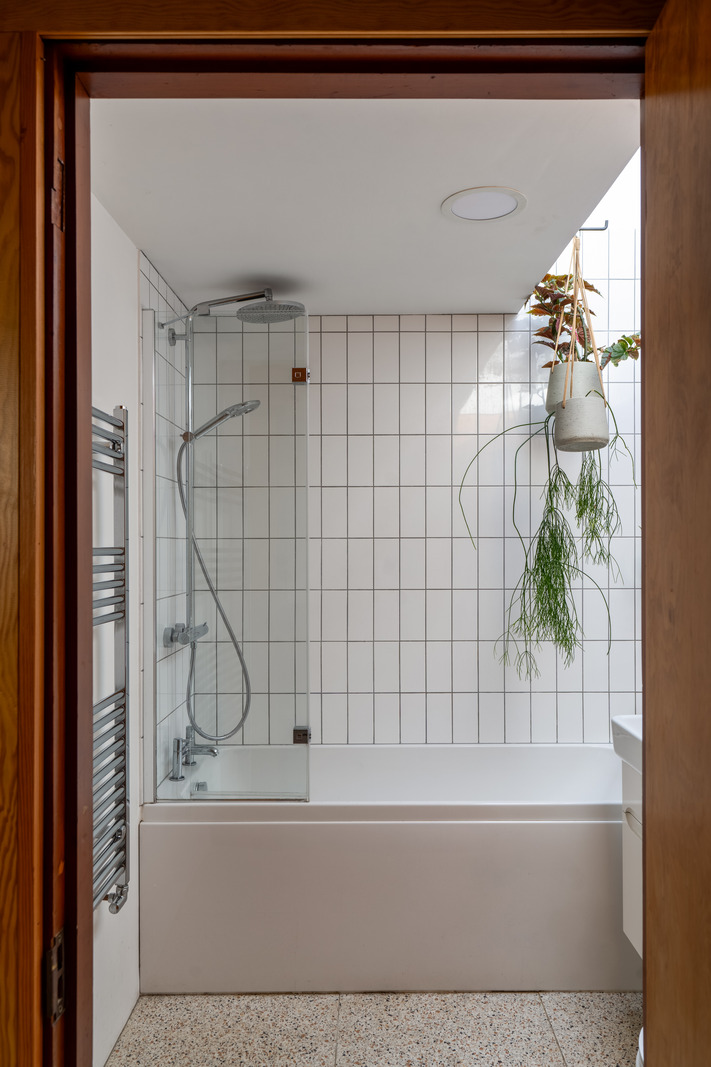
Freya Pocklington: “We’ve lived in Hatfield for 12 years, initially at Park Meadow Estate in Old Hatfield, a 1960s modernist housing scheme. For us, a major attraction of the Cockaigne houses is the connection they make with the outdoors. But, there was one snag: following extensions by the previous owner, the house needed more natural light, so we added some large skylights in the darker areas.
“We decided to keep the courtyard when we had the extension. And we have a covered light-well area between our bedroom and guest room.”
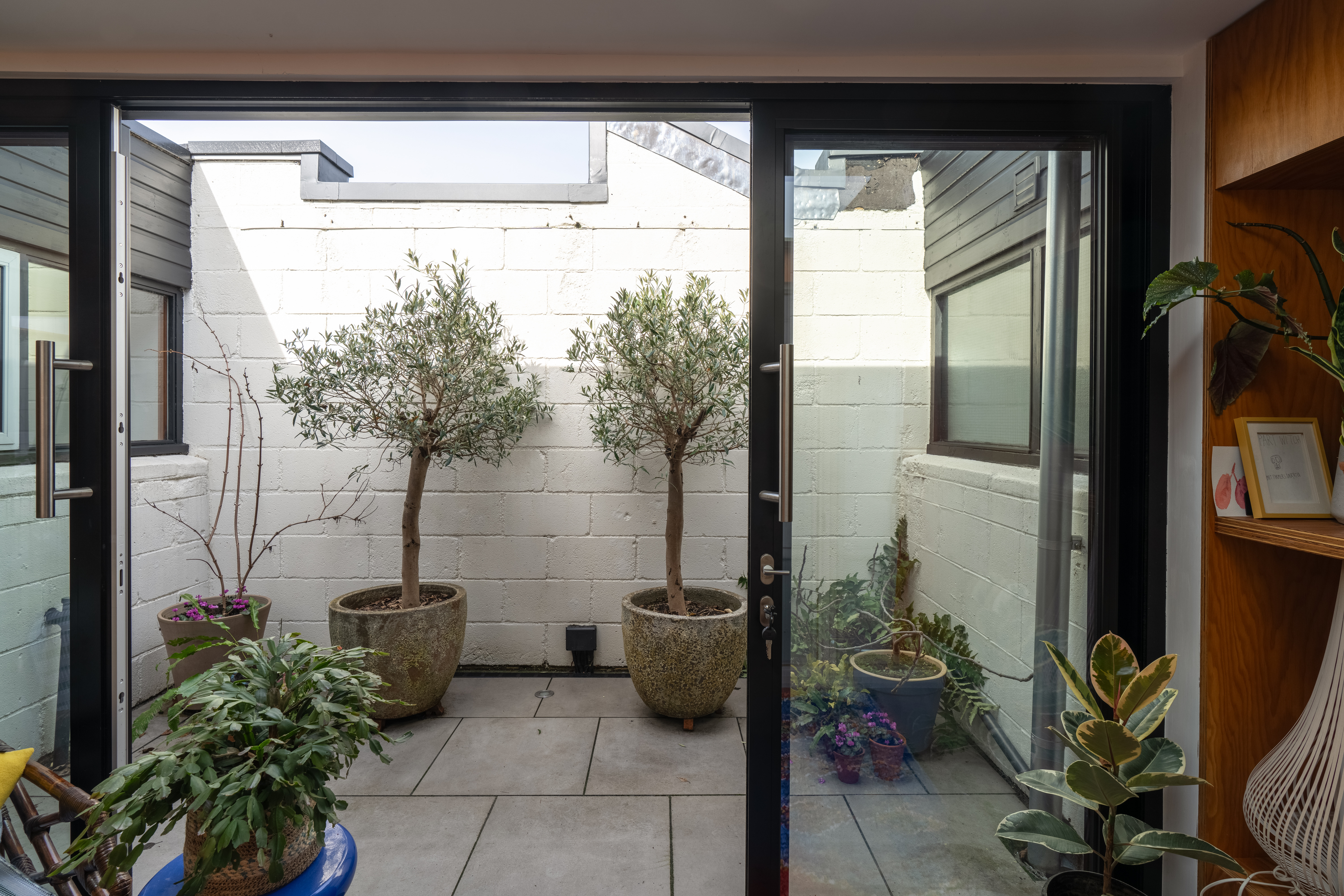
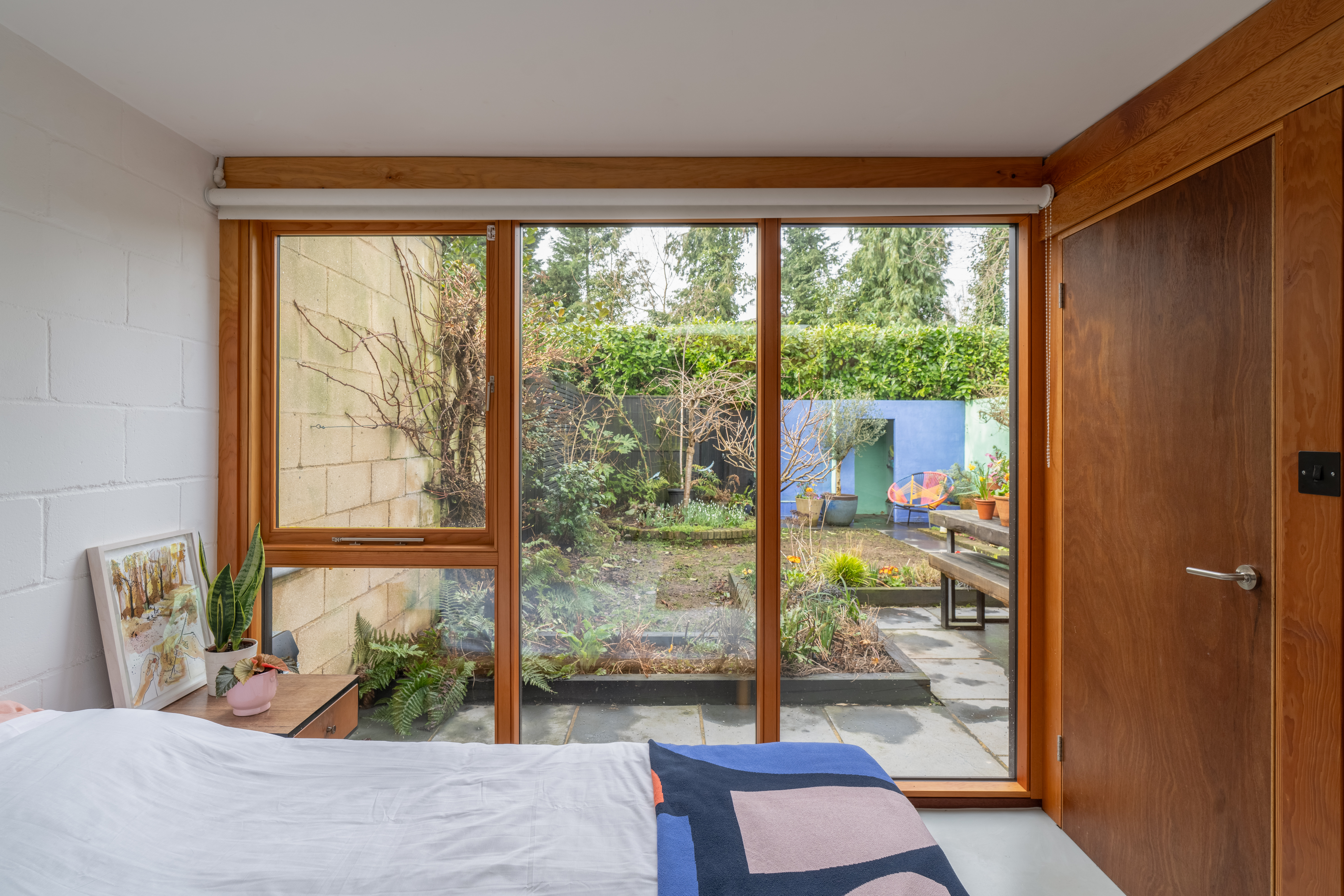
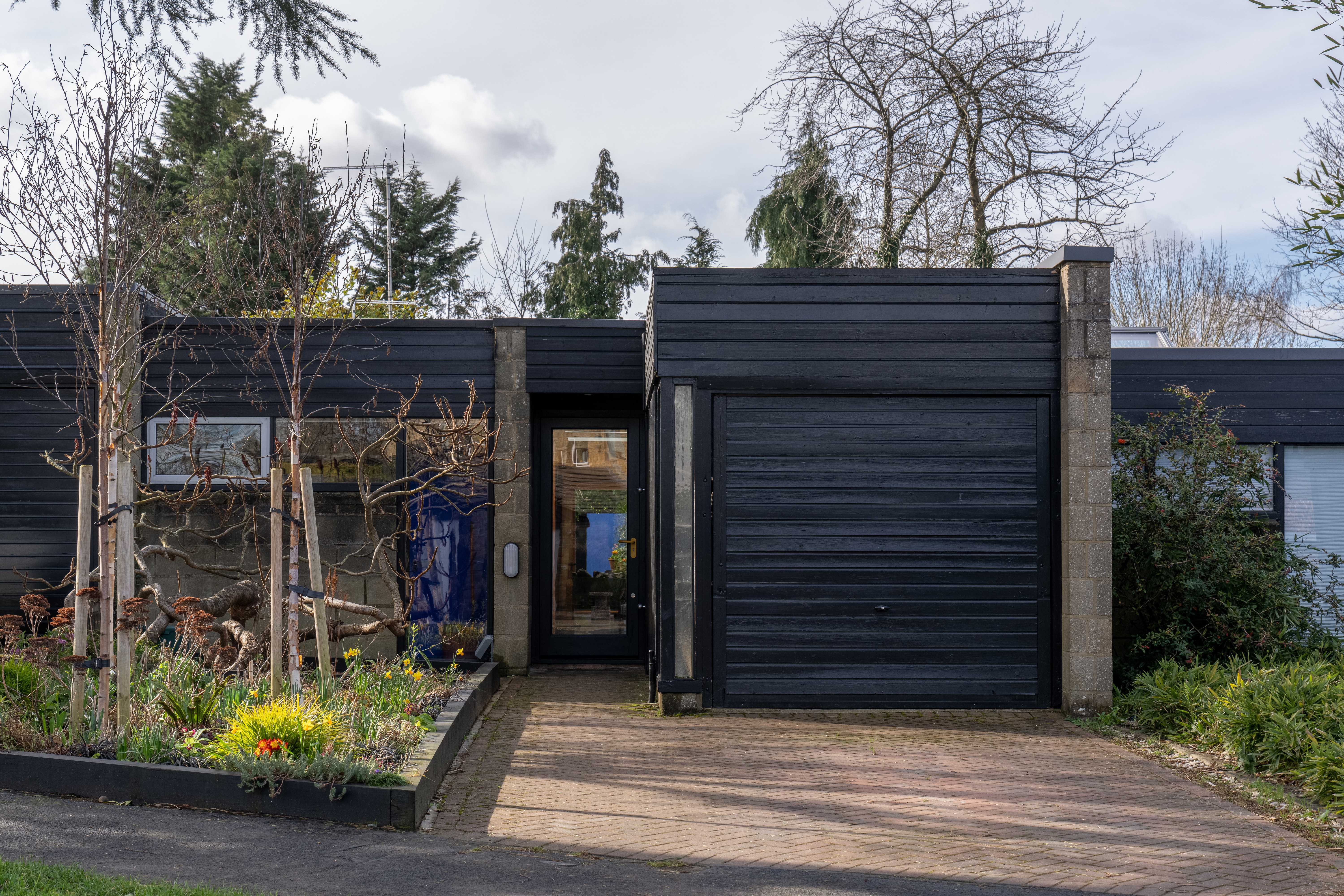
Nick Lovegrove: “A prime consideration was to make the space function better as a family home. We’ve changed the layout at the front of the house which originally felt disjointed. There was a bedroom and study there originally but, to enter them, you had to go out of the front door and through another door. We rationalised this by adding a roof over a corridor, previously open to the elements. The changed layout connects the old bedroom – now Freya’s studio – my office, a utility room and a garage (used as a storage area).”
Freya: “We hired Phil Lyons of Fabric Architects and Surveyors, who has extensive experience in conservation architecture, to undertake some of the changes. Architects often impose their vision of clients but Phil rarely said, ‘You need to do this or that.’ He understood all the arguments for creating a better family home and totally understood the building.”
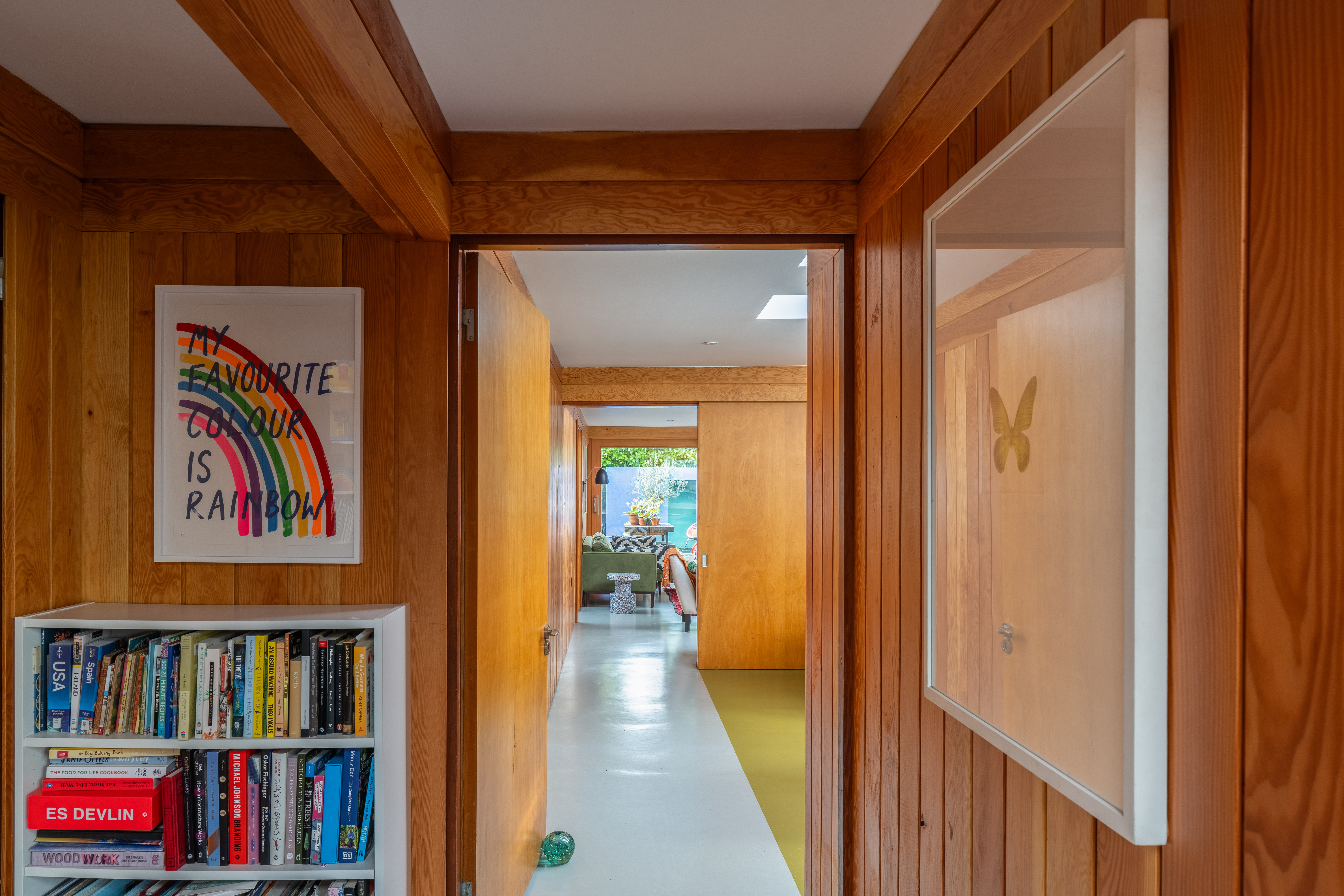
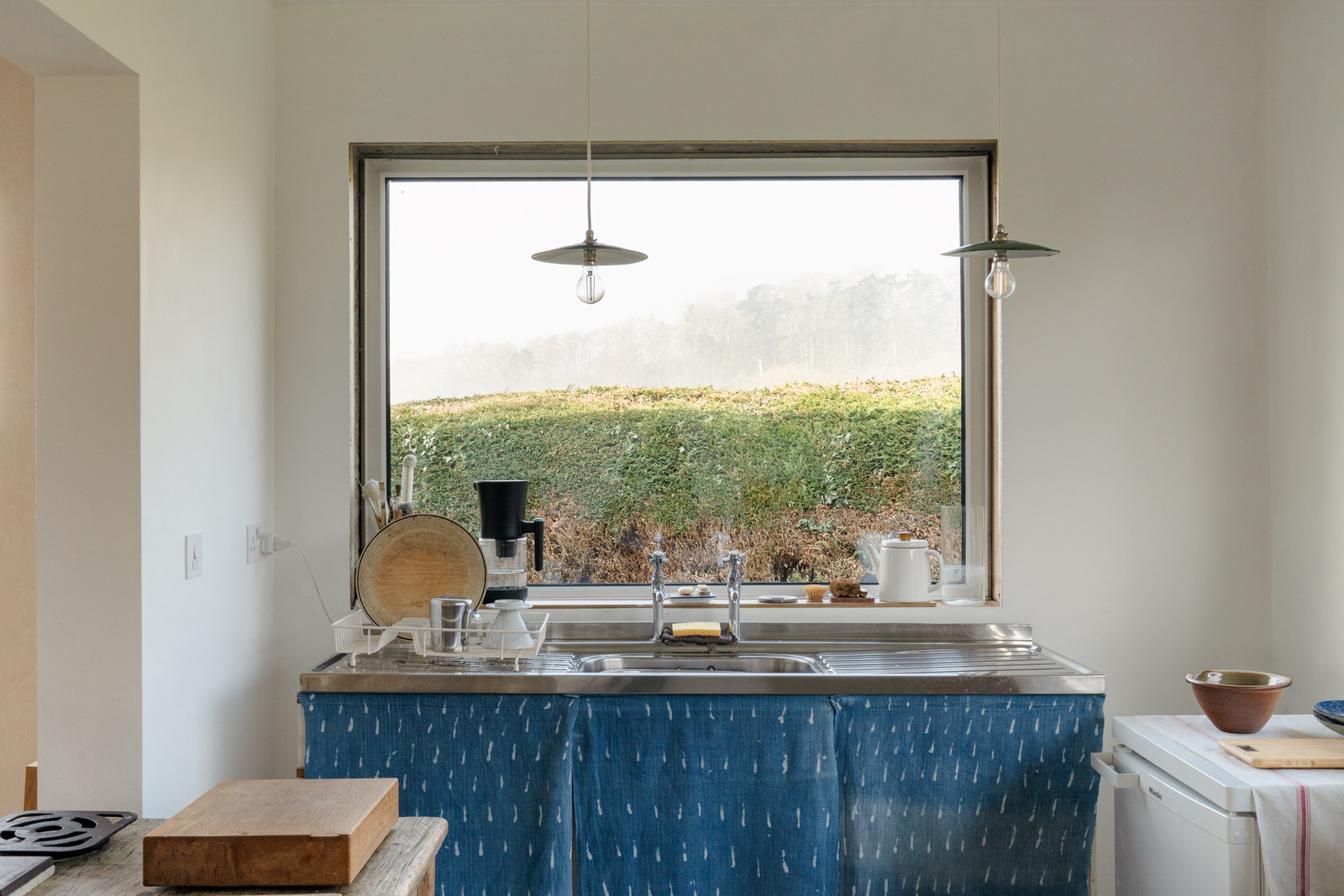
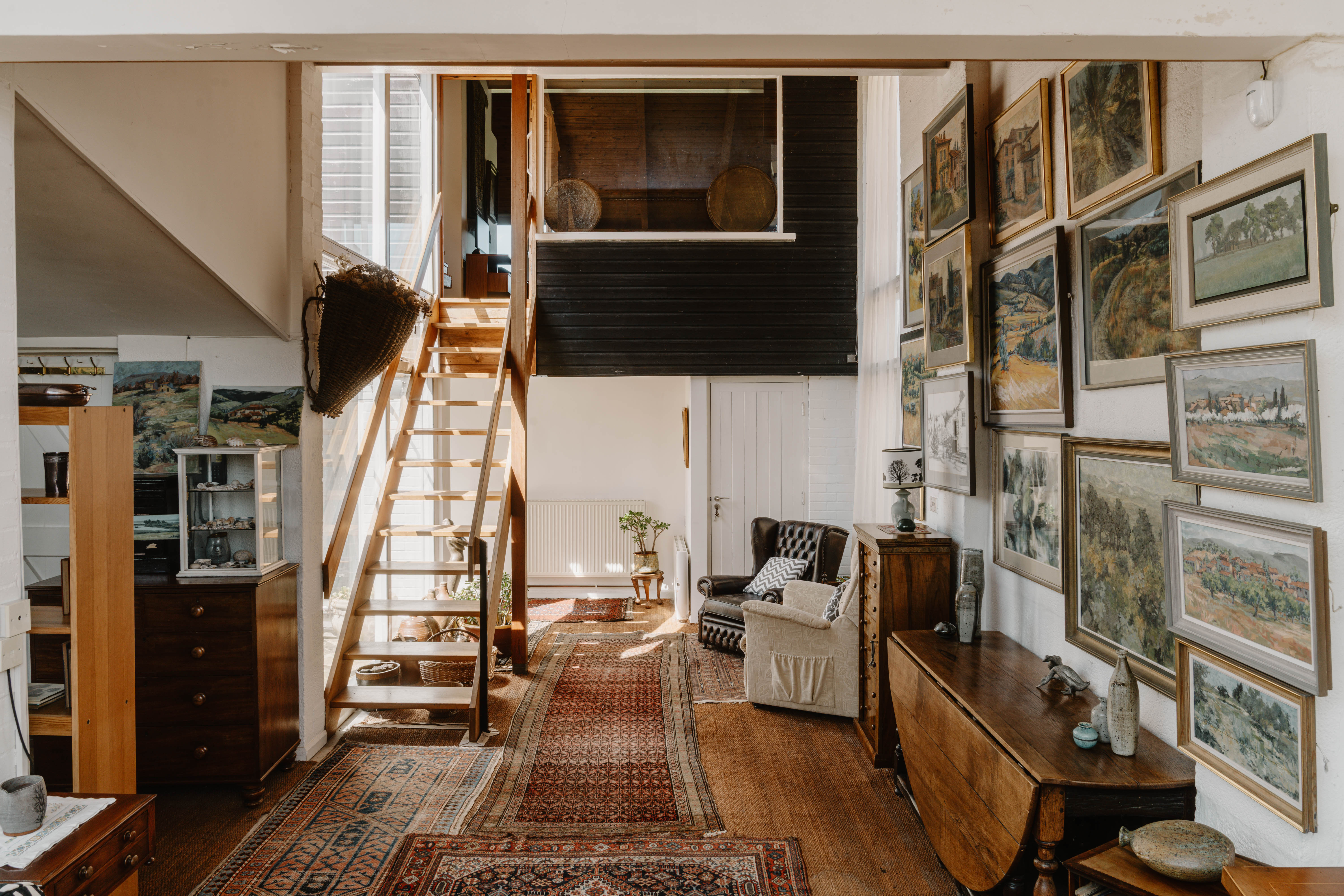
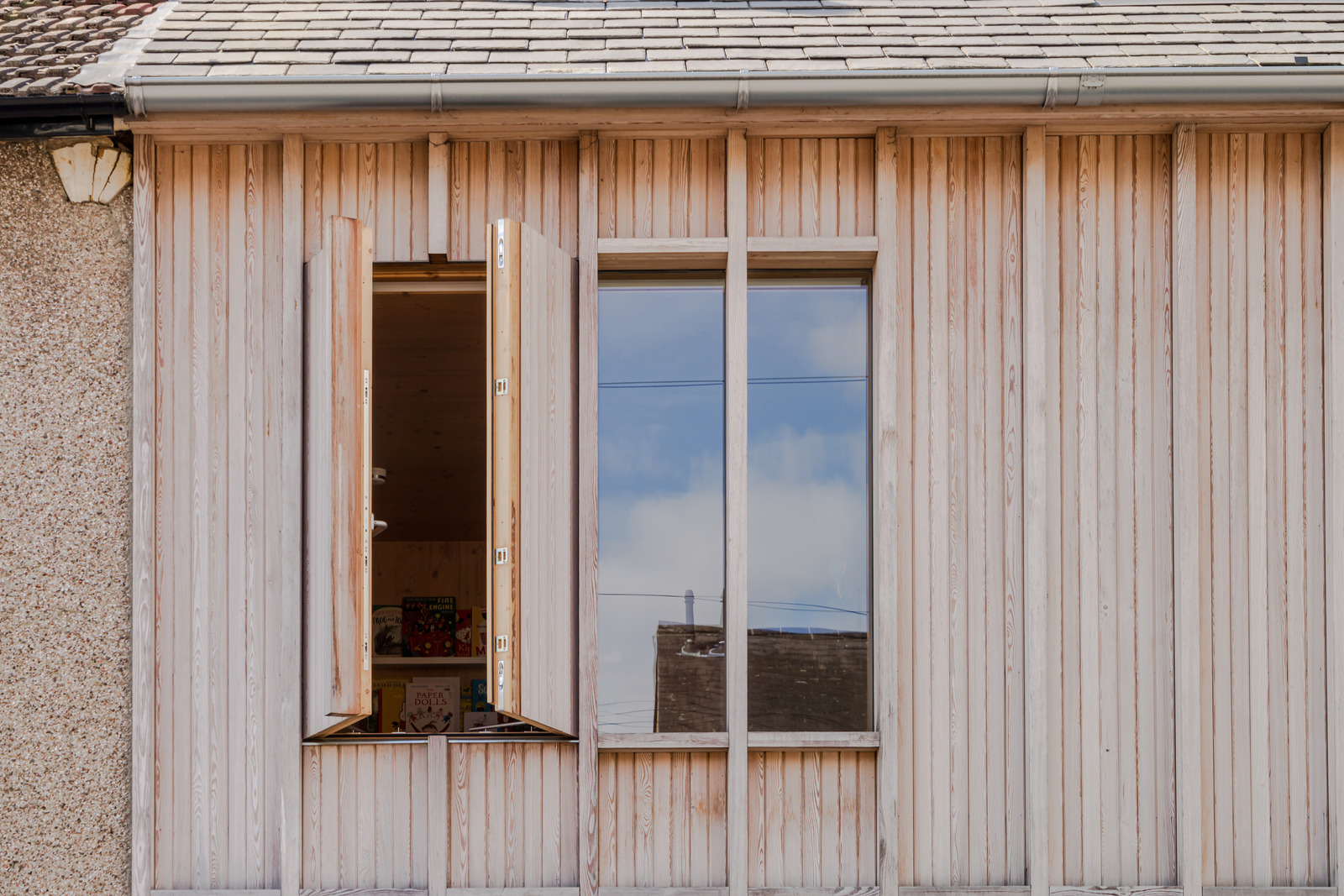
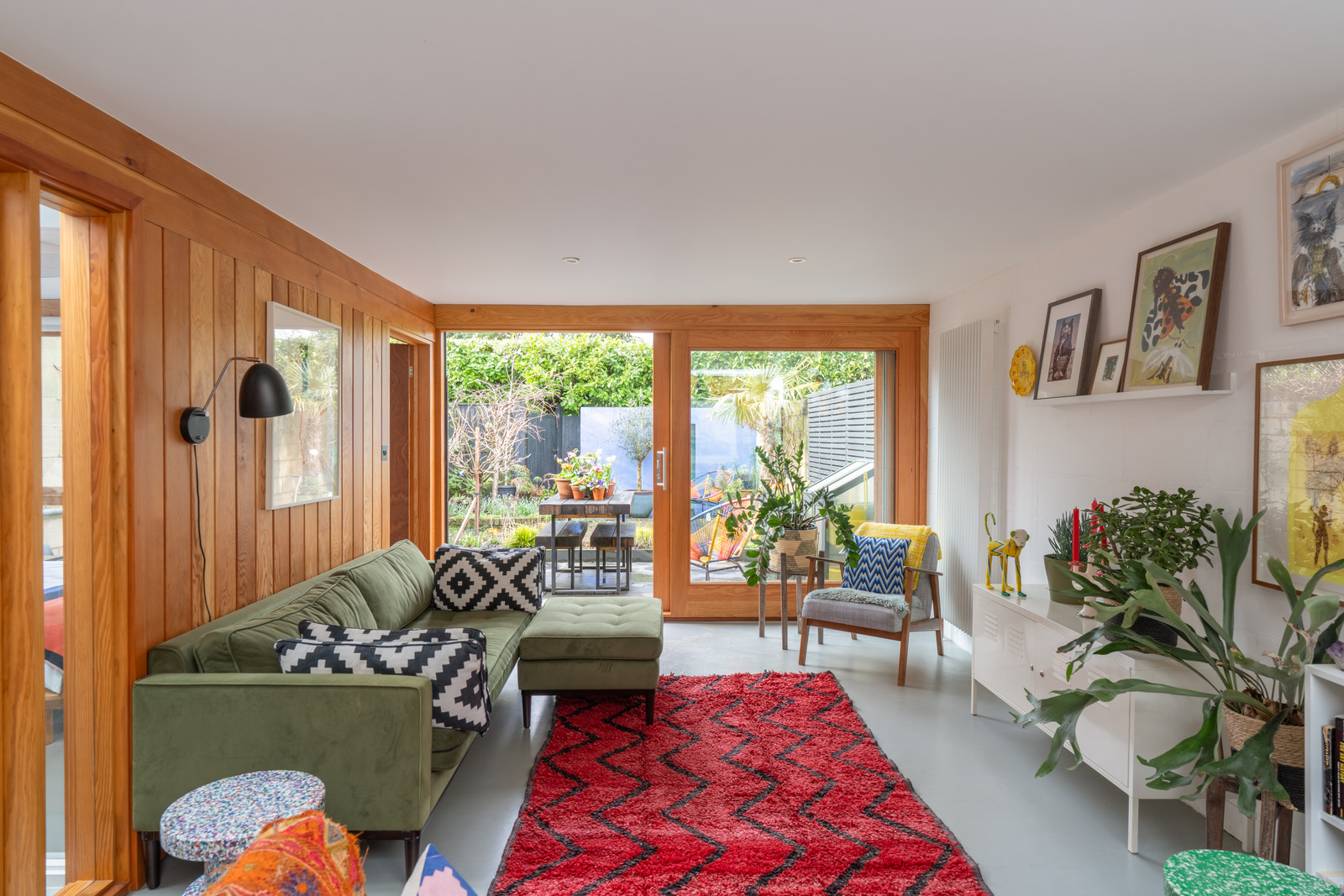
Nick: “The house felt quite gloomy when we bought it, it felt like we were living in a submarine. The ceiling, kitchen and floor were all a dark brown, and the walls covering a large expanse of the corridor were clad in pine in poor condition – it had dealt well with decades of family life but was looking slightly battered. We liked the idea of wood cladding, though, as it’s integral to the house’s aesthetic, so Phil suggested we replace the old pine with Douglas fir wood in a lighter, fresher tone.
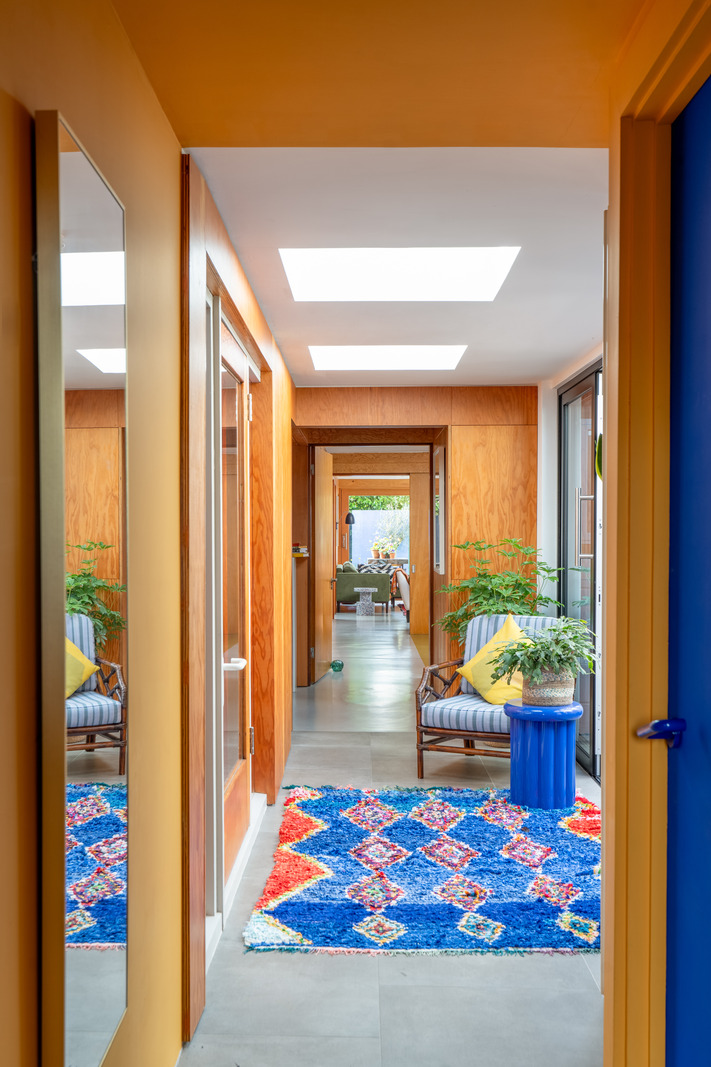
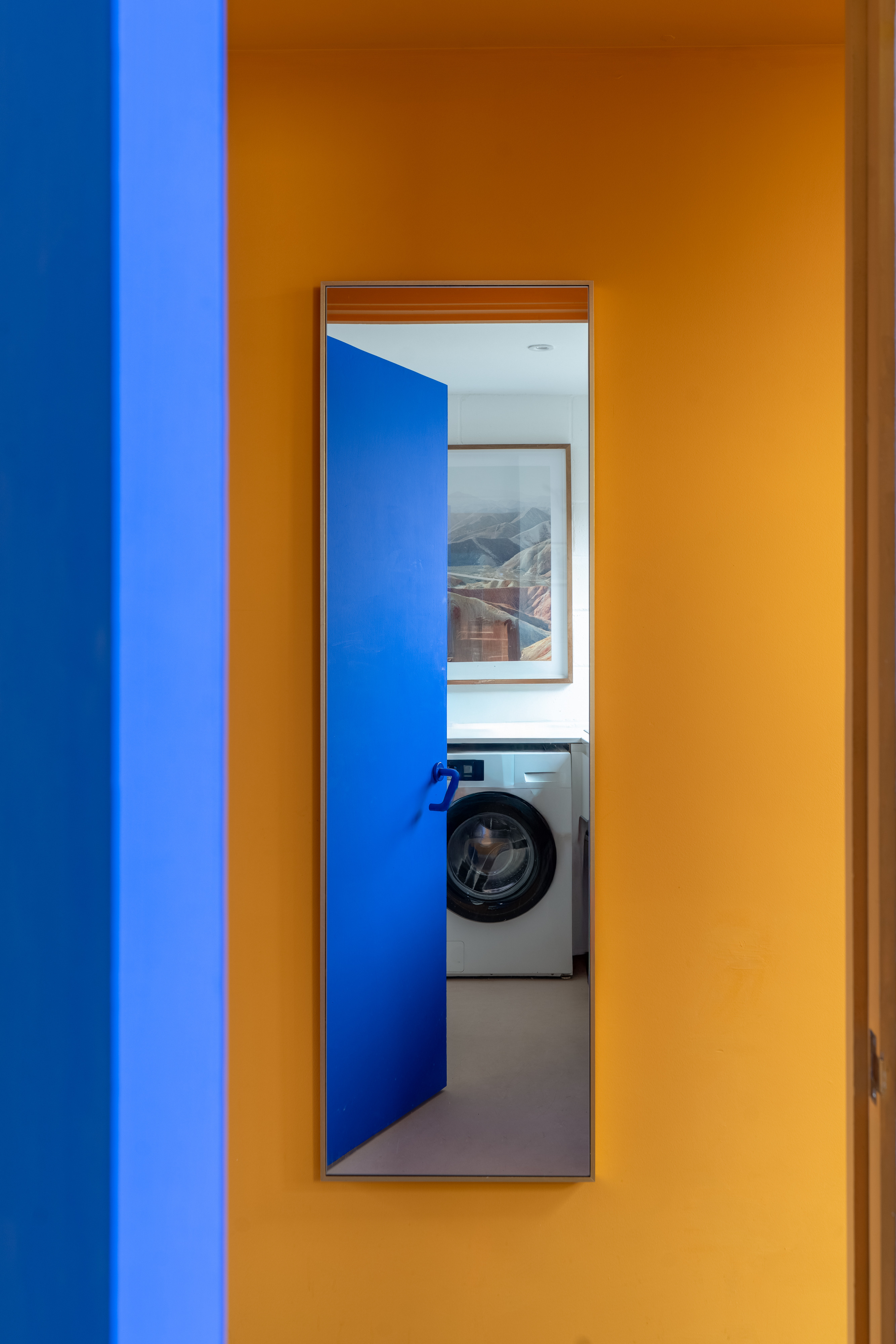
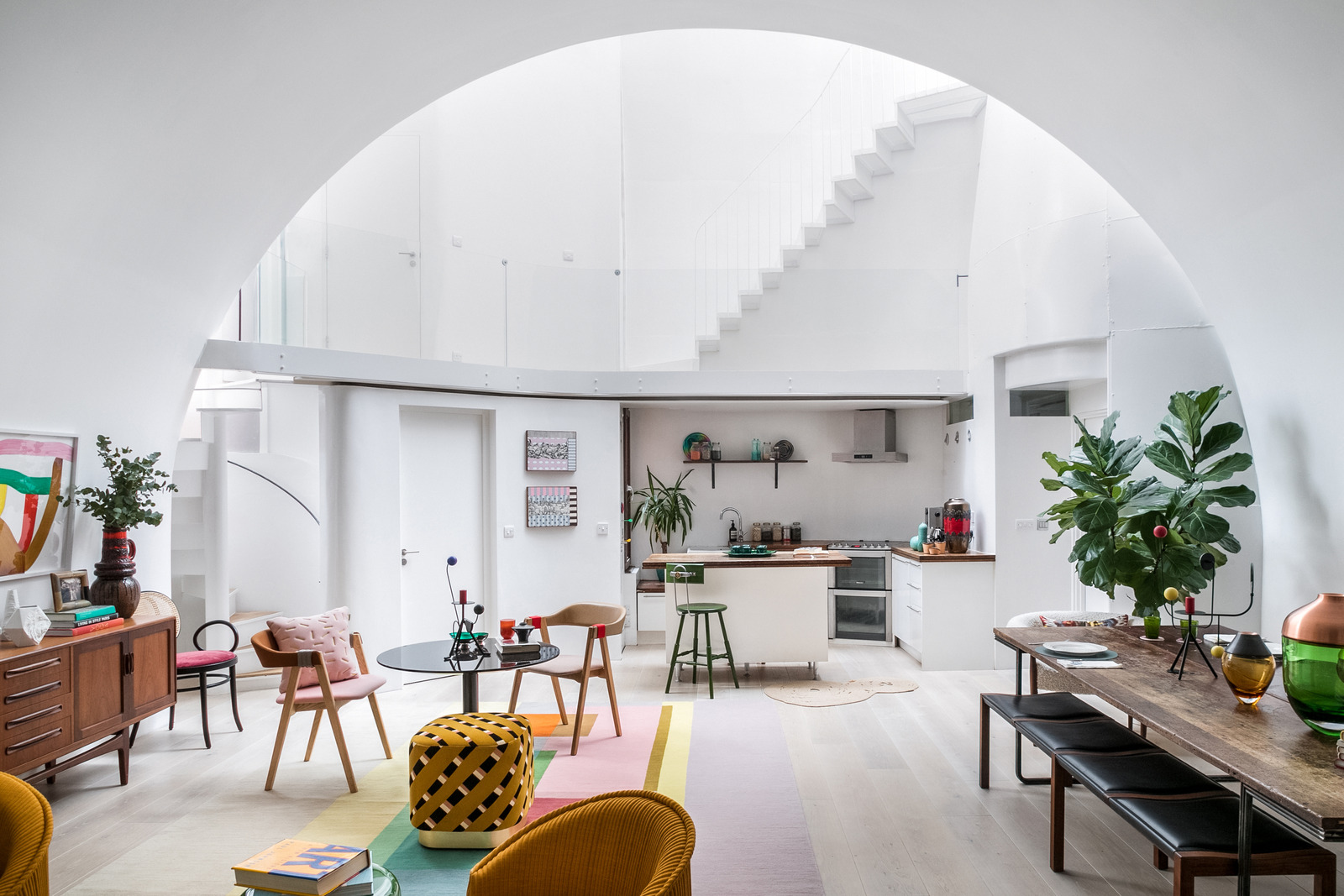
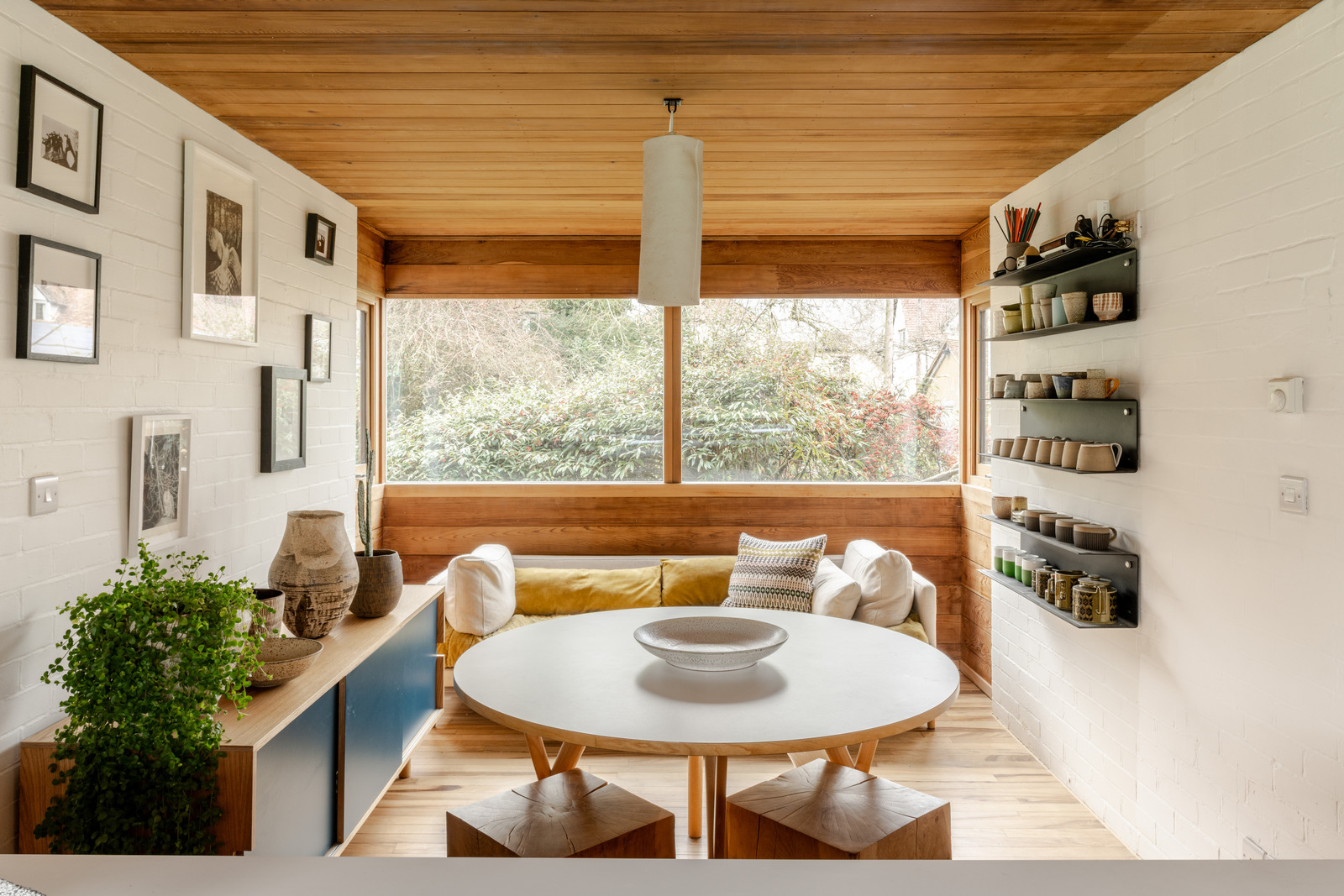
Freya: “We also painted the breezeblock walls a lovely chalky, matt white which brightens things up. And there was a wall in the kitchen-cum-dining area with a hatch, which Phil suggested removing to bring in more light.”
Nick: “There are lots of skylights in the house but some leaked when it rained. We hired Iain Flack of Iain Flack Joinery to repair or replace these. With this style of house, when features need repairing, you can’t just buy off-the-peg elements. Any replacement features need to match the quality of the originals.
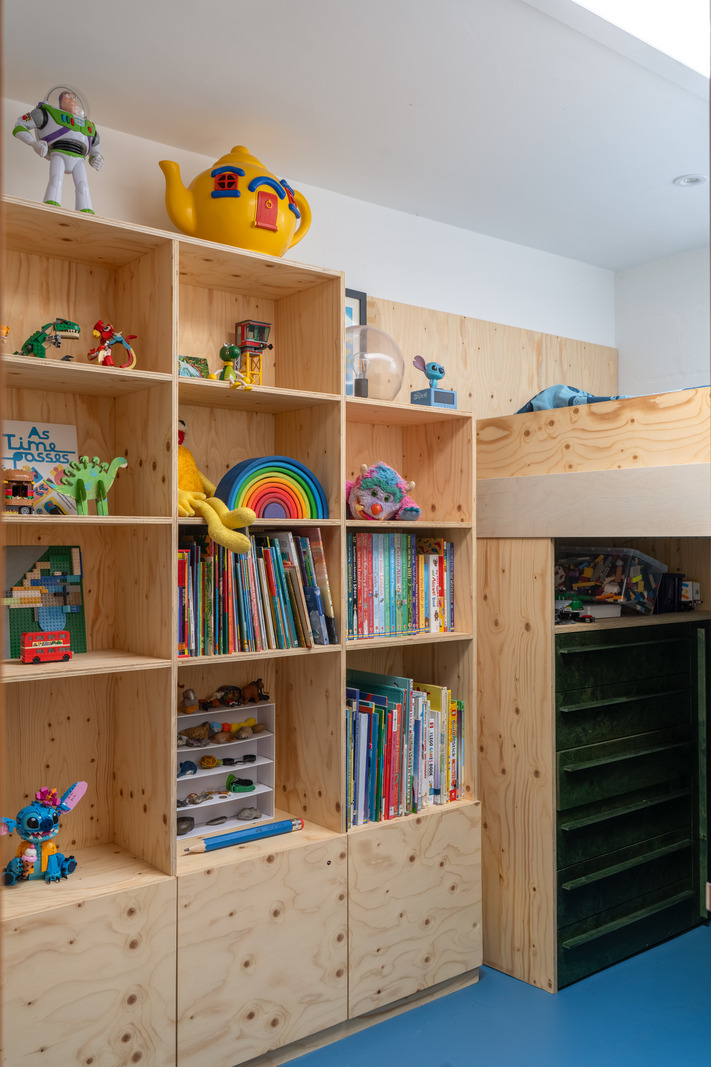
“All the Cockaigne houses are oriented to face east and west and have angled skylights intended to cast dramatic shadows when it’s sunny. Iain also made some bespoke wooden doors that are now a key feature of the house. Other carpenters installed Freddie’s bedroom and cantilevered shelving around the house for displaying all the objects we’ve accumulated over the years.”
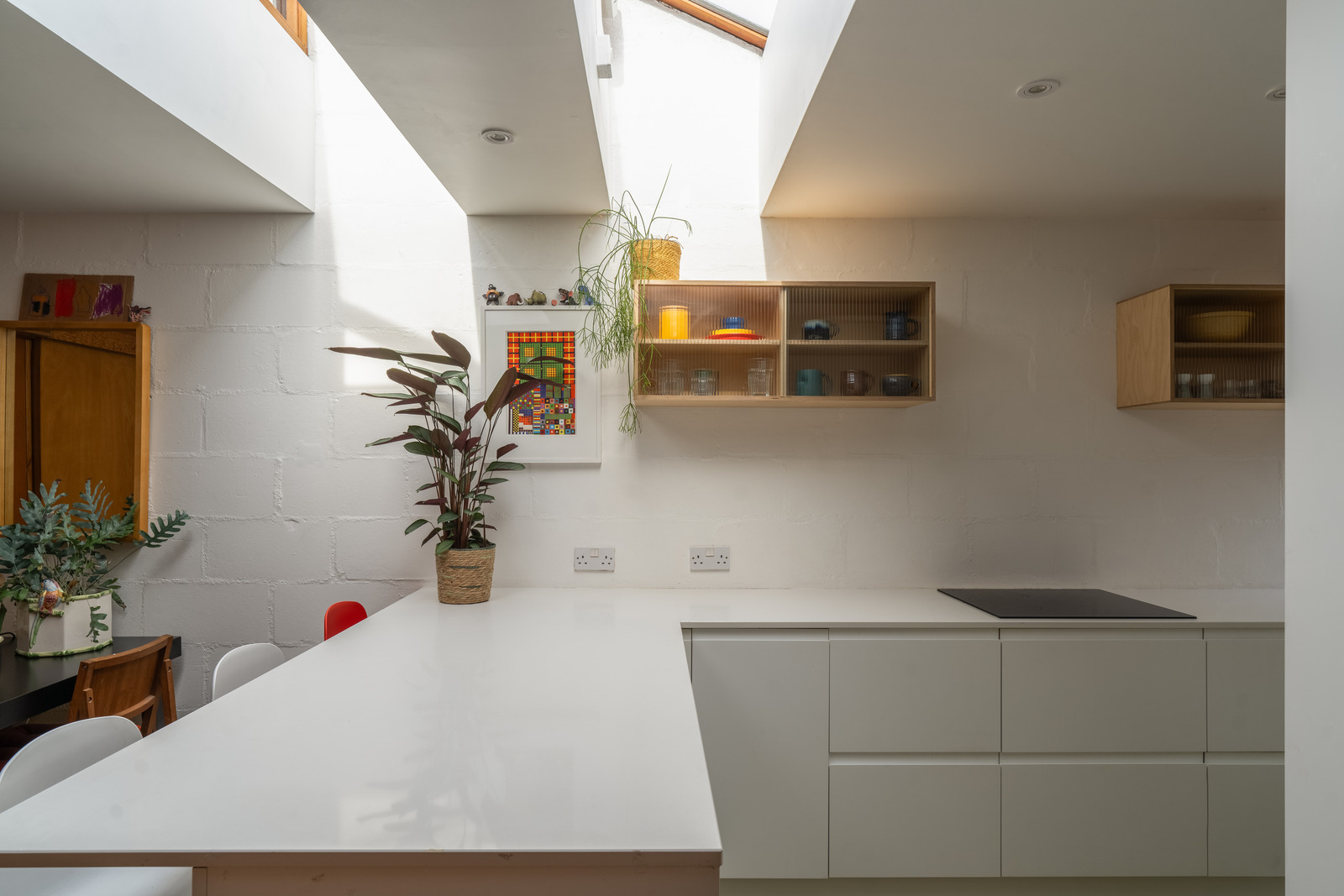
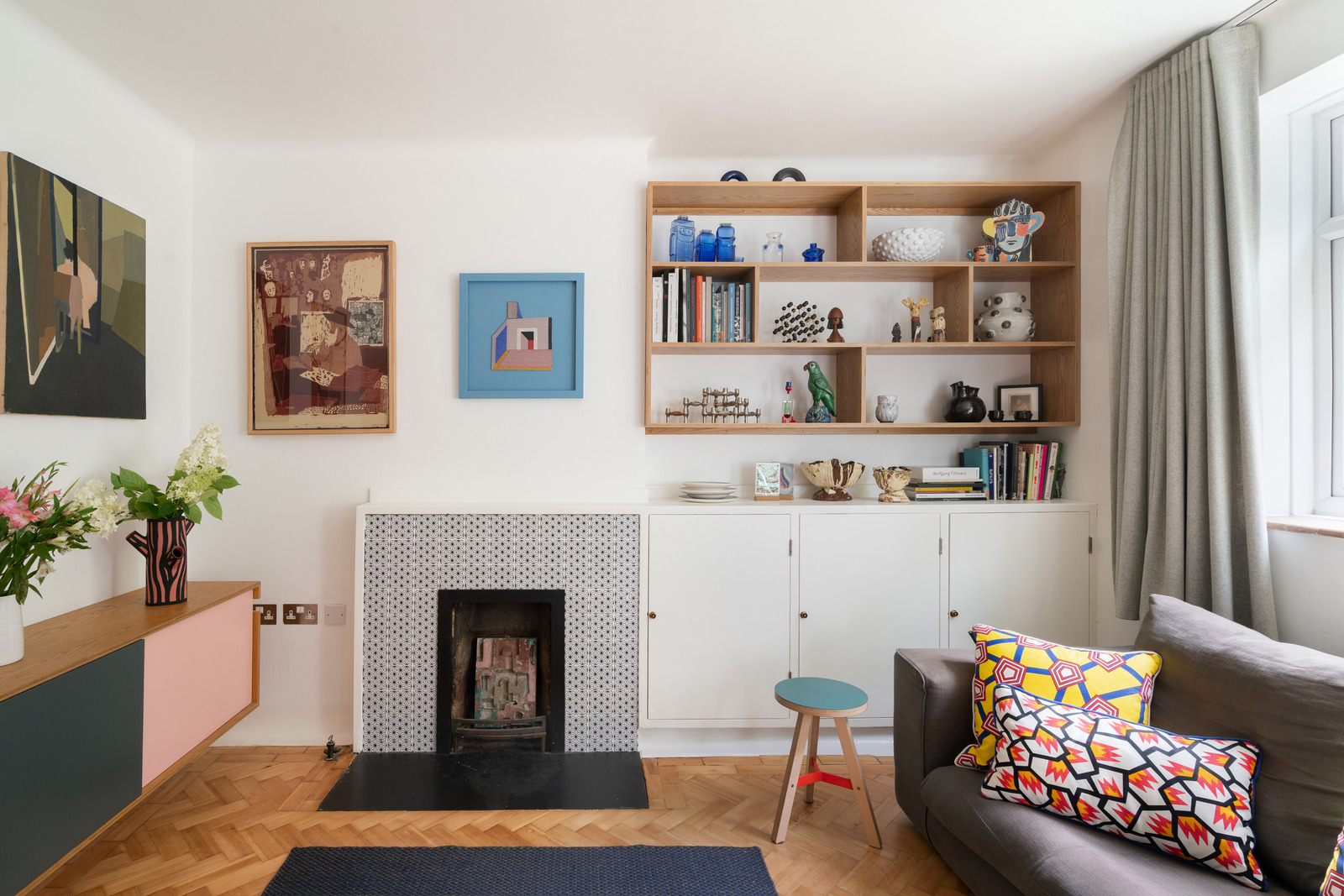
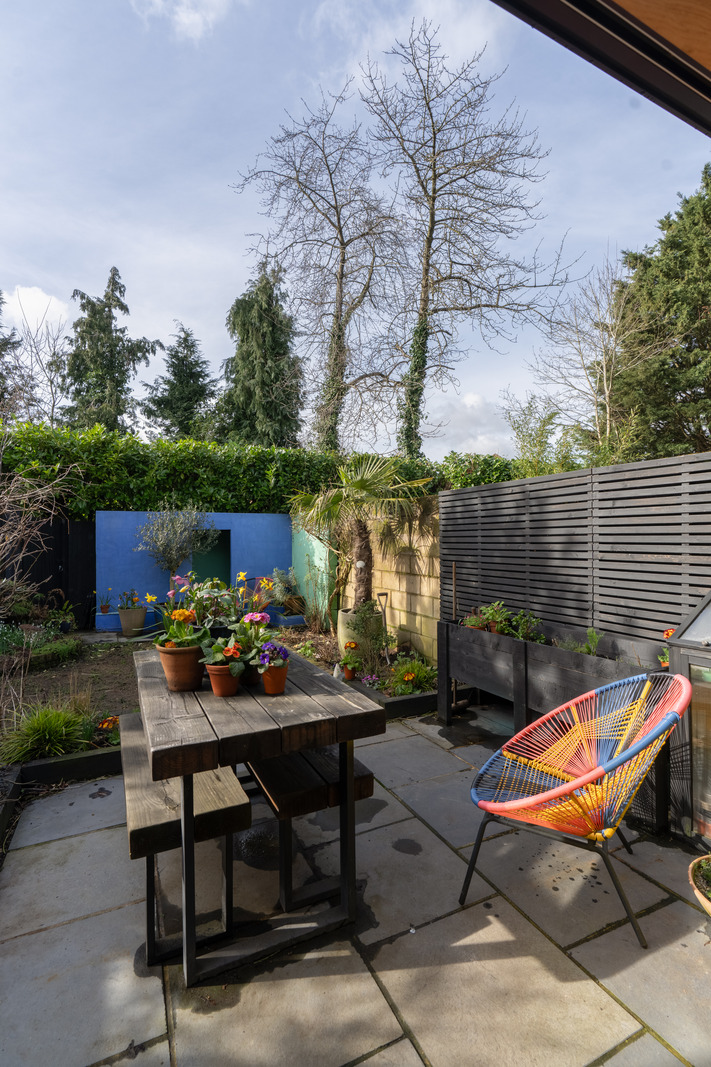
Freya: “In keeping with wanting a homely, family space, we’ve shaken up the house’s slightly spartan aesthetic with colour. The living room is now more colourful as we’ve covered sofas with our collection of patterned cushions and throws. And we’ve hung artworks everywhere, many with touches of blue that echo the hue of the garden shed – we painted it powder-blue, a shade that recalls the joyously colourful buildings of Mexican architect, Luis Barragán.
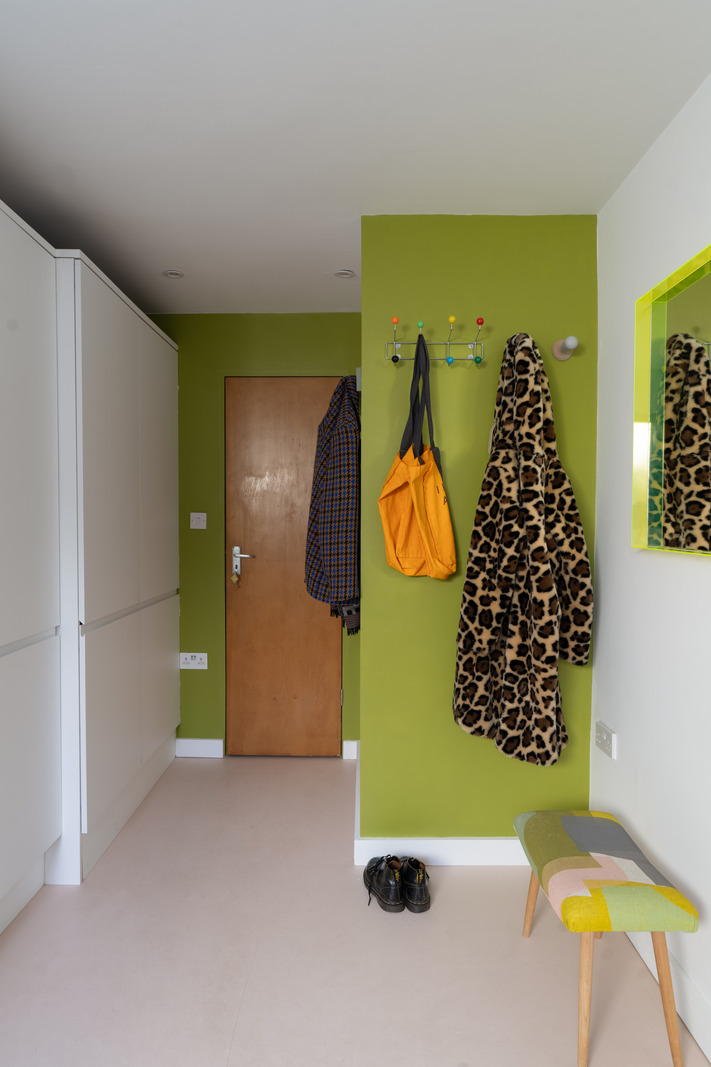
“I’m a big Frida Kahlo fan and love Mexican folk art – a big inspiration behind wanting more colour. We have rubber flooring in an olive shade as well as terrazzo tiles with colourful marble flecks. We also painted the external frames of the sliding doors to the garden a zingy, chrome yellow.”
Nick: “The estate has communal grounds accessible via a gate from the garden. The kids love playing here. Woodland screens off the nearby railway line and there’s a path leading to a clubhouse, an original feature of the Cockaigne project – it has a self-contained flat that residents can rent out for a small sum to family and friends."
Freya: “There are plenty of great places to go to in the area. We love taking the dogs for walks in the grounds of nearby Hatfield House – a Jacobean stately home, owned by the Marquis of Salisbury. St Albans is also home to some of our favourite restaurants. Tewinbury Farm and Hotel is beautiful and very social, holding pizza and movie nights.”
The future of The Ryde looks bright. Nearly sixty years on, it still represents an incredible model for new housing and has such an important level of communality that continues to thrive – with shared rooms and gardens, planned new initiatives like a tree-planting scheme and a host of residents making sensitive and thoughtful updates along the way.