Sound and vision: a uniquely rhythmical converted dairy in Dalston
February 13th, 2025
This article is more than a year old and may contain information that is out of date. Sorry about that.

Words Sophie Sims
Photography Dan Glasser and Rachel Ferriman
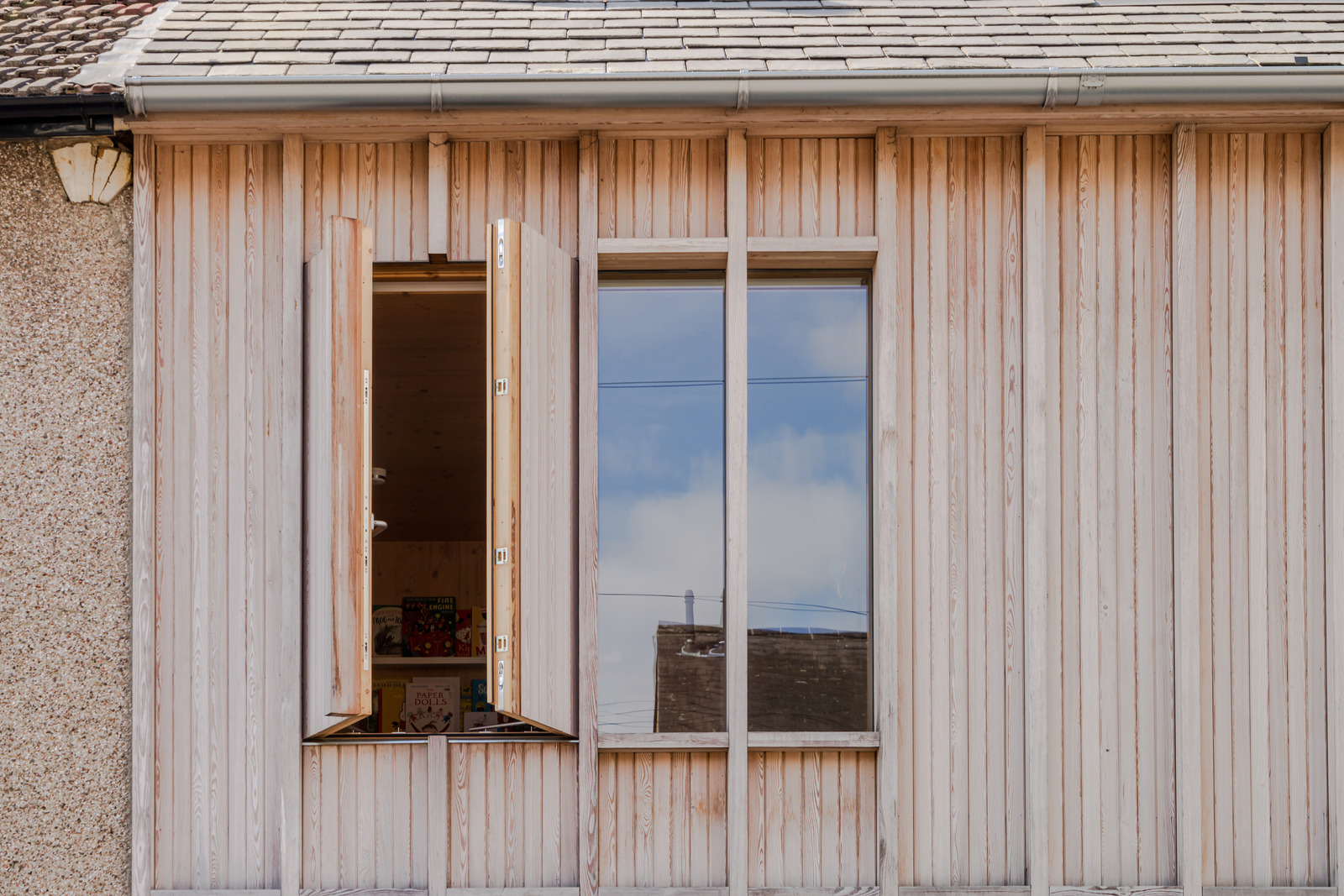
First a dairy, then a launderette, this exceptional house on Dalston’s Shacklewell Lane has a storied past. It was this distinct character that first drew Milo Cordell, a music producer, to it almost two decades ago. However, it wasn’t until 2023 that he enlisted the help of award-winning, London-based architecture practice Lynch Architects to orchestrate its transformation into an interconnected sequence of indoor and outdoor spaces. Now for sale, we meet the duo in this uniquely rhythmical home.
When Milo first bought Shacklewell Lane, his circumstances were different: walking outside to reach the rear of the house from the front (which had their beginnings as a dairy and a cheese and milk shop respectively) was not a problem. “When we were in our 20s it was fine,” he says. “It’s a different story when you have kids.”
If the walls could talk, they would surely speak of the changes seen during his time here and the people Milo has welcomed into his home. “I quickly filled the house with musicians,” he says Milo. (He bought the house from a record producer: “the house had already hosted some big names in pop by the time I moved in.”) The garden studio was, at the time, let to an artist: “She stayed for a while – she came with the house,” Milo jokes.
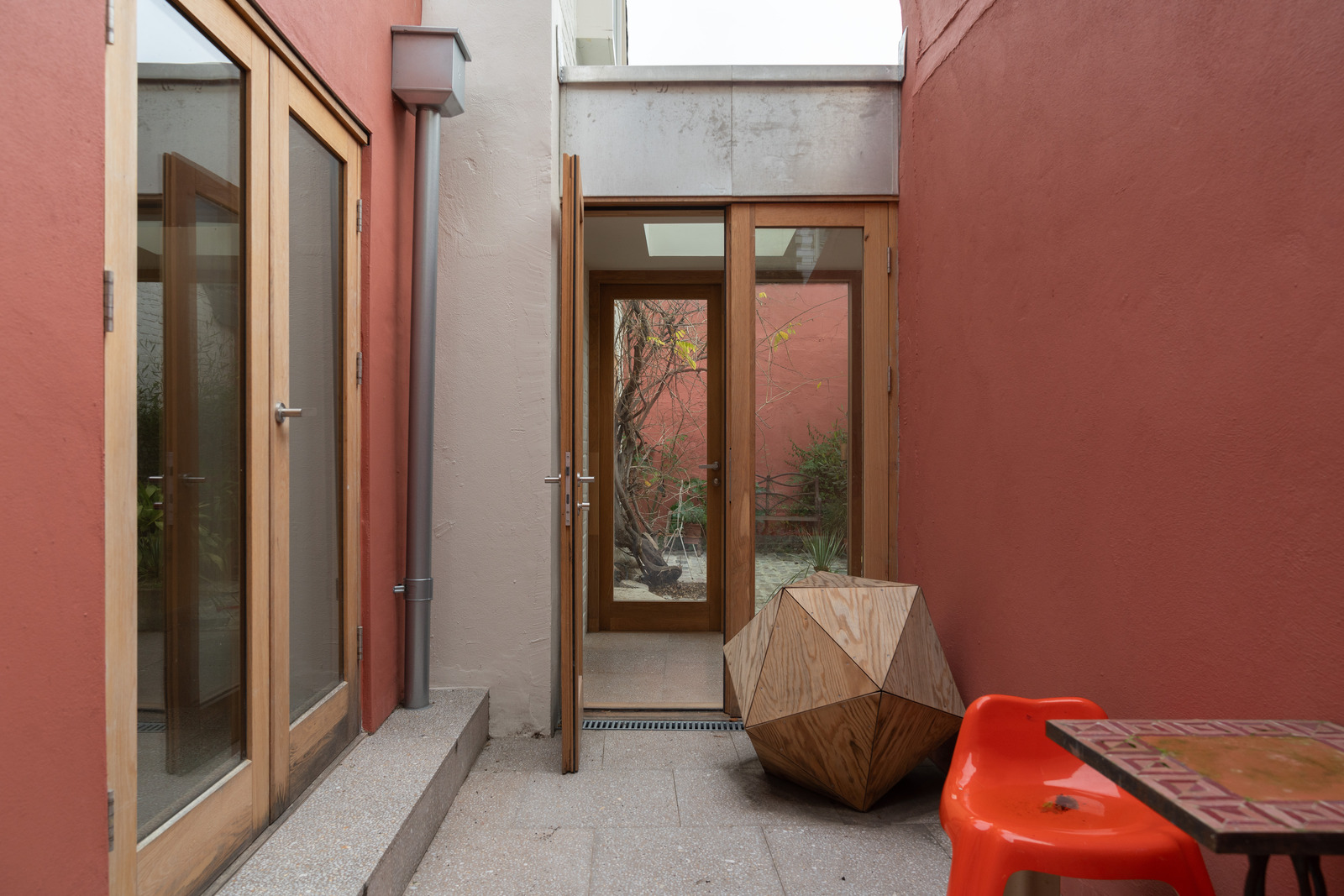
Having lived in the house as long as he did before undertaking any major works, Milo had some ideas on how things could work. He paired with Patrick Lynch of Lynch Architects to realise these changes. They had been, in some ways, ships in the night: they had plenty of mutual connections, but only formally met when Patrick’s firm was recommended to Milo. “At the time, The Modern House had your house for sale,” Milo recalls, speaking to Patrick. “We went to see it and were impressed with how sympathetic it was to the original architecture and design.”
Common ground was quickly established between the two and Milo was particularly taken by the musicality of designing a building. “We started to talk about rhythm,” says Milo. “Patrick had been talking about it in an architectural way. We went to Lynch Architects’ office and saw the software they used to design buildings, which uses a similar grid system to how you make music. There’s definitely a cross-pollination of sorts.”
Patrick agrees. He recalls his time studying architecture at Cambridge when, during a post-tutorial pint, a friend told him that his tutor had told him to go away and listen to Miles Davis’s ‘Sketches of Spain’. Marrying music and architecture is something embedded into his practice still, and something that informed his work here: “It’s sort of like music or writing. You start with something, then get a few more things … then you have the crescendo.”
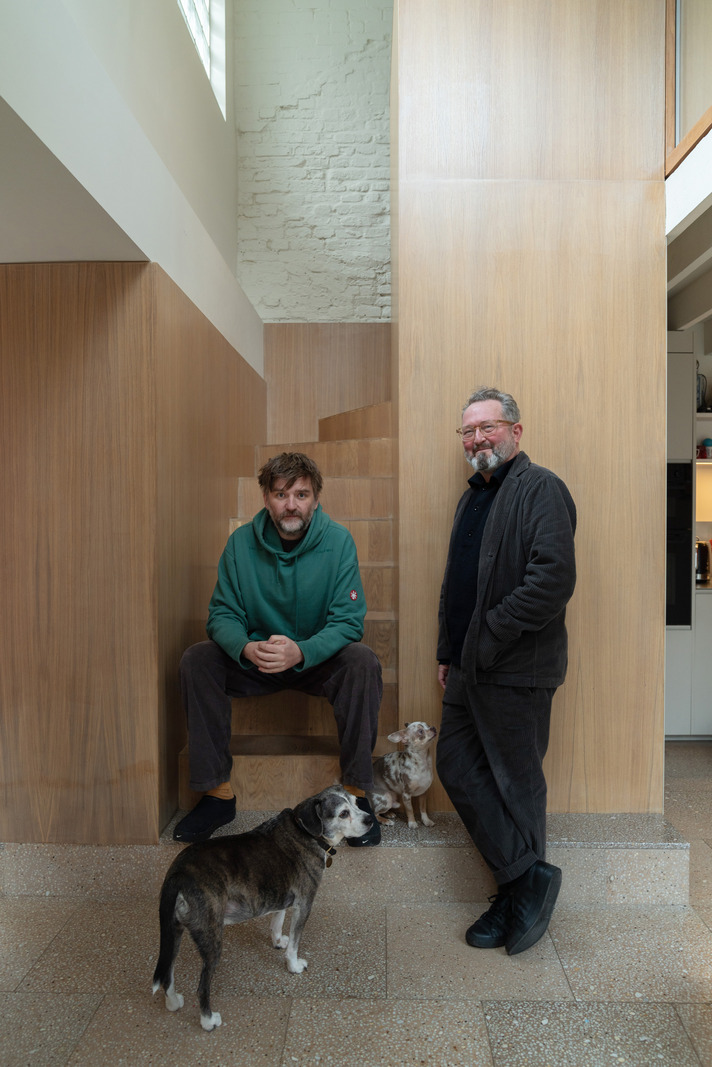
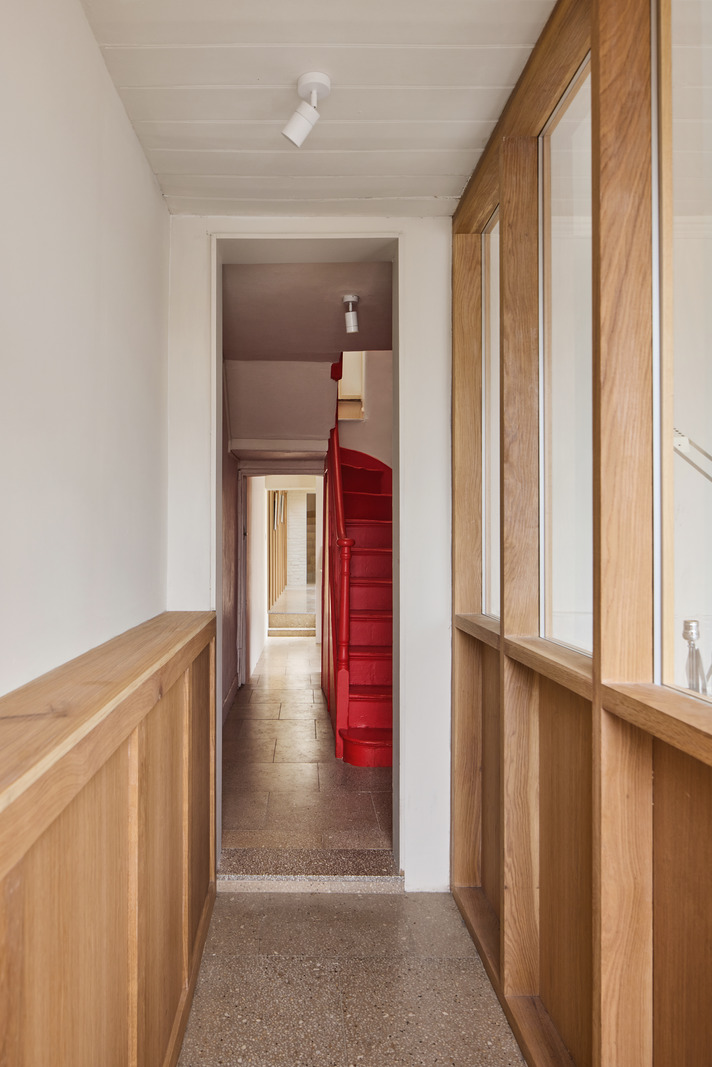
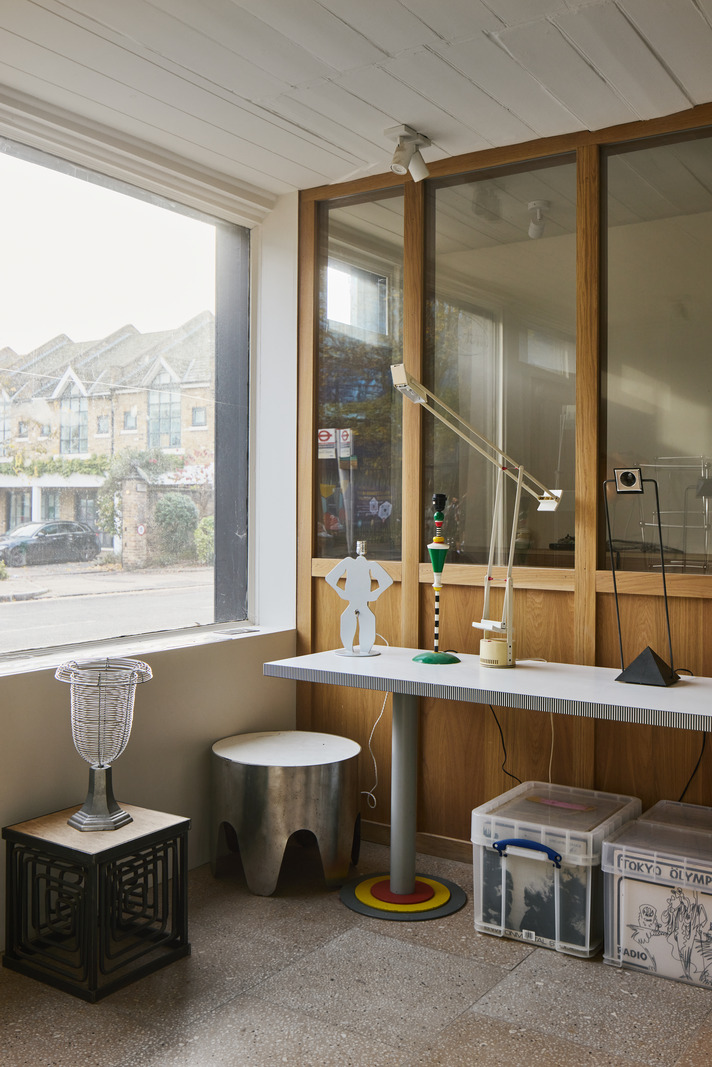
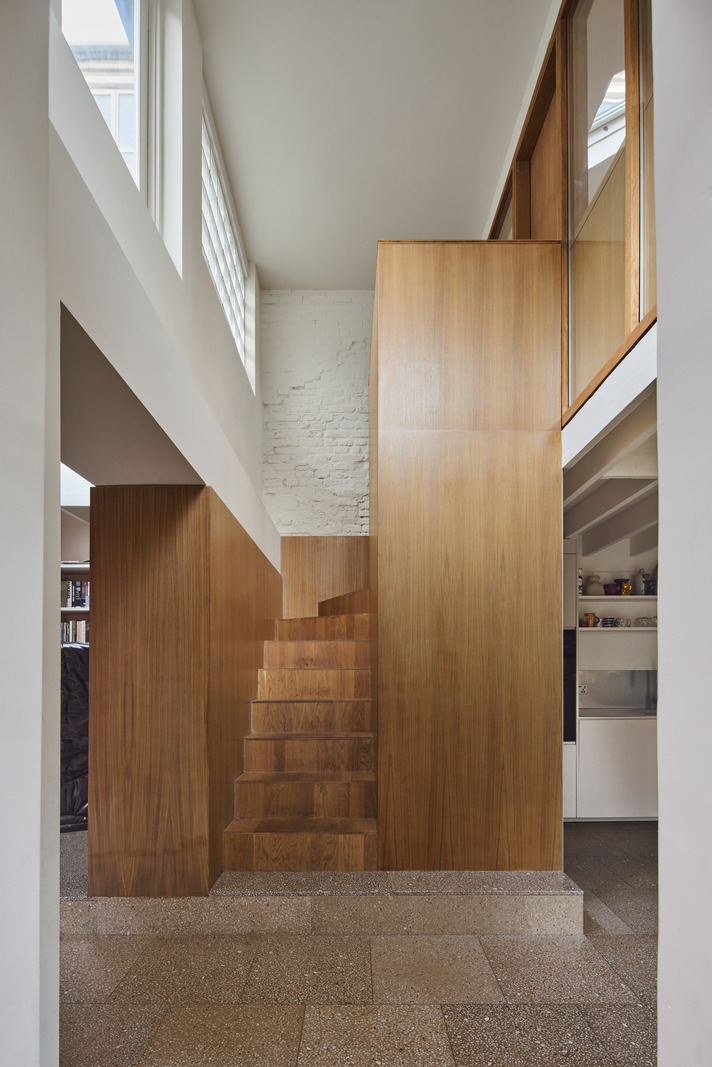
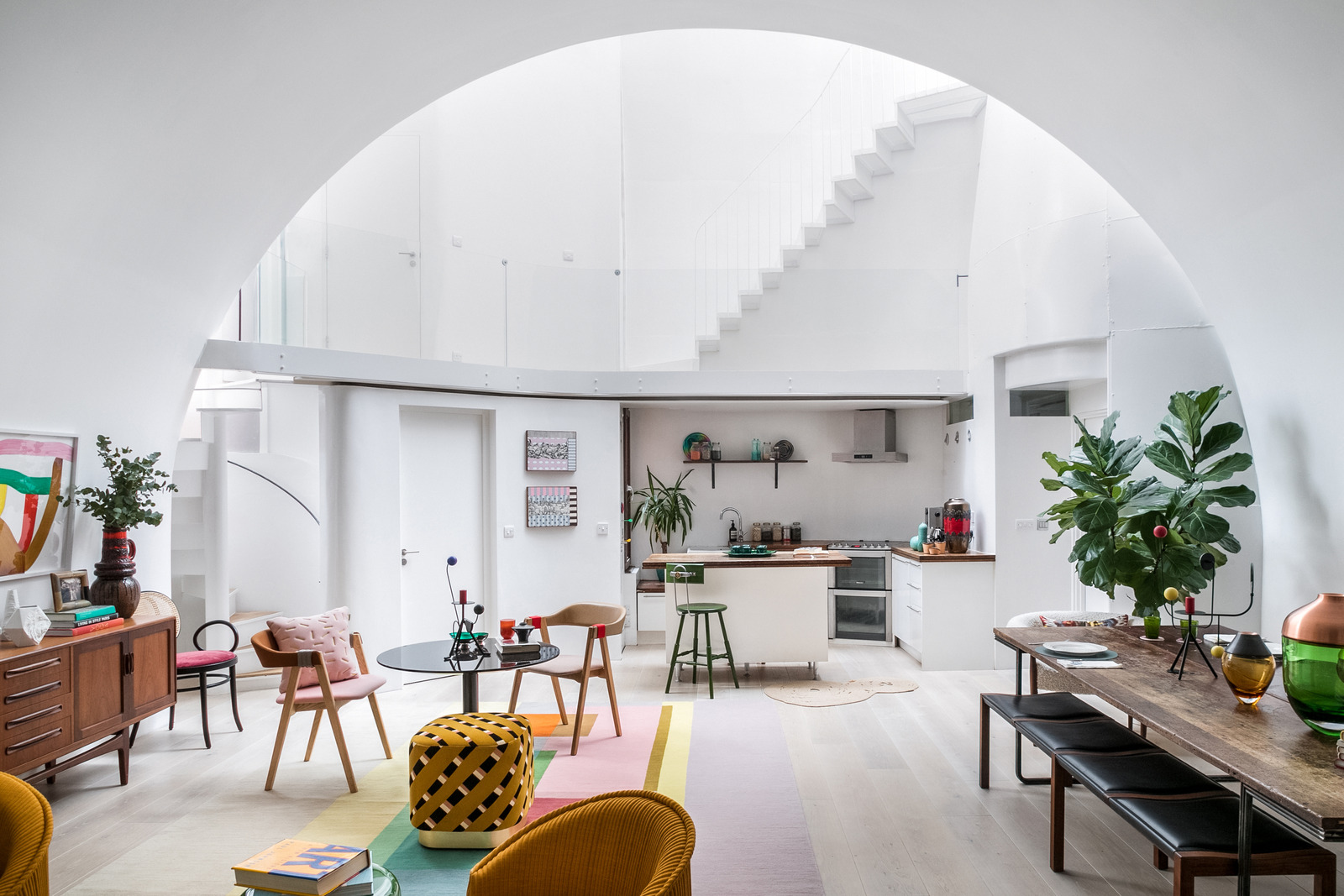
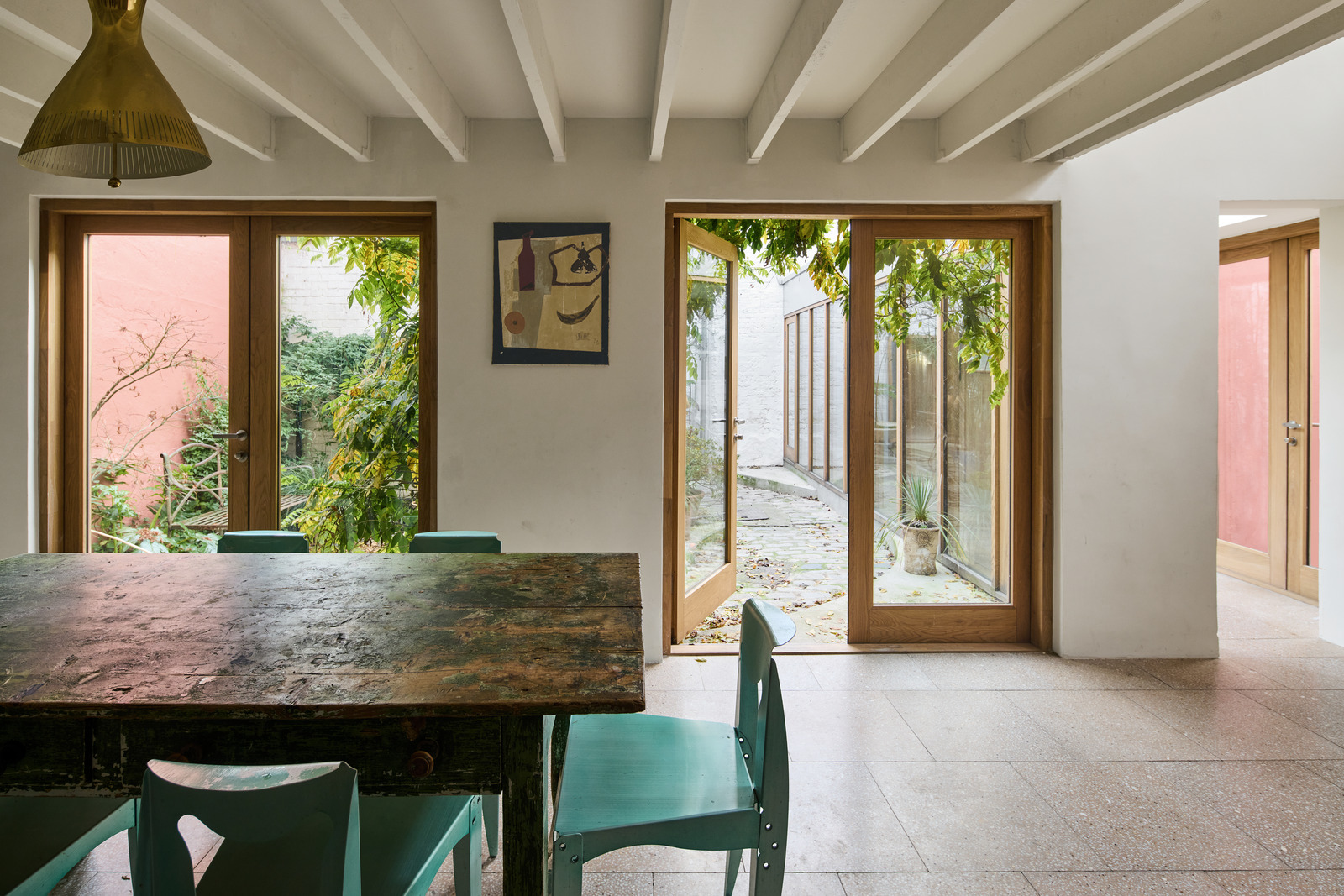
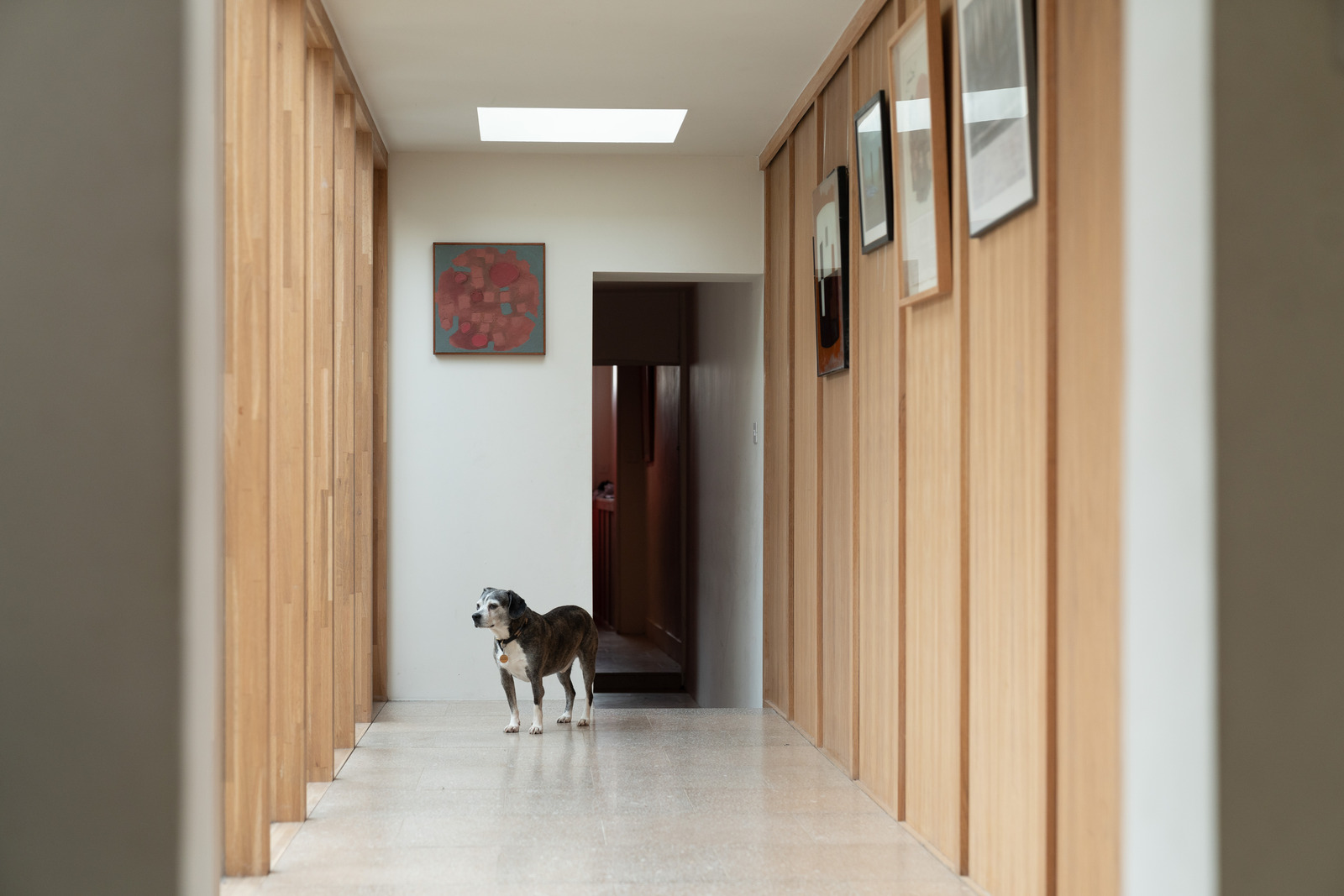
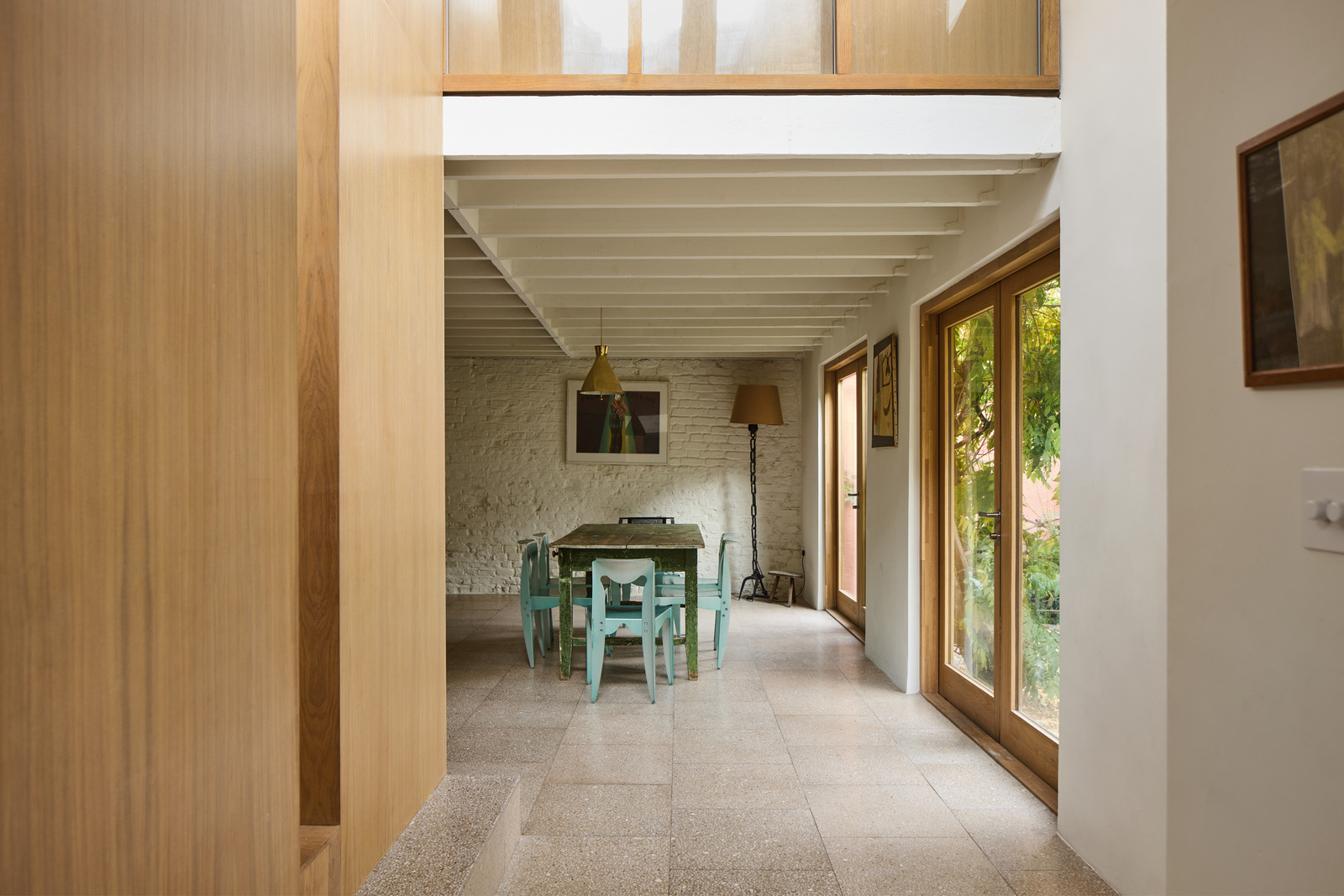
If it were a song, what might Shacklewell Lane be? Roxy Music’s ‘Mother of Pearl’, Patrick suggests. A song of unique parts knitted together, it is clear to see why he’d think this: much of his work on the house has centred on uniting its separate components. Refrain-like, a light-filled glazed corridor connects the separate ‘verses’ of the house: the front shop/studio space, the rear living spaces and external courtyards, its windows arranged “rhythmically” as Milo puts it. “The way Patrick designed the ground floor means that you can now see right the way from the front to the back – that may be my favourite bit of the whole house.”
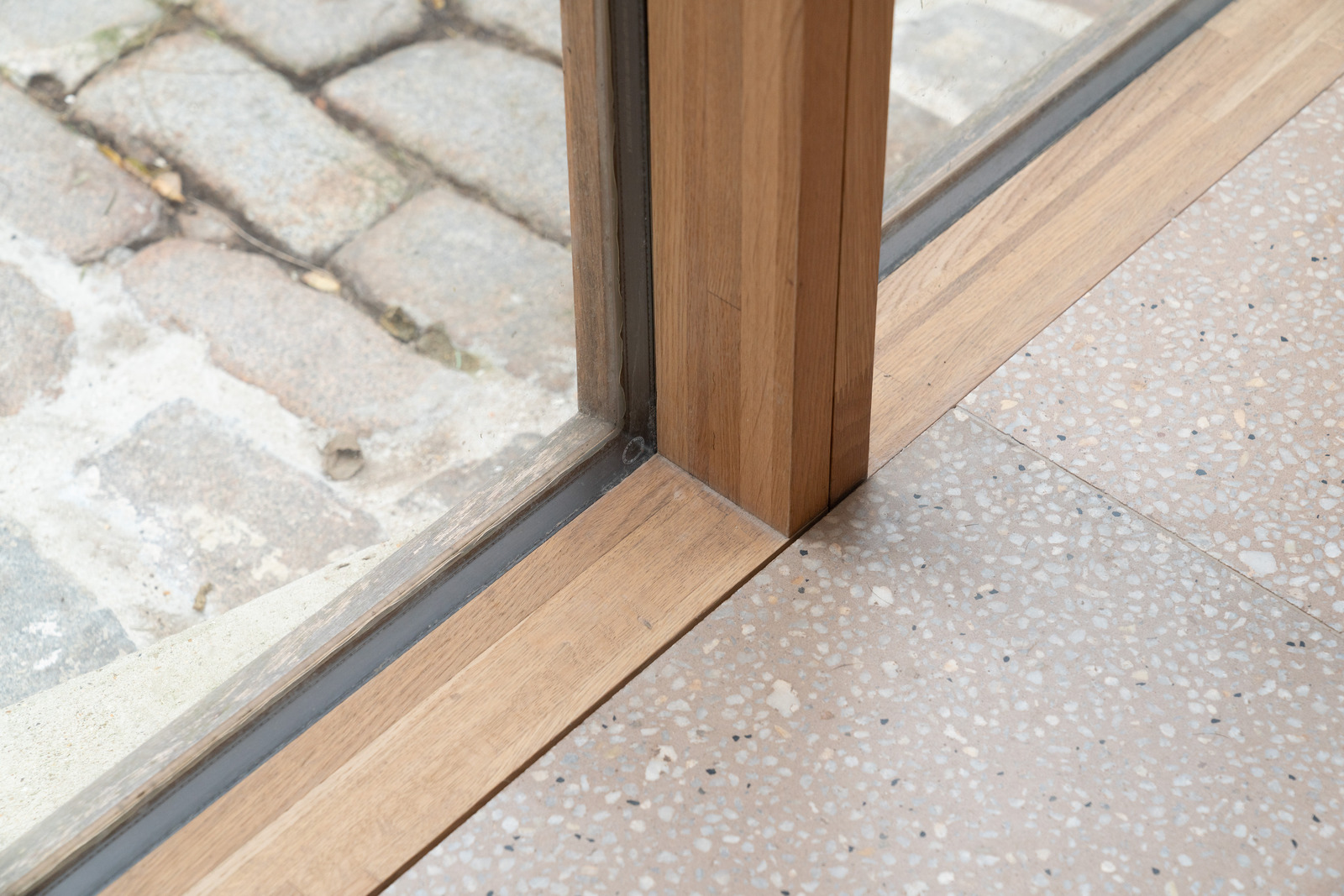
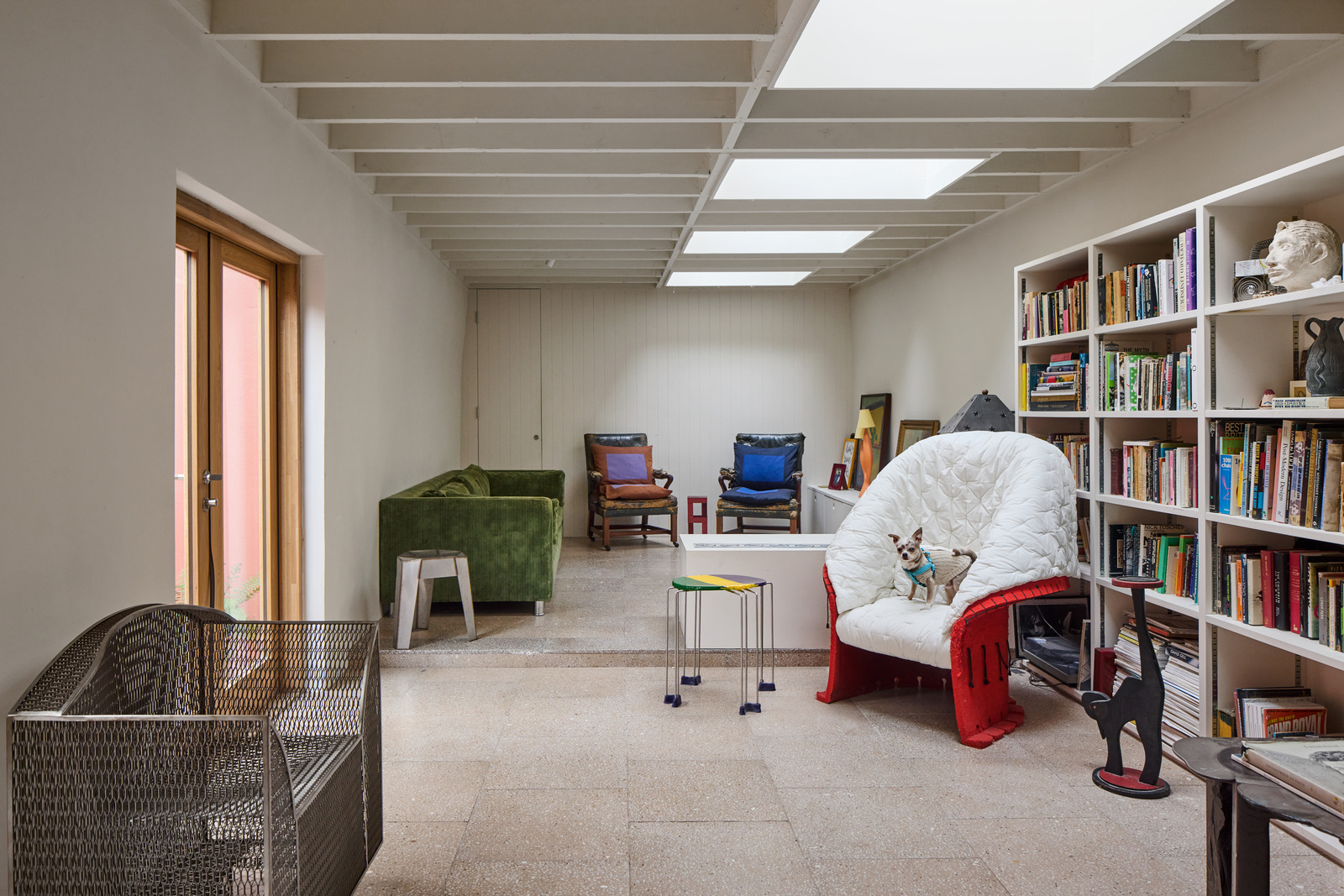
Like background music (unobtrusive, but often more interesting on closer inspection), luminescent terrazzo flooring spreads throughout much of the ground-floor living spaces. “There were hundreds of different types of terrazzo to choose from, and Milo chose this – I think because of the relative anonymity of it,” Patrick says. “It’s not uniform and regular – but it’s still very stone-like”.
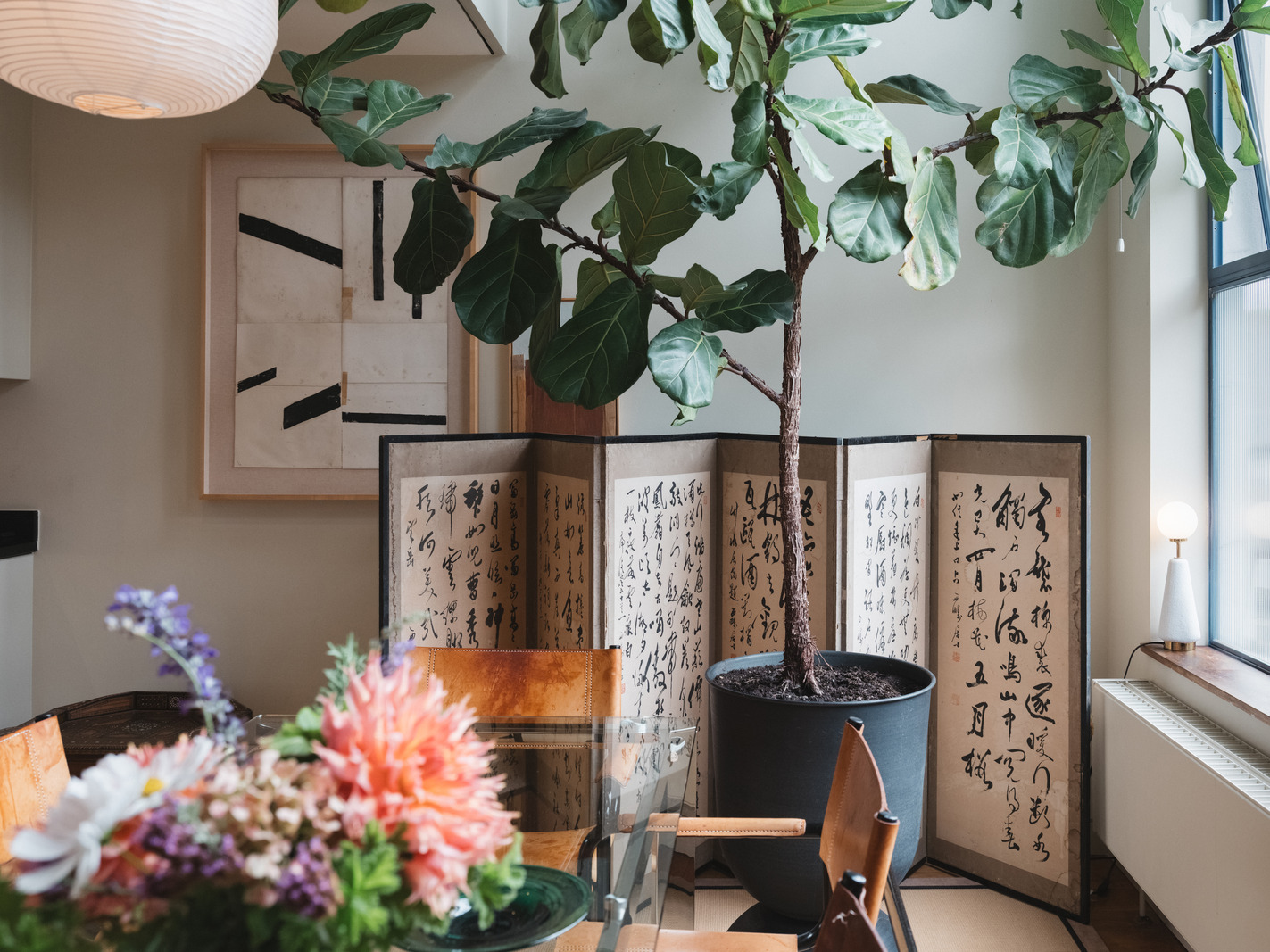
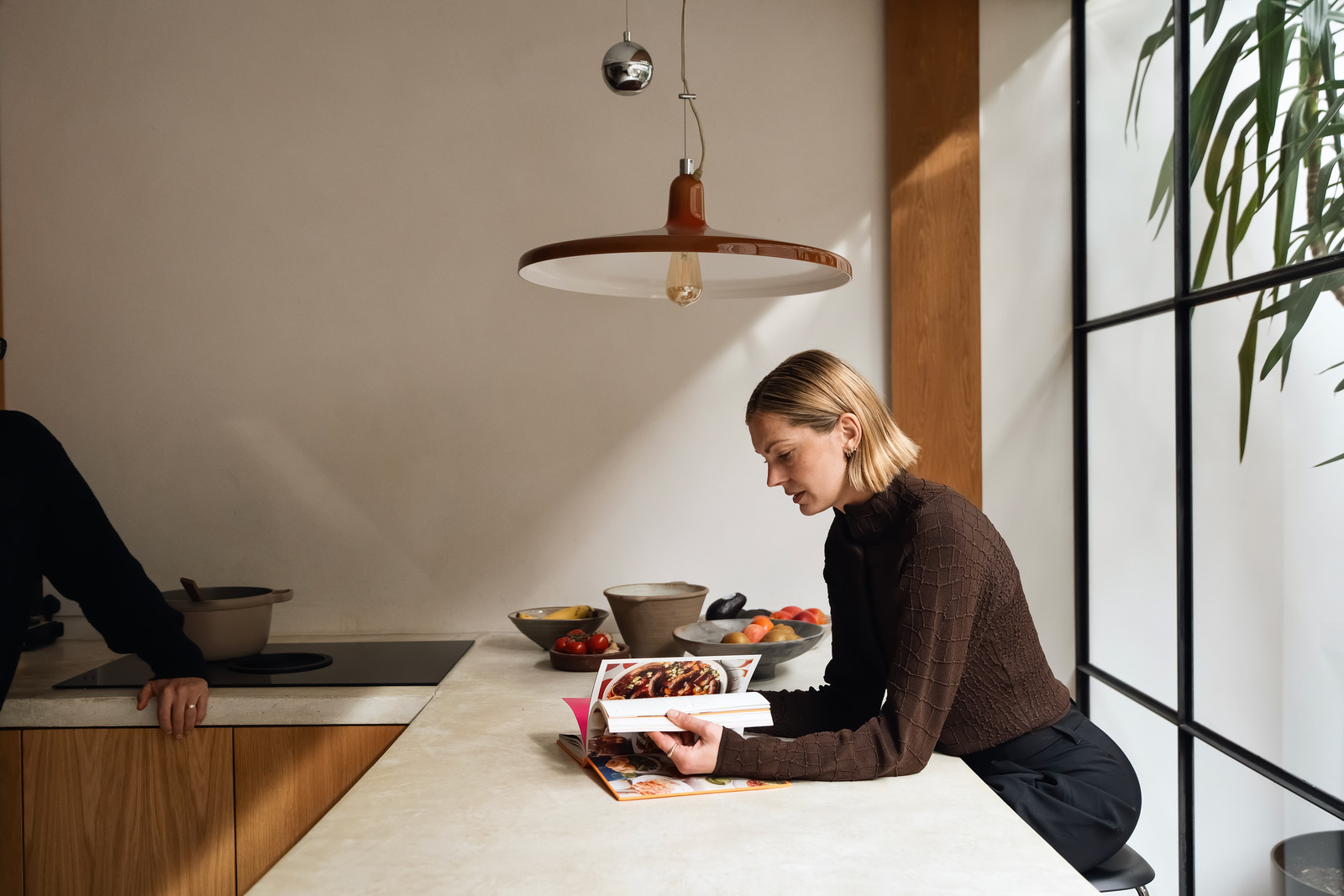
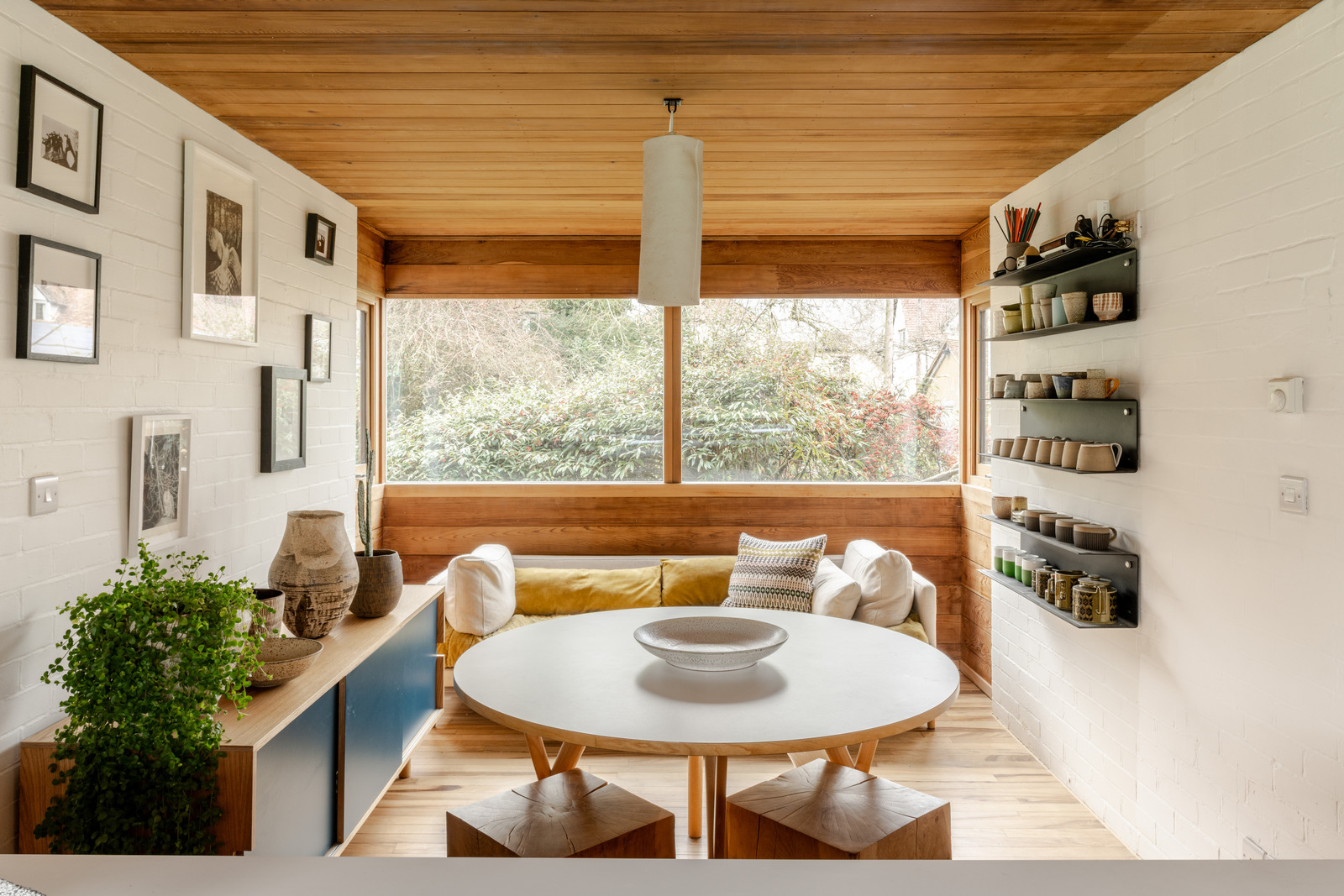
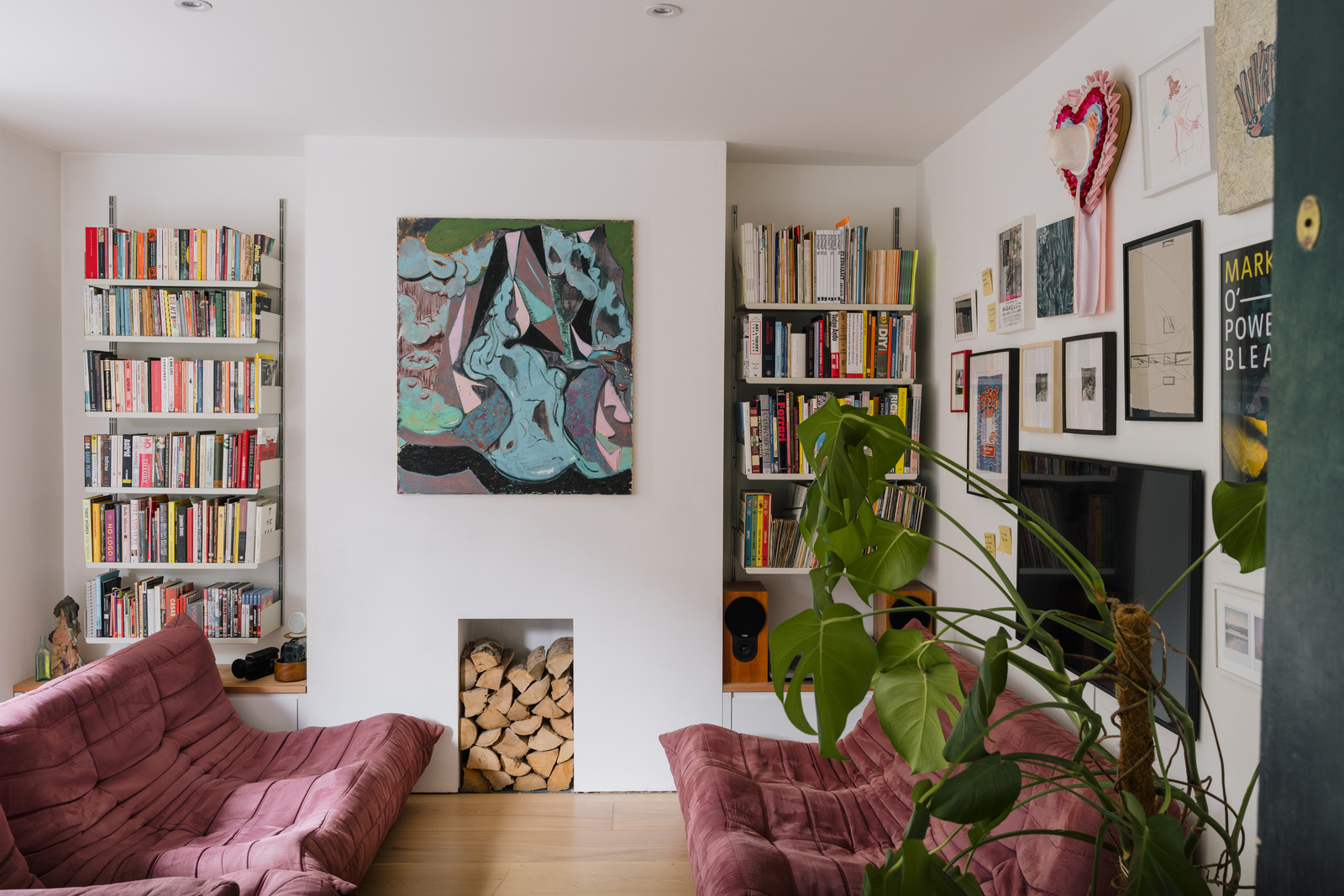
It plays as a neutral and seamless backdrop to Milo’s furniture collection, which he occasionally sells through his Instagram account, @open_by_appointment. While intriguing pieces are dispersed throughout the house, those on a long, open shelf in the kitchen – similar to one in Patrick’s own house – form a sort of visual focal point. “I was completely inspired by my parent’s mantelpiece,” says Milo. “We don’t have a central one here, but this, and the bookshelves in the living room, have become substitutes.”
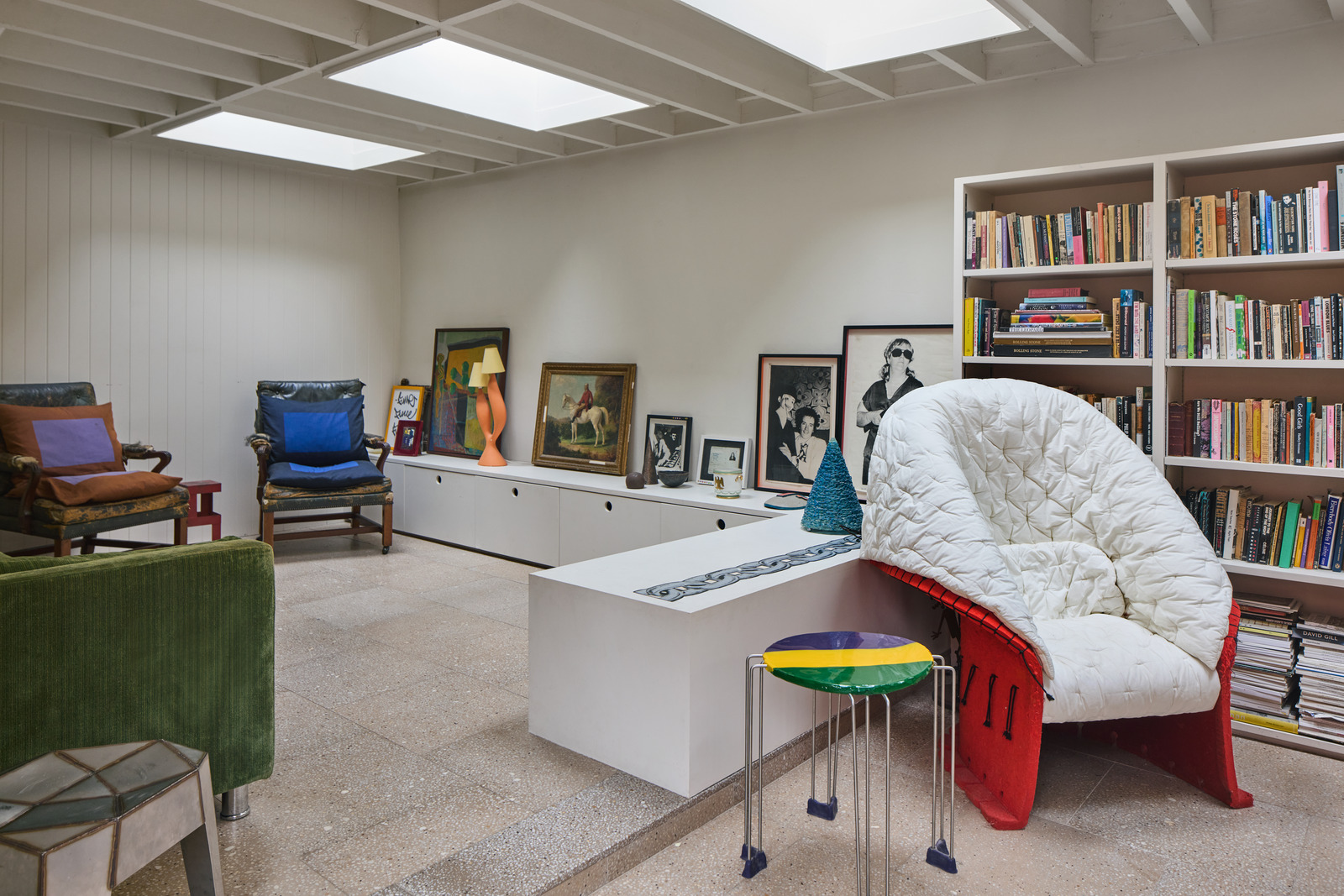
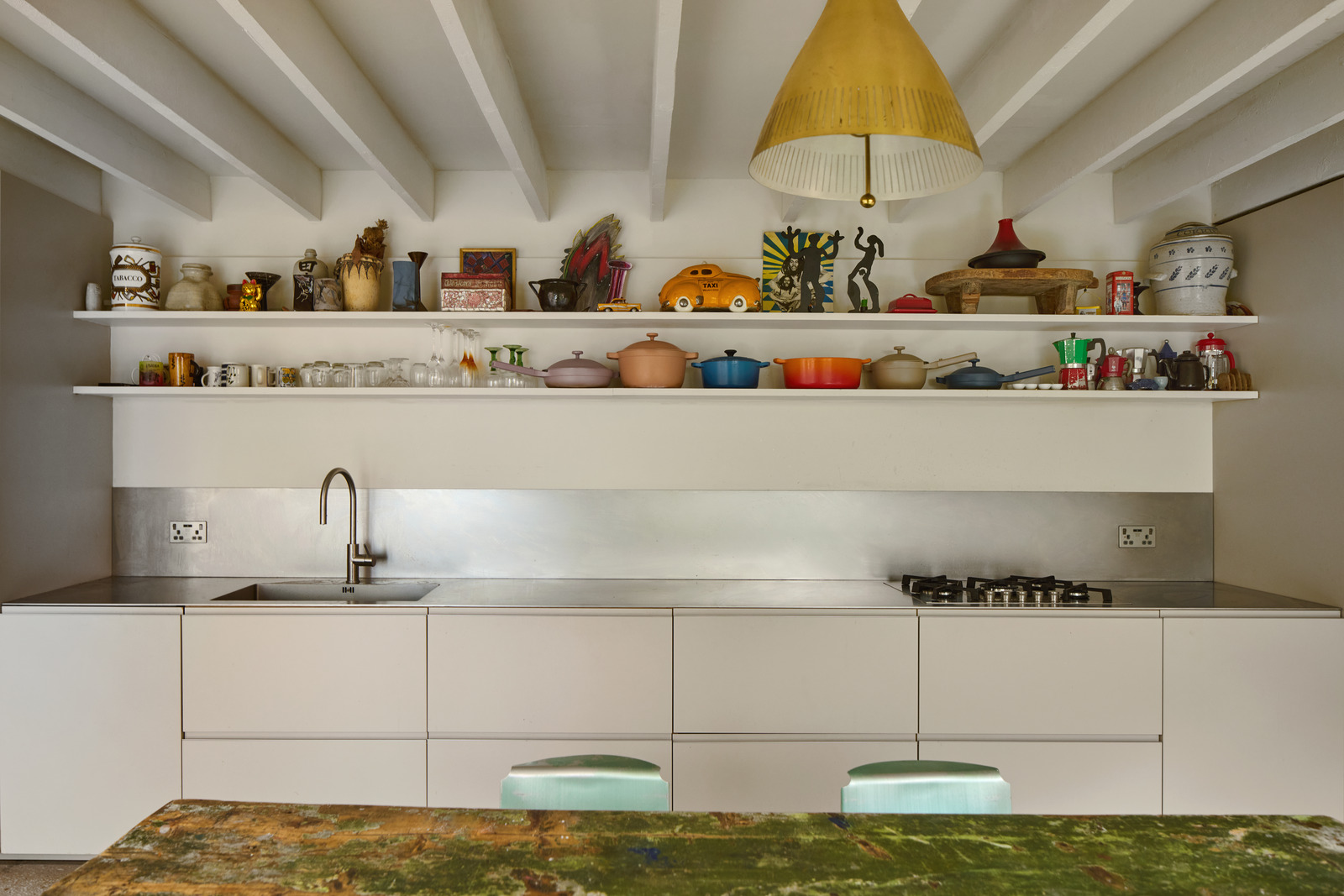
Milo returns to the idea of “living among your things” throughout our conversation. The inspiration for this took root at a young age: “My mum used to talk about going to see her friends, like Christopher Gibbs, who were dealers and interior designers. They’d put these amazing pieces in their flats in places like Pimlico and Chelsea. People would come round and look at them. They had amazing collections - my mum and dad would go there and buy something like a lamp.
”Bringing together a variety of things – materially, referentially and temporally – is the way of Shacklewell Lane. It is at the crux of what both Patrick, as its architect, and Milo, as its design-collecting dweller, have done. “The house is a sort of collage,” Patrick suggests – but one where all its parts, even at their most distinct, sit in total harmony with one another.